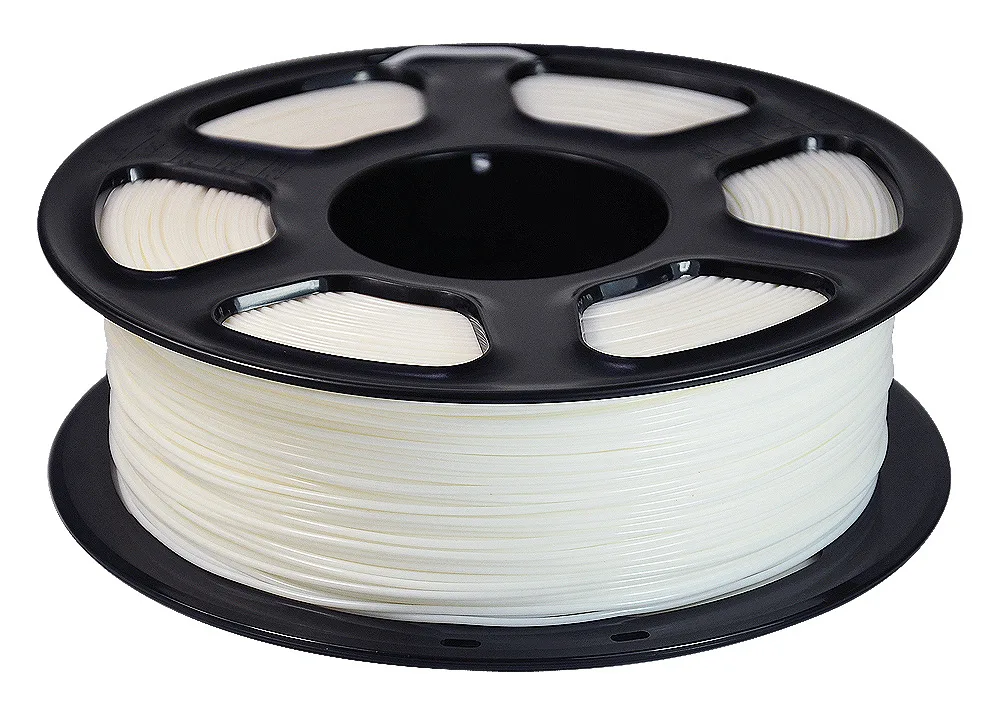
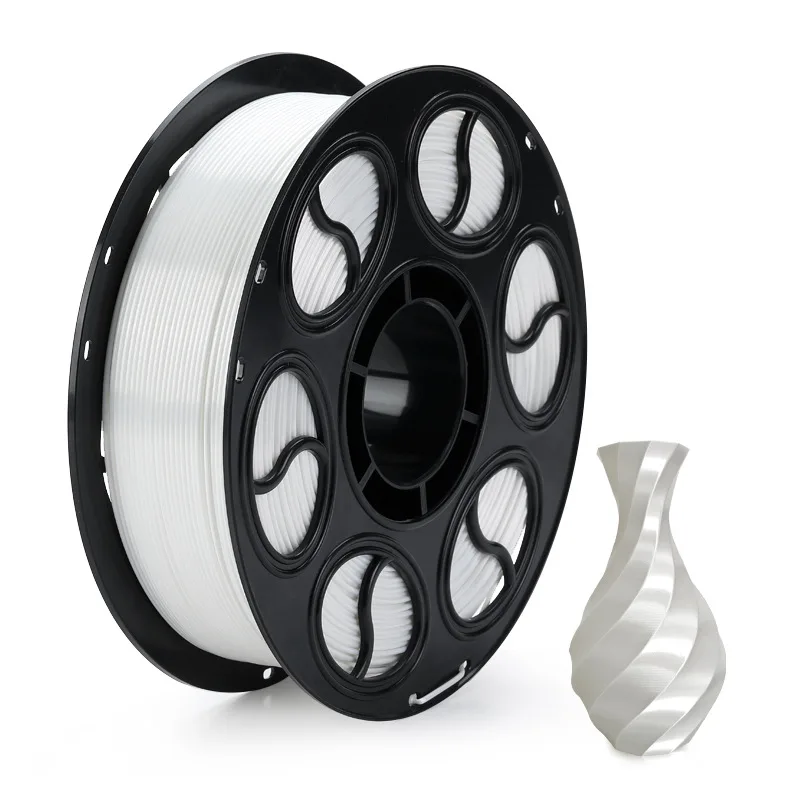
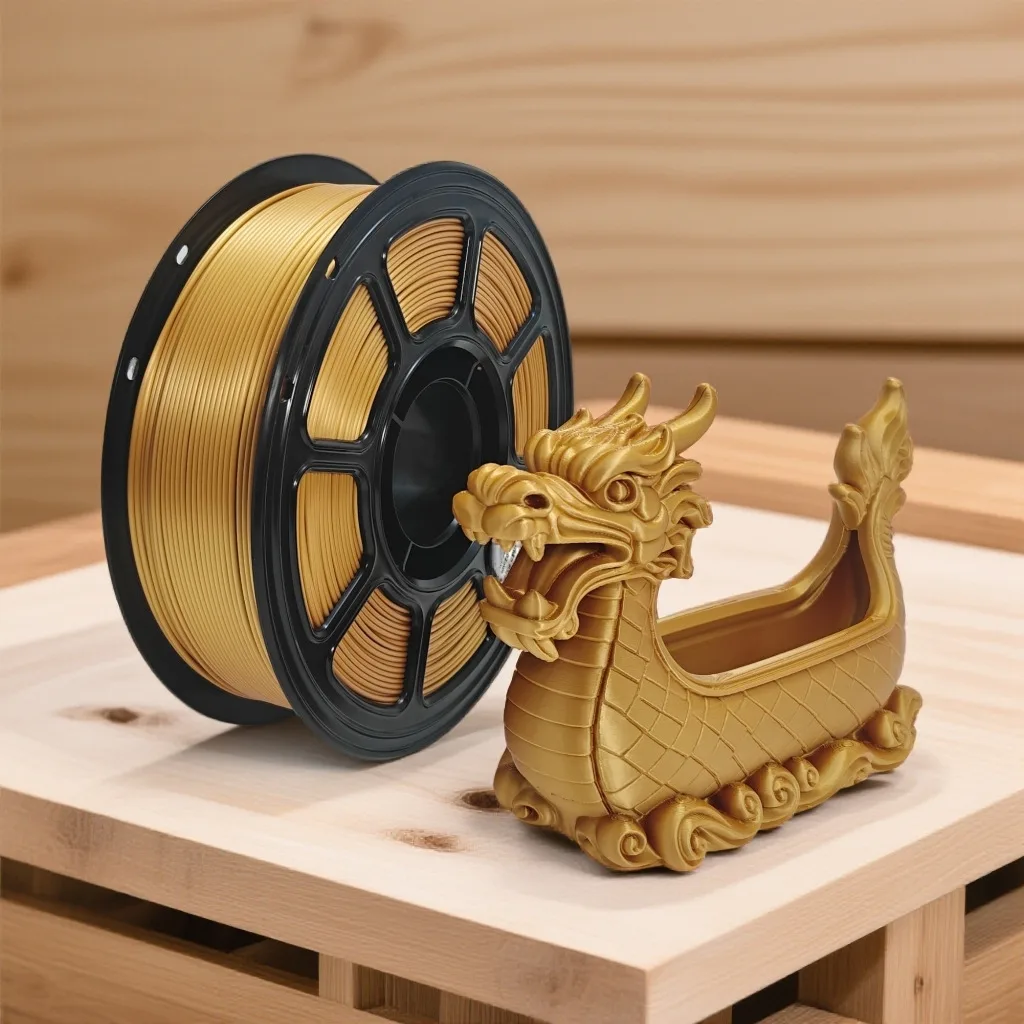

Silk PLA Tri Color

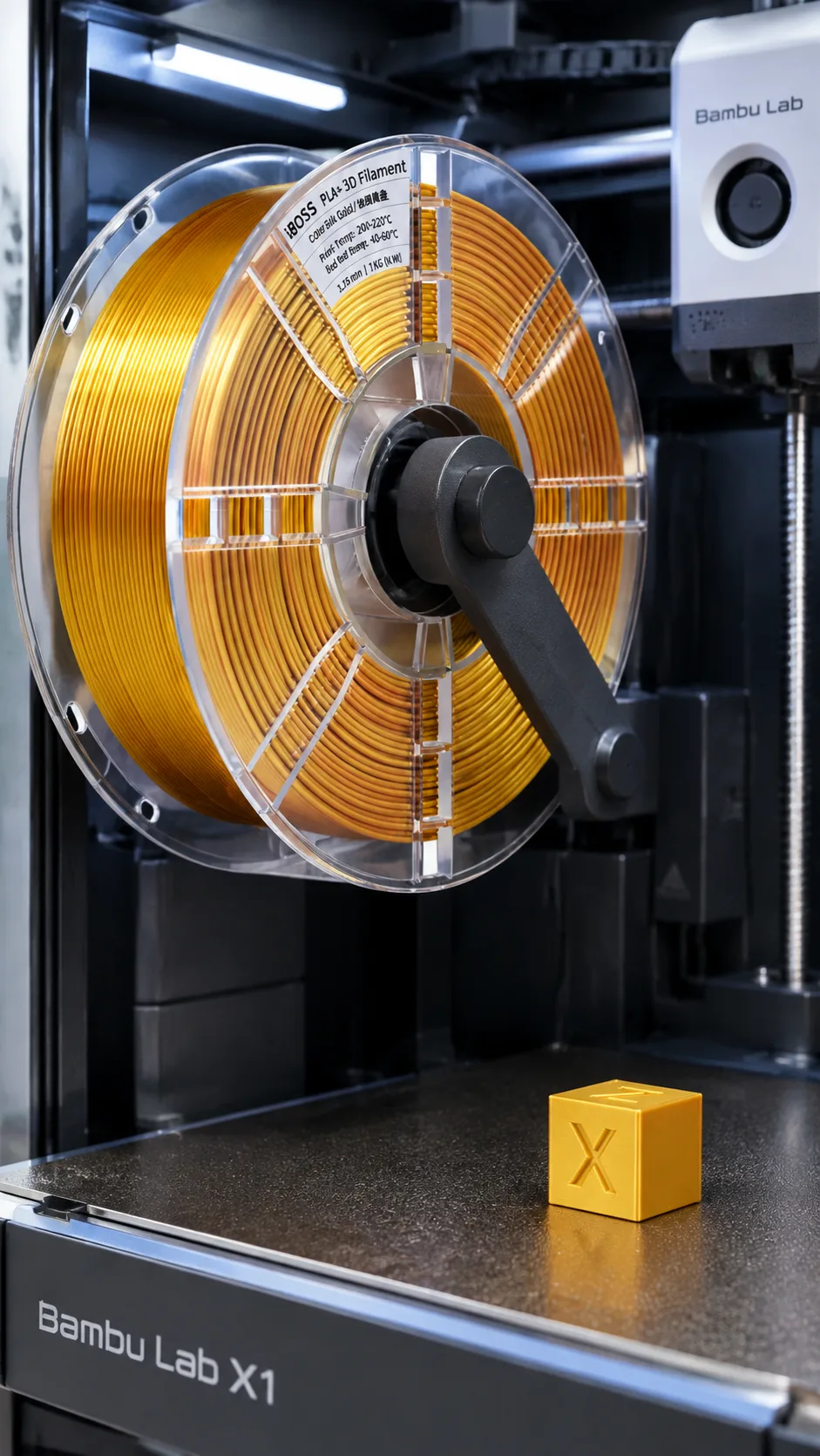
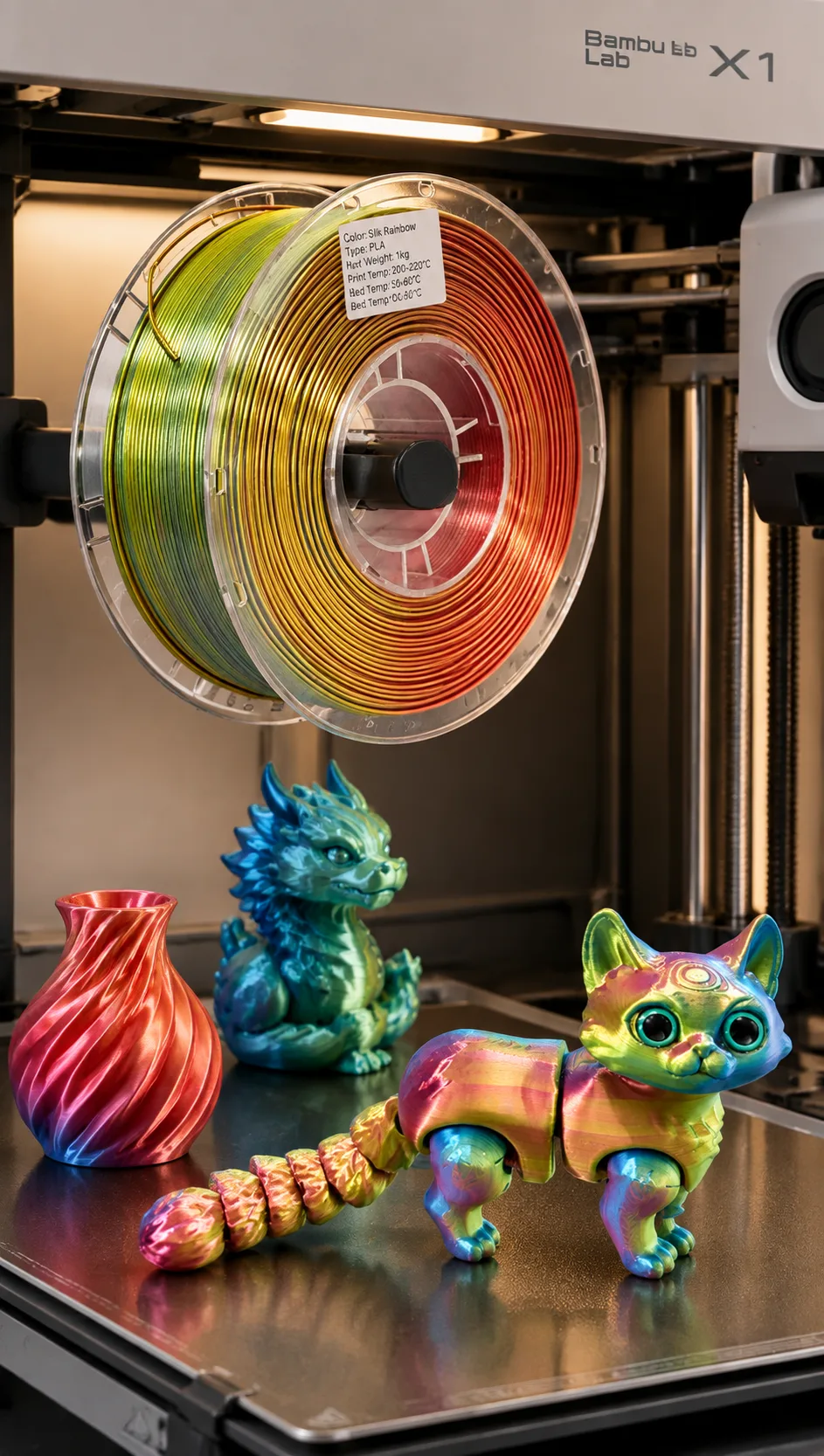
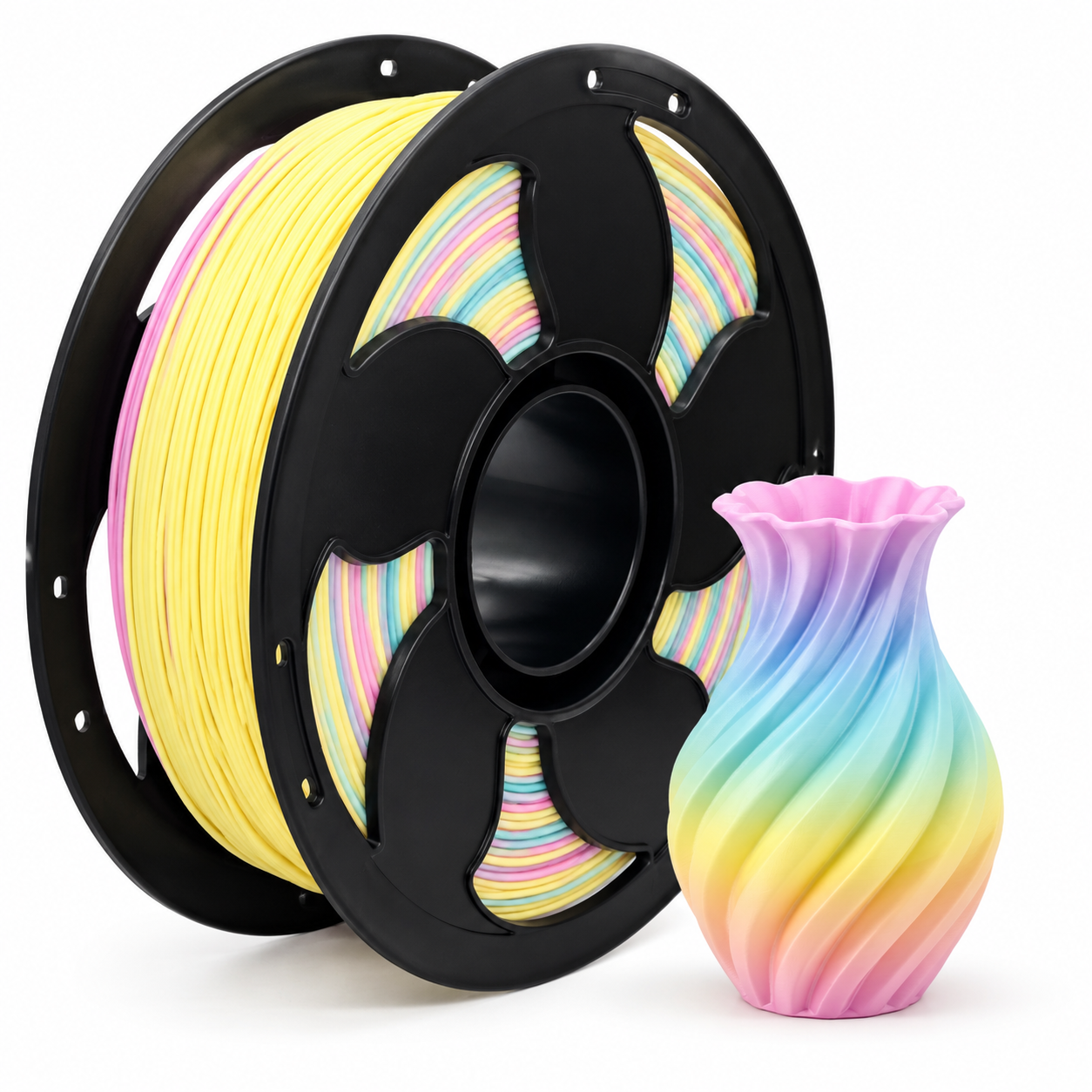
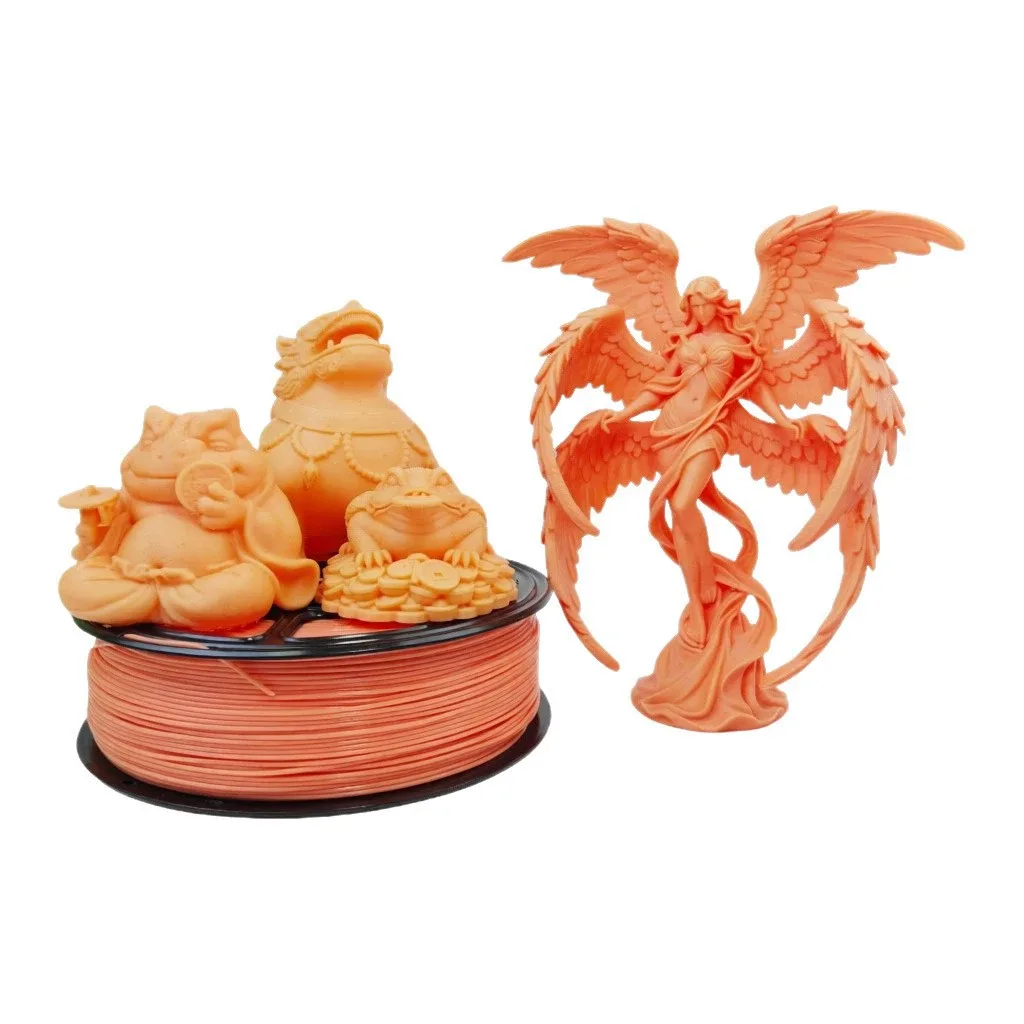
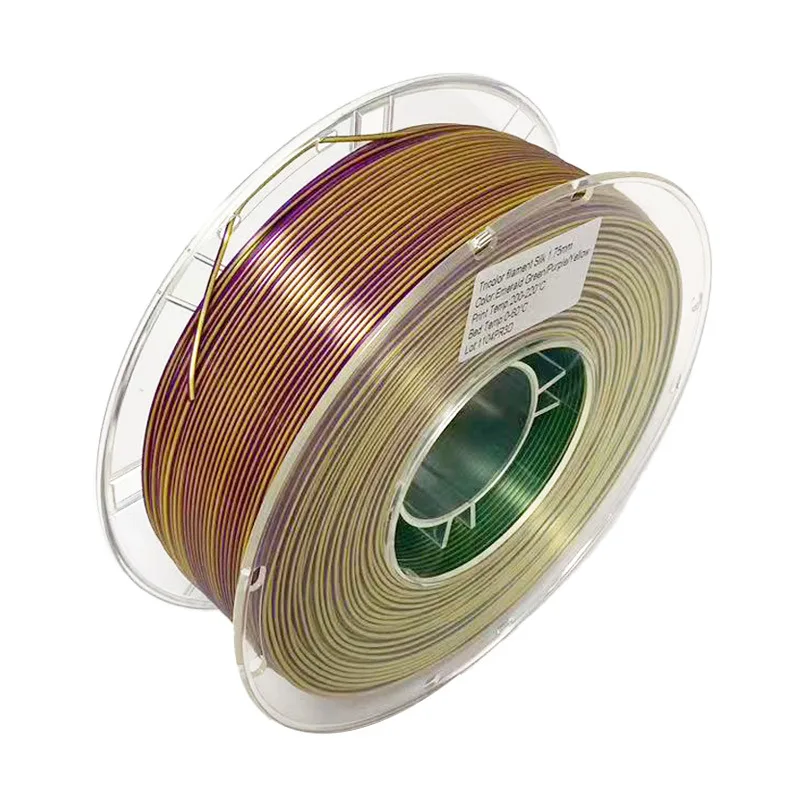
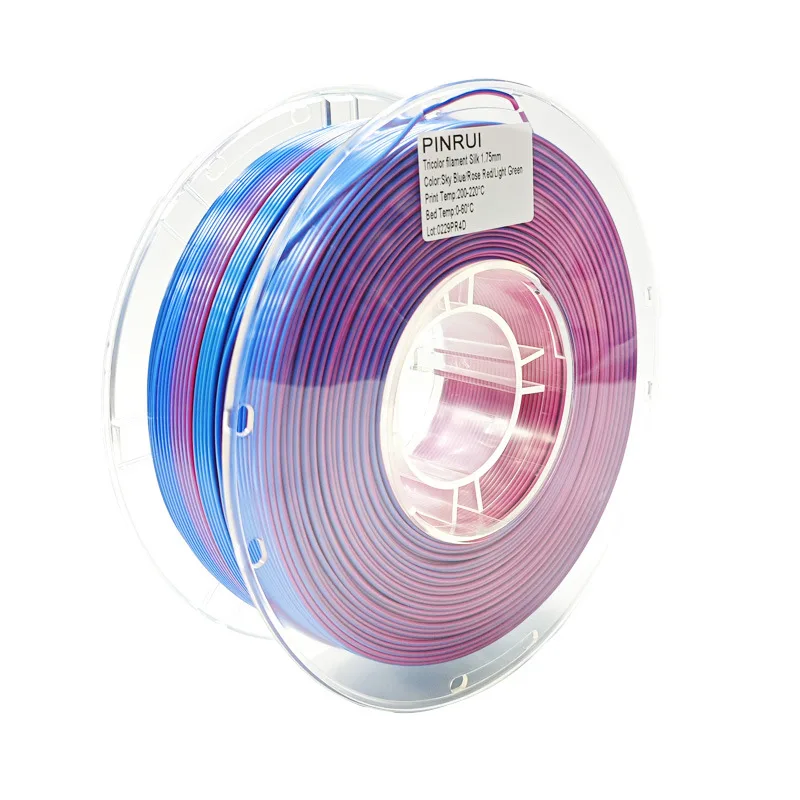
Brand: Yiqiu3D · Tri-color filament often looks muddy where the strands meet: the transitions land halfway through a face and the model reads as striped plastic rather than a gradient. This Silk PLA lays red, blue and green in a fixed sequence through every layer, so the colour roll travels smoothly along the print instead of jumping between bands, and the surface keeps a glossy silk sheen straight off the plate.

  • Silk colour is usually dullest exactly where it matters: on flat faces and at the seams. The silk compound in this filament reflects light along the extrusion path
  • Diameter drift is what turns a gradient spool into wasted hours: the strands thin out
  • Resellers lose margin when the next spool prints a different red. Each spool is wound with in-line diameter gauging
Compare filaments
Diameter 1.75mm
Material PLA
Quick Answer

What is Silk PLA filament and how does the tri-colour gradient work?

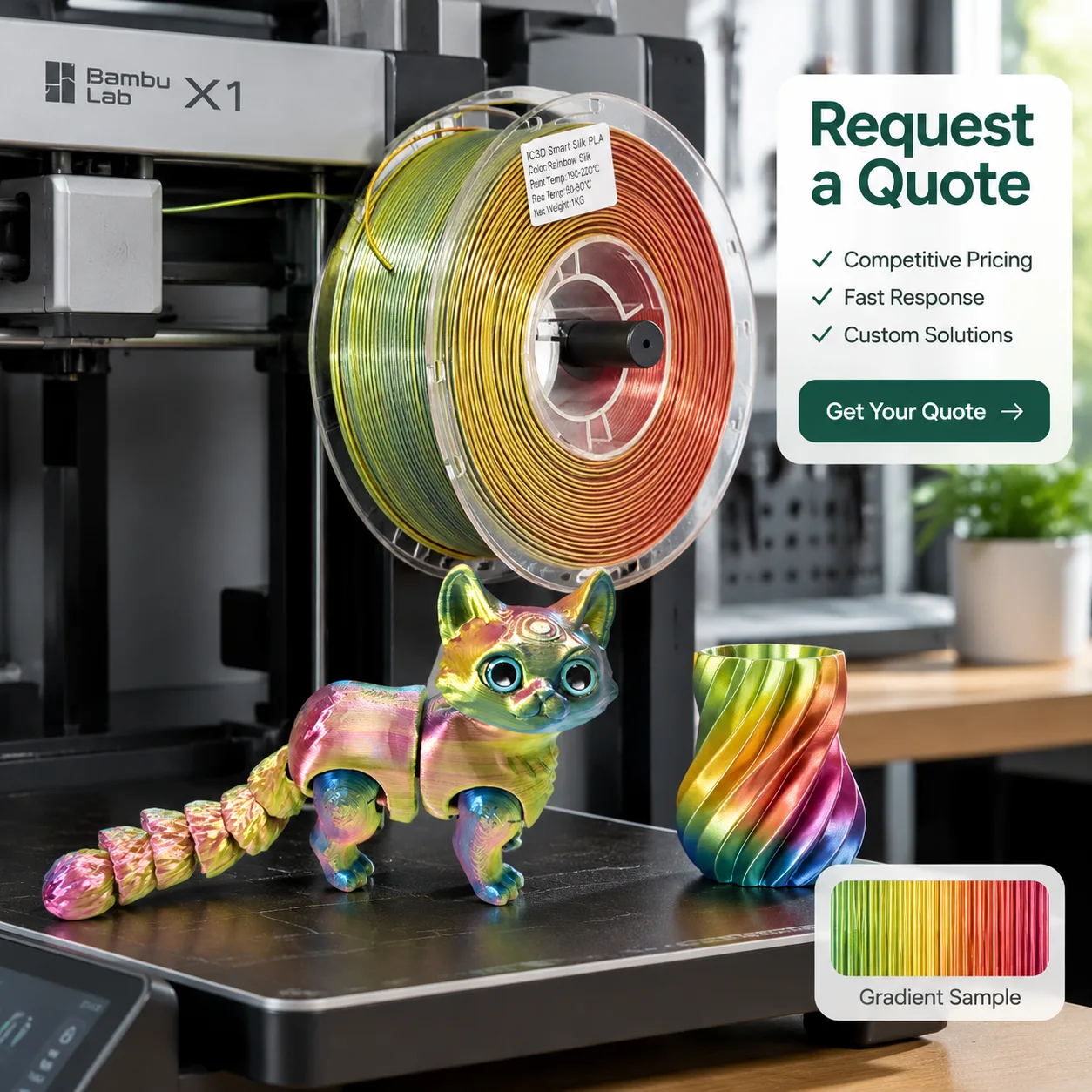
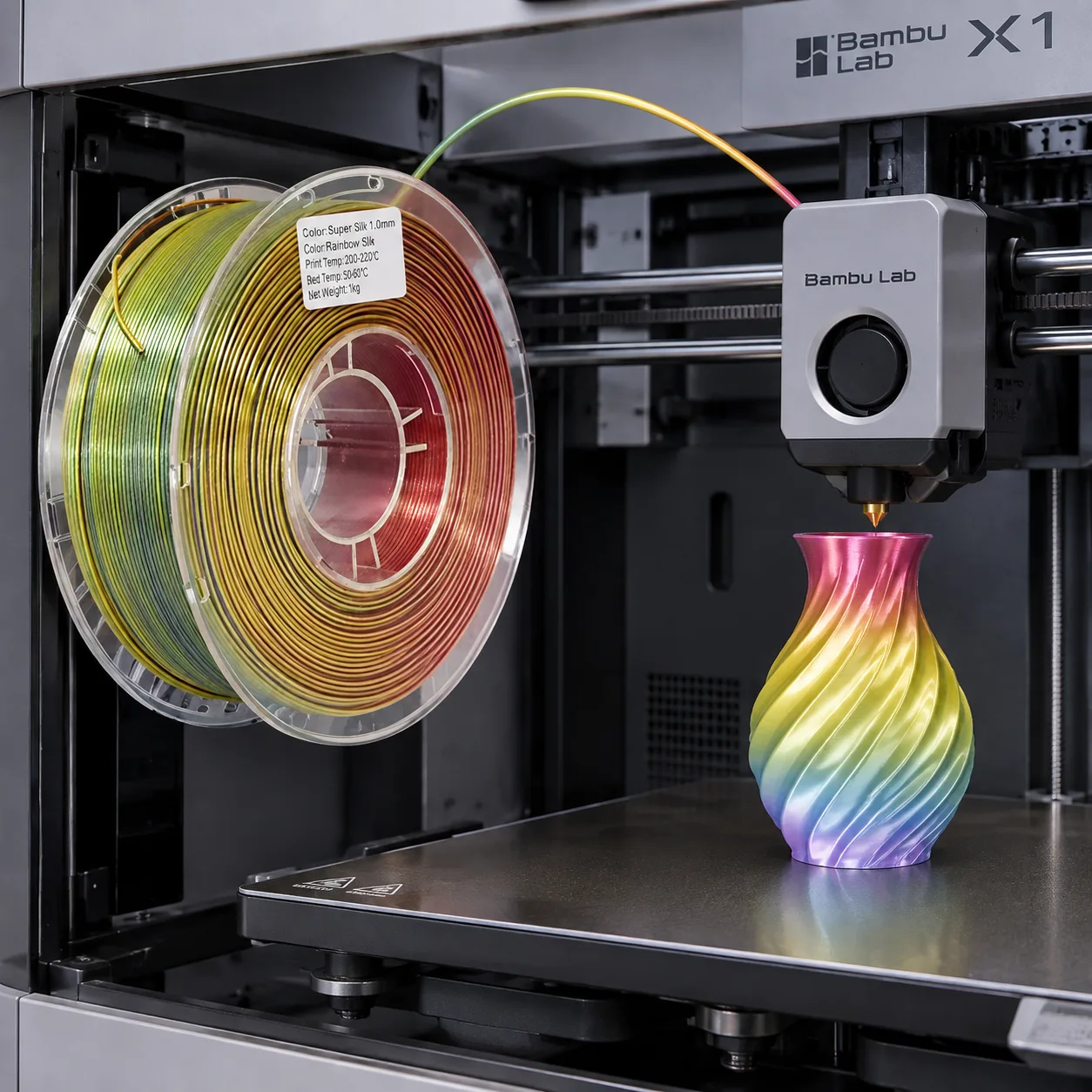
Silk PLA is PLA plastic with a polymer and pigment system that gives the printed surface a high-gloss, silky sheen; the base material is still PLA plastic, not a metal. In this tri-colour version, red, blue and green are laid along the filament in a fixed repeating sequence, so the colour shifts through the print as the strand is consumed, and the transition point moves depending on the model height.

Full answers below
Is it right for my project?

Best for: Where surface finish sells the product: display models, awards and shop-window prototypes - available in 9 colours; 1kg spools. Not ideal for: Avoid outdoor or heat-exposed items - the sheen dulls; choose ASA for weather resistance - available in 9 colours; 1kg spools.

Print settings

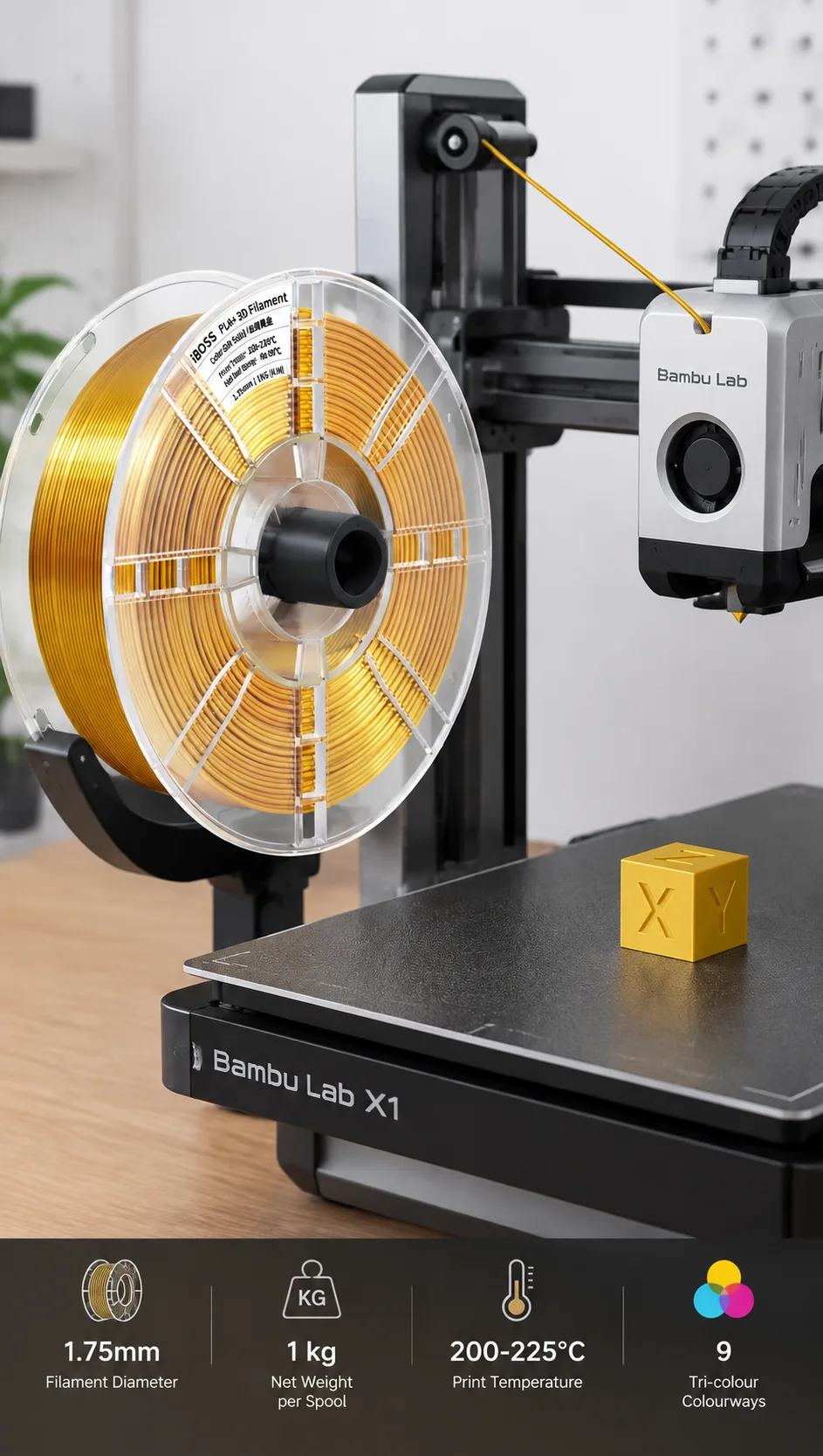
Nozzle 200-225°C

01 · Why this one

Product highlights

3 reasons

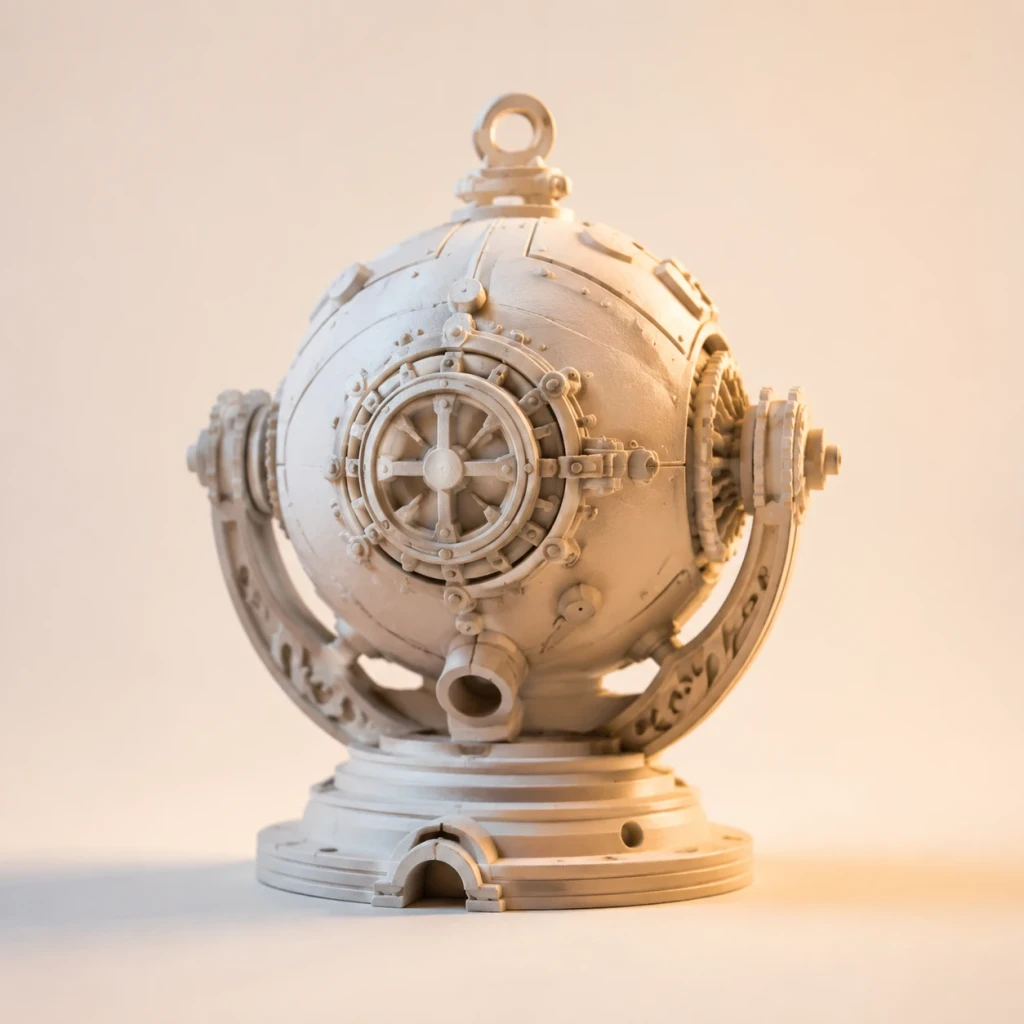
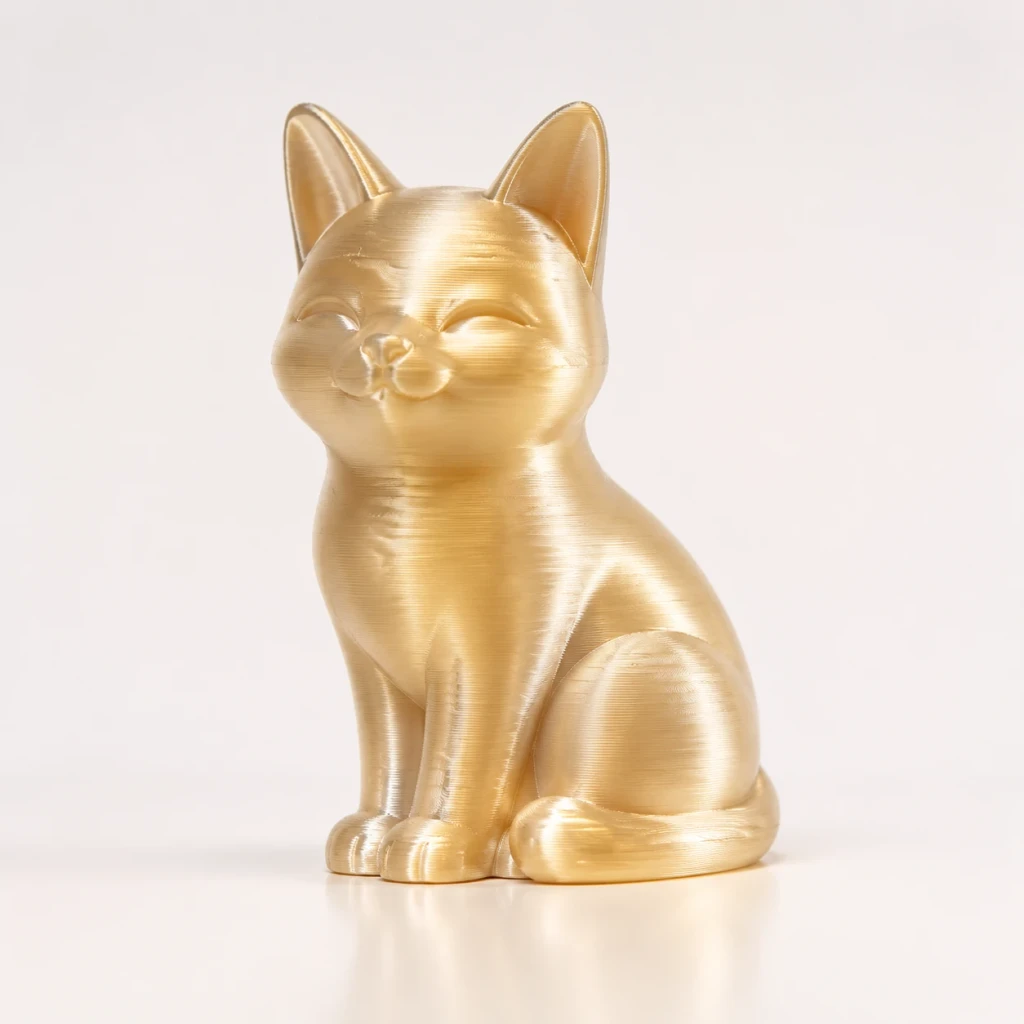
Silk colour is usually dullest exactly where it matters: on flat faces and at the seams. The silk compound in this filament reflects light along the extrusion path, so red, blue and green each read as deep saturated tone, and the gloss survives the whole print instead of fading after the first layers. Gifts, figurines and display pieces come off the plate photo-ready, with no sanding, priming or clear coat.

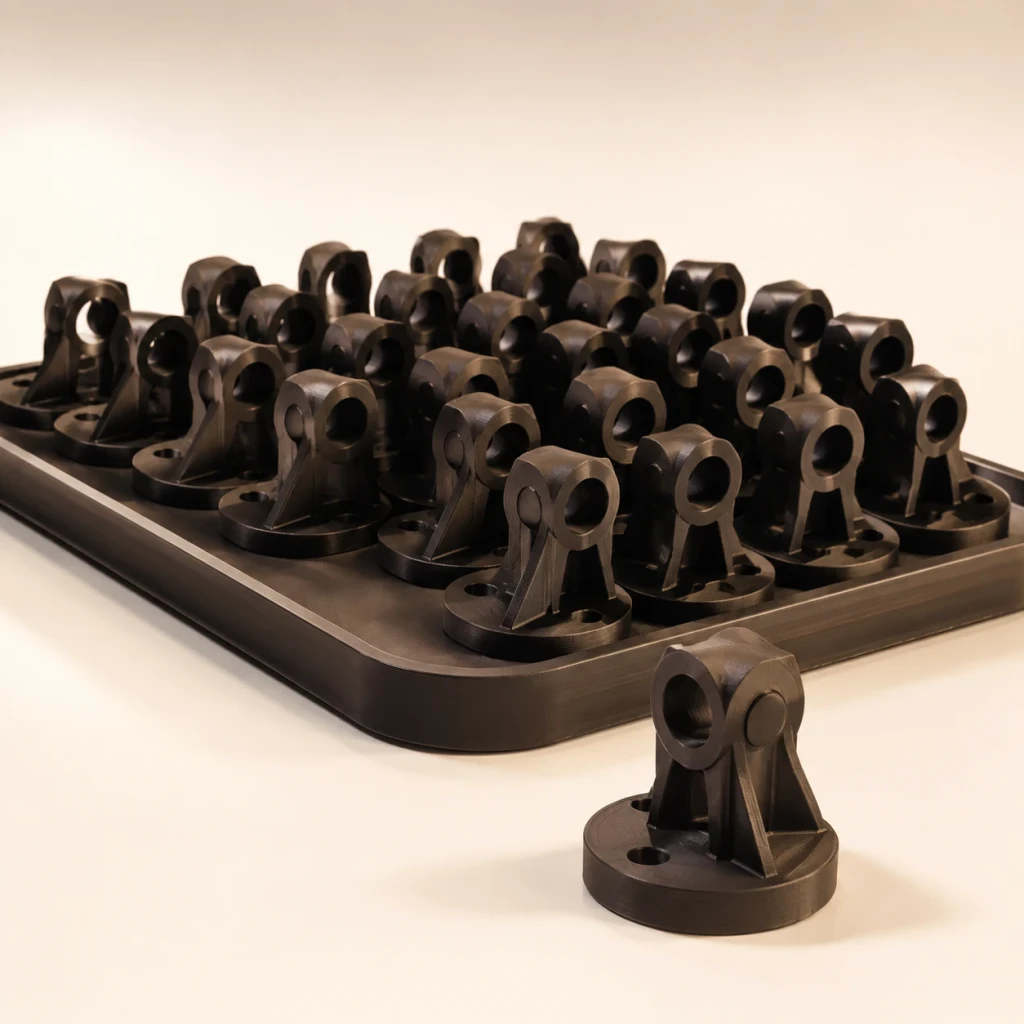
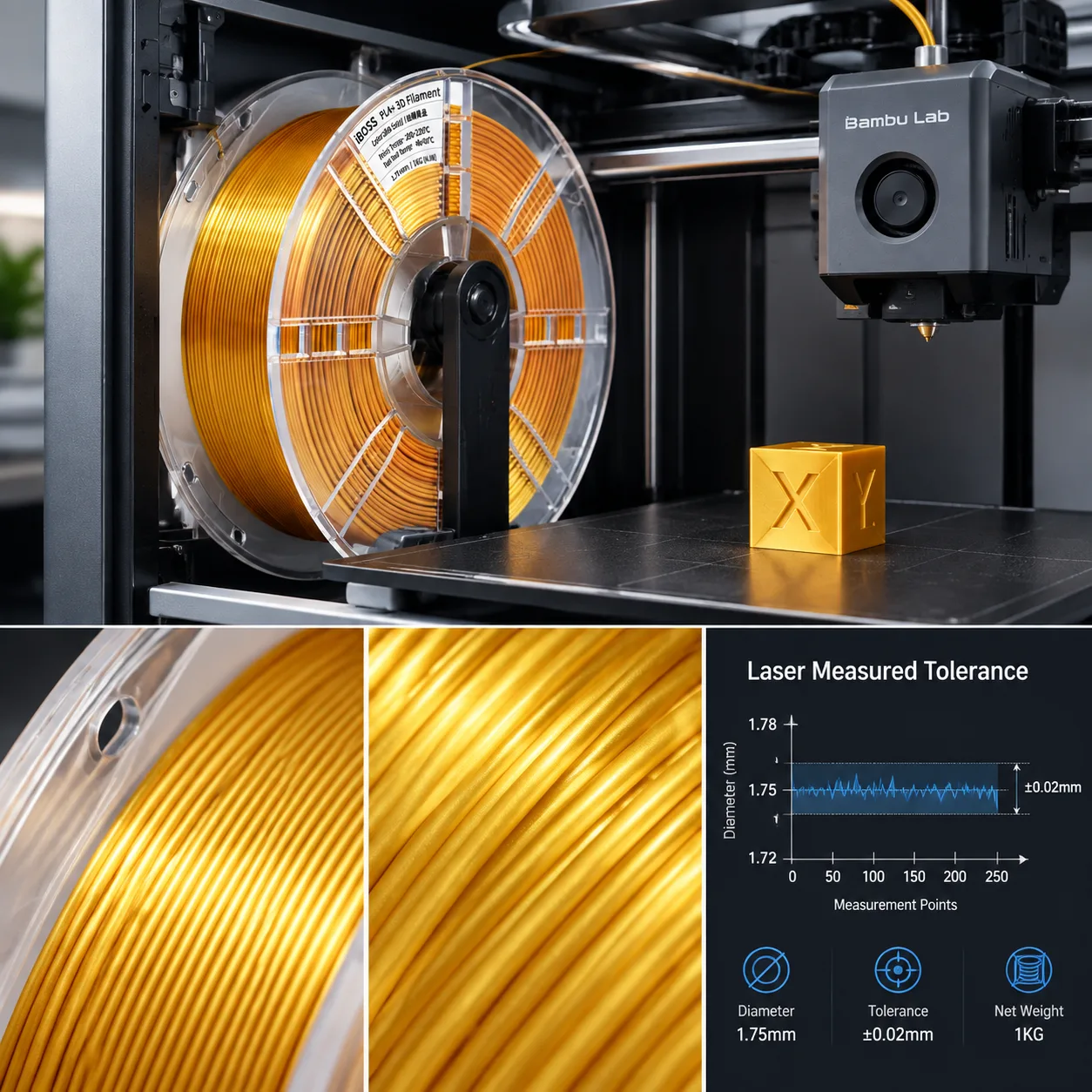
Diameter drift is what turns a gradient spool into wasted hours: the strands thin out, the extruder slips and the colour sequence smears. The filament is held to a 1.75mm diameter tolerance so the melt flow stays constant and the printed bead stays uniform from the first layer to the last. It runs at 200-225 C on a standard FDM printer with a 0.4mm nozzle, so the same profile carries across every colour.

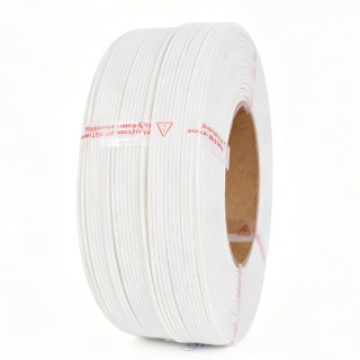
Resellers lose margin when the next spool prints a different red. Each spool is wound with in-line diameter gauging, dye lots are segregated so the three-colour sequence stays fixed, and every spool leaves the line vacuum sealed. Reordering the same colourway gives you the same gradient and the same sheen, which is what keeps repeat buyers on the same SKU.

Technical Data

Specifications

Diameter 1.75mm
Material PLA

Print Profile

Silk PLA Tri Color prints best at 200-225°C nozzle.

Nozzle Temp200-225°C

Spool Specification

Spool details for your feeding and handling setup.

Gross Weight1.3 kg
LengthSpool Pack
Spool Size (L×W×H)21 × 21 × 7 cm
Pack FormatPiece

Attributes

Country / Regionchina
HS Code39169050
Item No.silk-pla-tri-color-gradient-color
Product Name PLA Filament
Grade PLA
Cross-Section Round
Application 3DPrinting
Appearance Various Colors
Length Spool Pack
Before You Ask

Frequently Asked Questions

What is Silk PLA filament and how does the tri-colour gradient work?
Silk PLA is PLA plastic with a polymer and pigment system that gives the printed surface a high-gloss, silky sheen; the base material is still PLA plastic, not a metal. In this tri-colour version, red, blue and green are laid along the filament in a fixed repeating sequence, so the colour shifts through the print as the strand is consumed, and the transition point moves depending on the model height.
Which 3D printers is this filament compatible with?
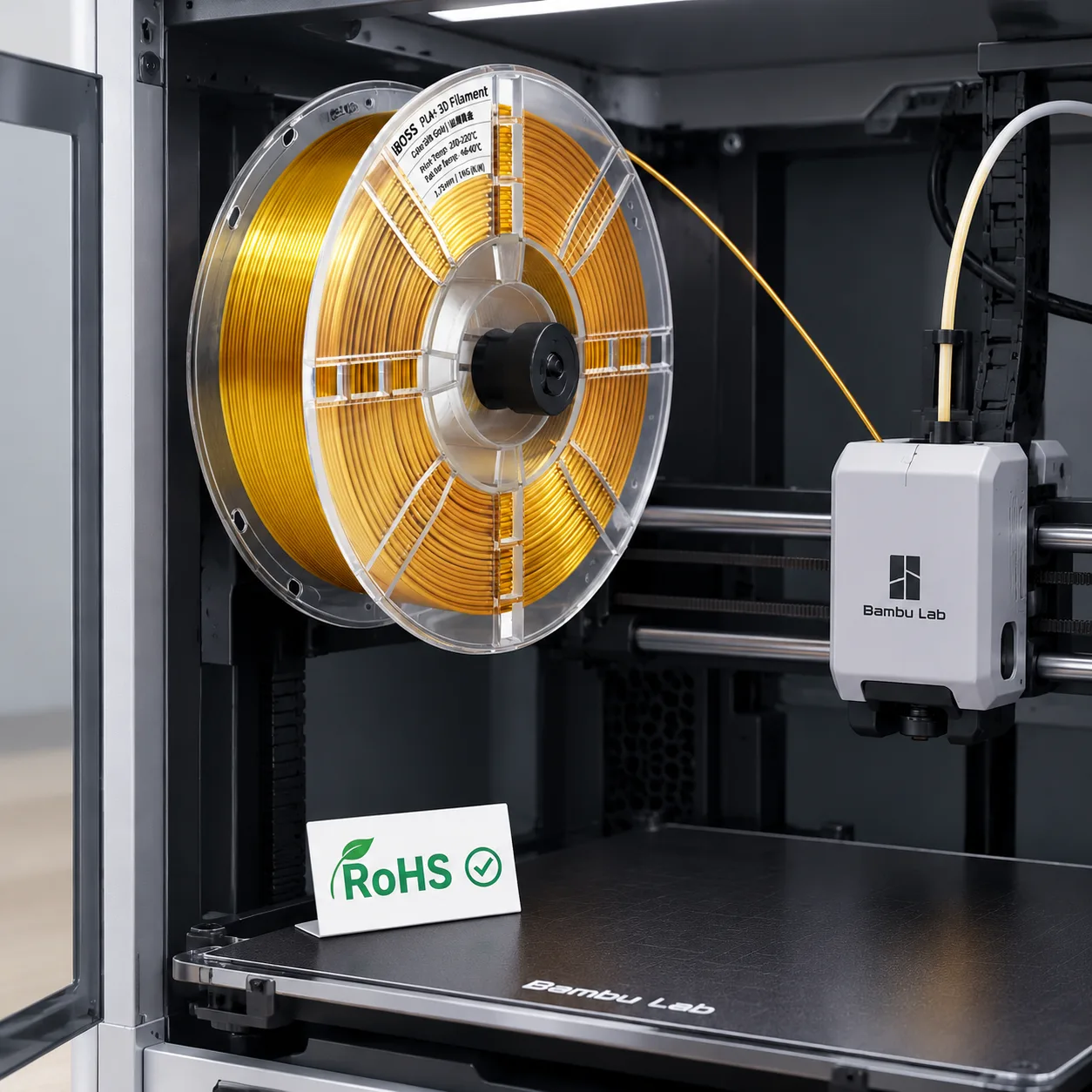
It runs on standard FDM printers with a 1.75mm filament path and a 0.4mm nozzle, including Bambu Lab and Creality style machines and other common desktop printers. Confirm a 1.75mm filament path before ordering for an uncommon machine.
What printing settings do you recommend?
Print at 200-225 C. Keep part cooling moderate so the layers bond while the silk sheen is preserved, and lower the first layer speed if adhesion is difficult on your build plate.
How much filament is on one spool, and roughly how long is it?
1 kg net filament per spool at 1.75mm diameter, approximately 335 m of filament (calculated from standard PLA density, so treat it as an estimate). That is the same print capacity as a standard 1kg PLA spool.
Which colours are available in this series, and what is the lead colour?
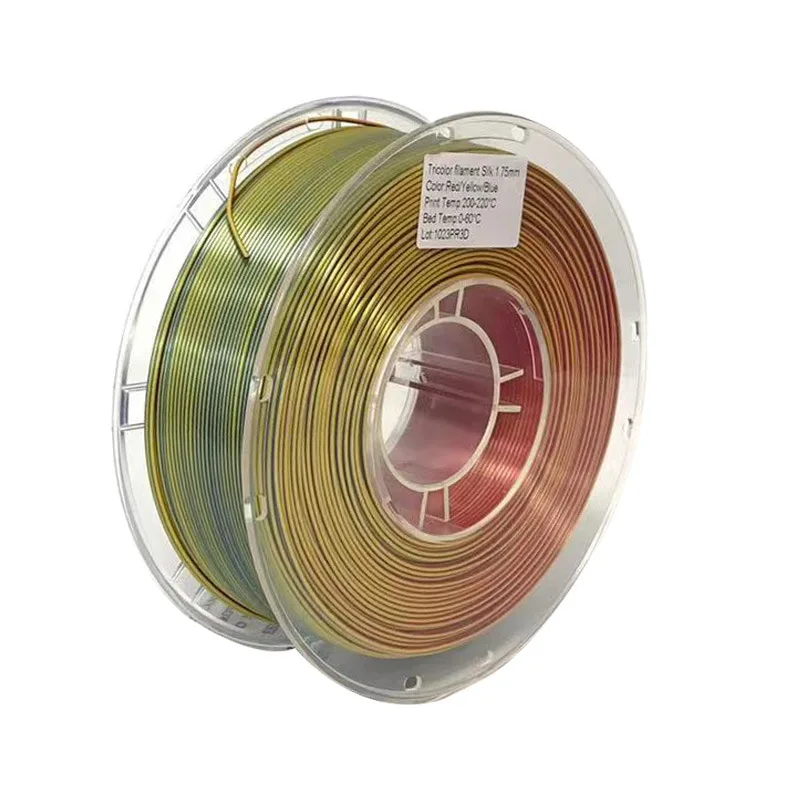
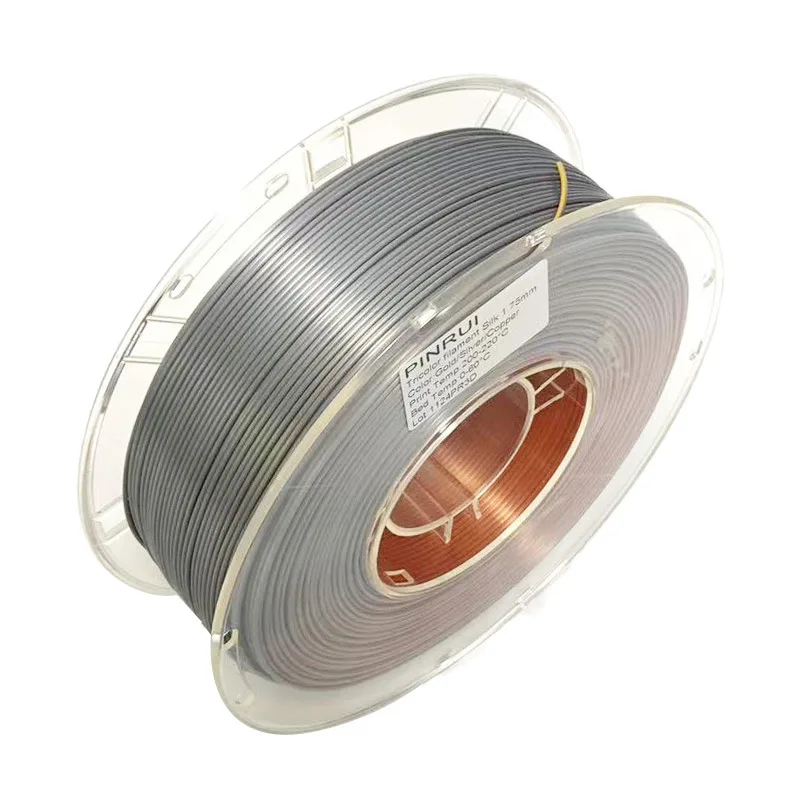
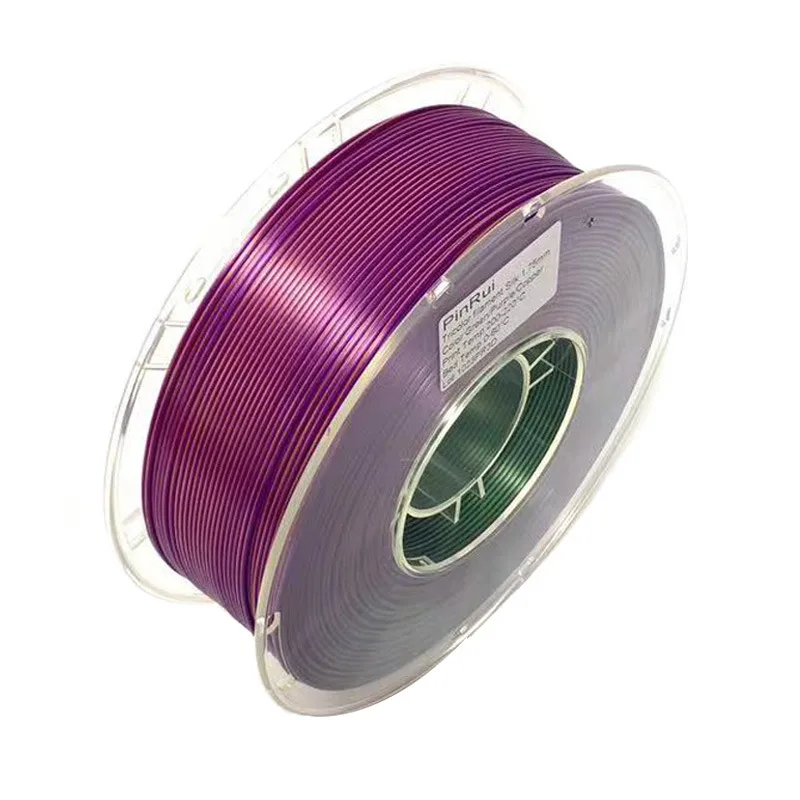
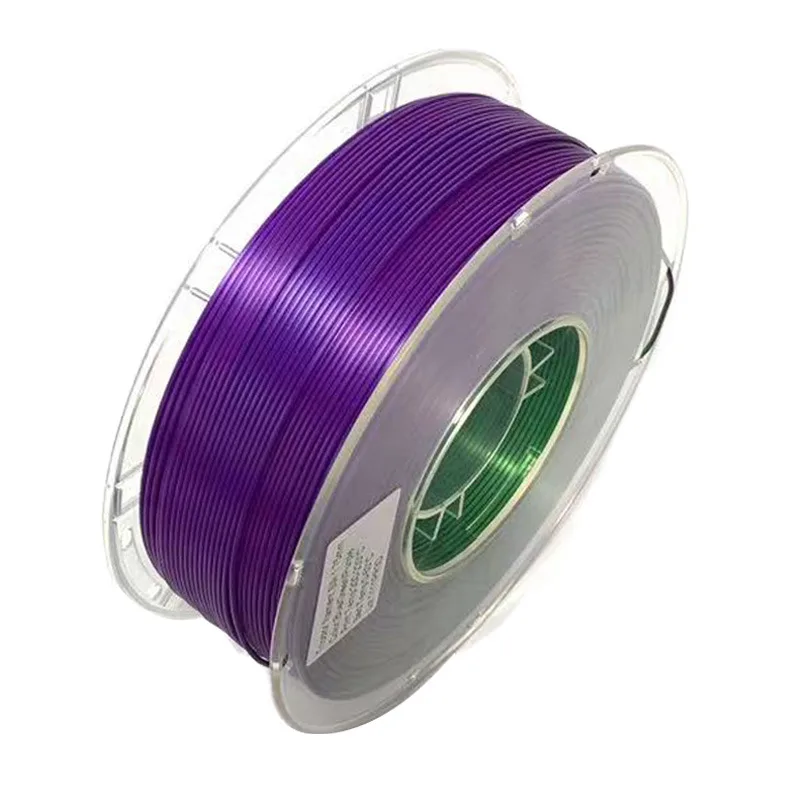
The lead colour is Silk Tri Color Red/Blue/Green. The series lists 9 tri-colour colourways, including Red/Yellow/Blue, Blue/Green/Purple, Gold/Silver/Copper and Dark Green/Purple/Yellow. Tell us which colourways sell in your market and we quote them together.
What are the typical applications for this tri-colour Silk PLA?
Decorative and display work where the finish sells the item: gift pieces, figurines, collector items, retail displays and presentation models. For parts under load or exposed to sustained heat, a PETG or PLA+ grade is the better choice, because the sheen dulls with heat.
How should the spools be stored, and are they protected against moisture?
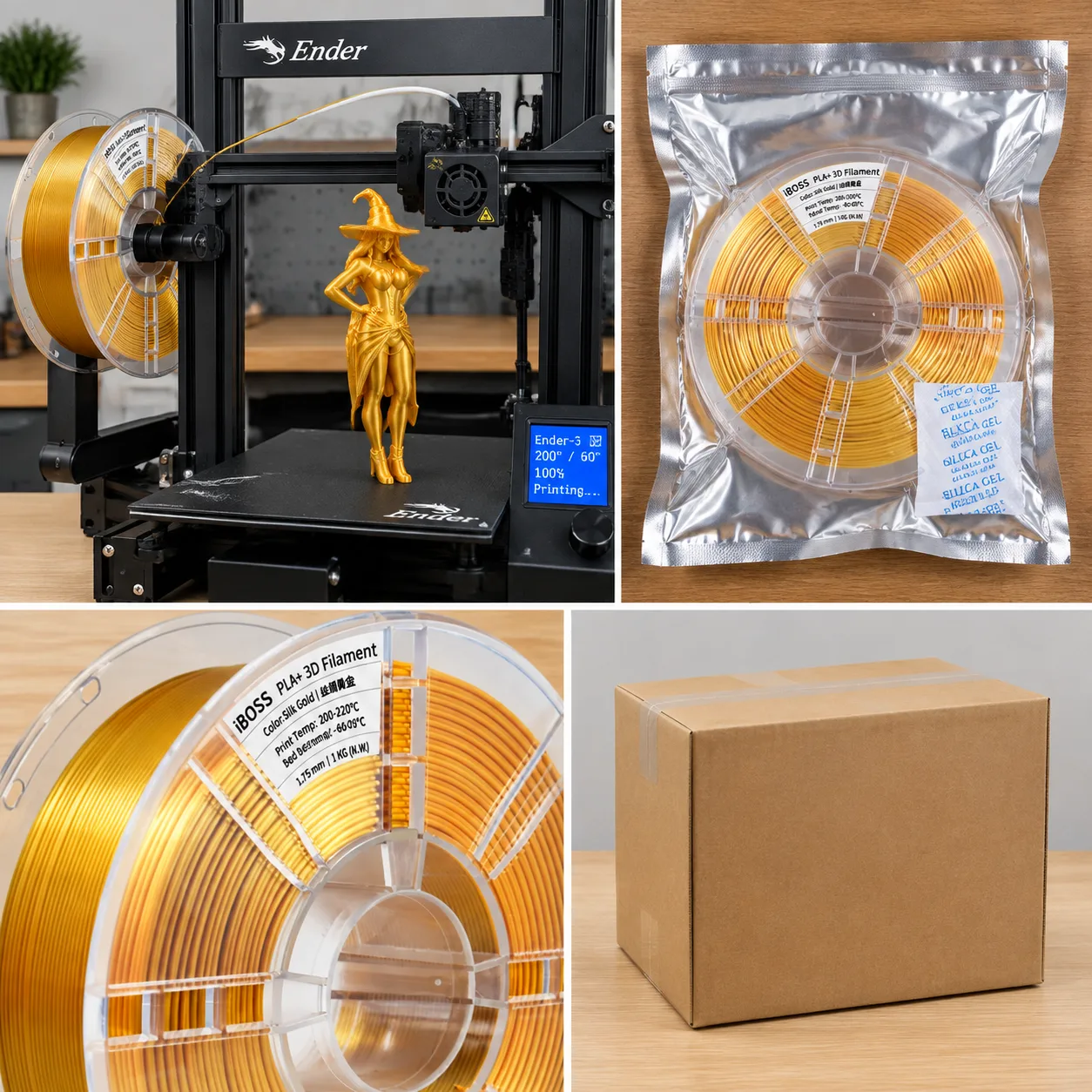
Every spool is vacuum sealed when it leaves the line. Keep the spool in the sealed bag until use, then store it closed with desiccant at below 30 C and below 50 percent relative humidity. Dry an open spool before a long print, and keep it away from heat and direct sunlight.

Documentation & Downloads

Everything we publish for this material, in one place.