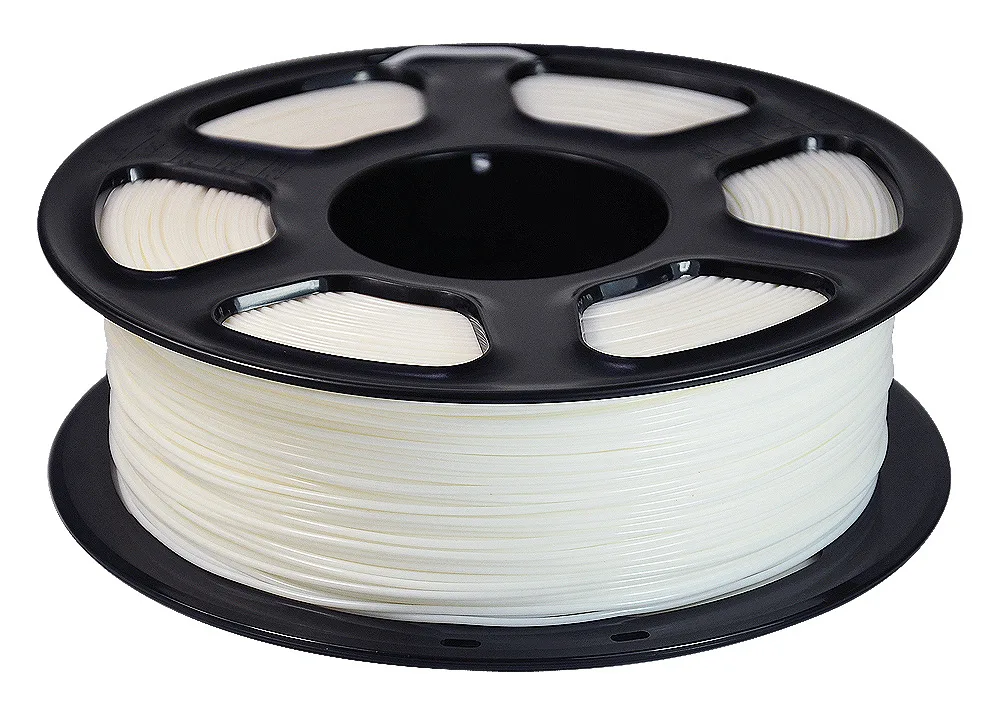
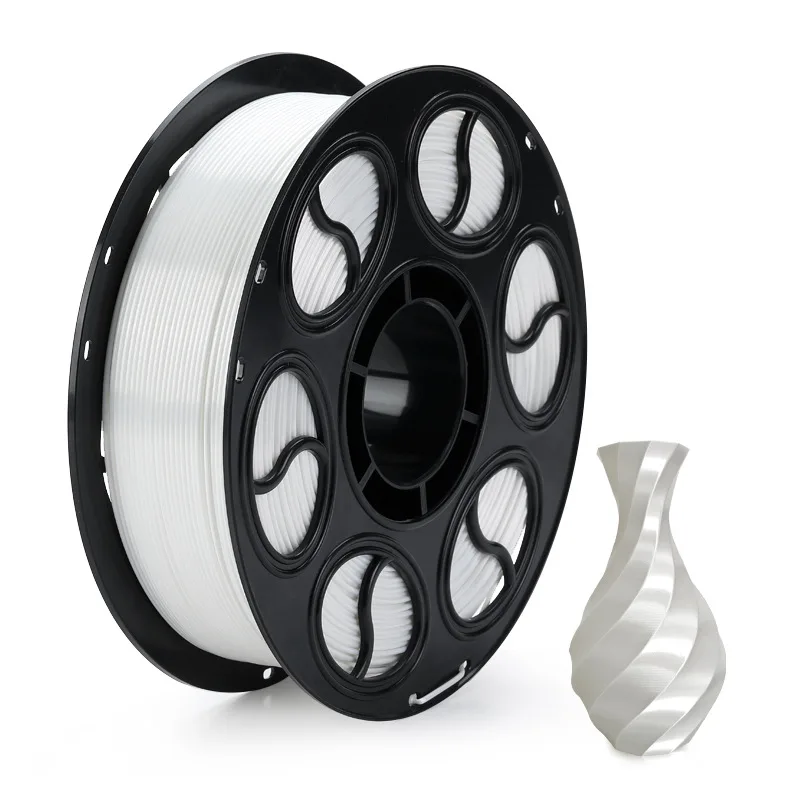
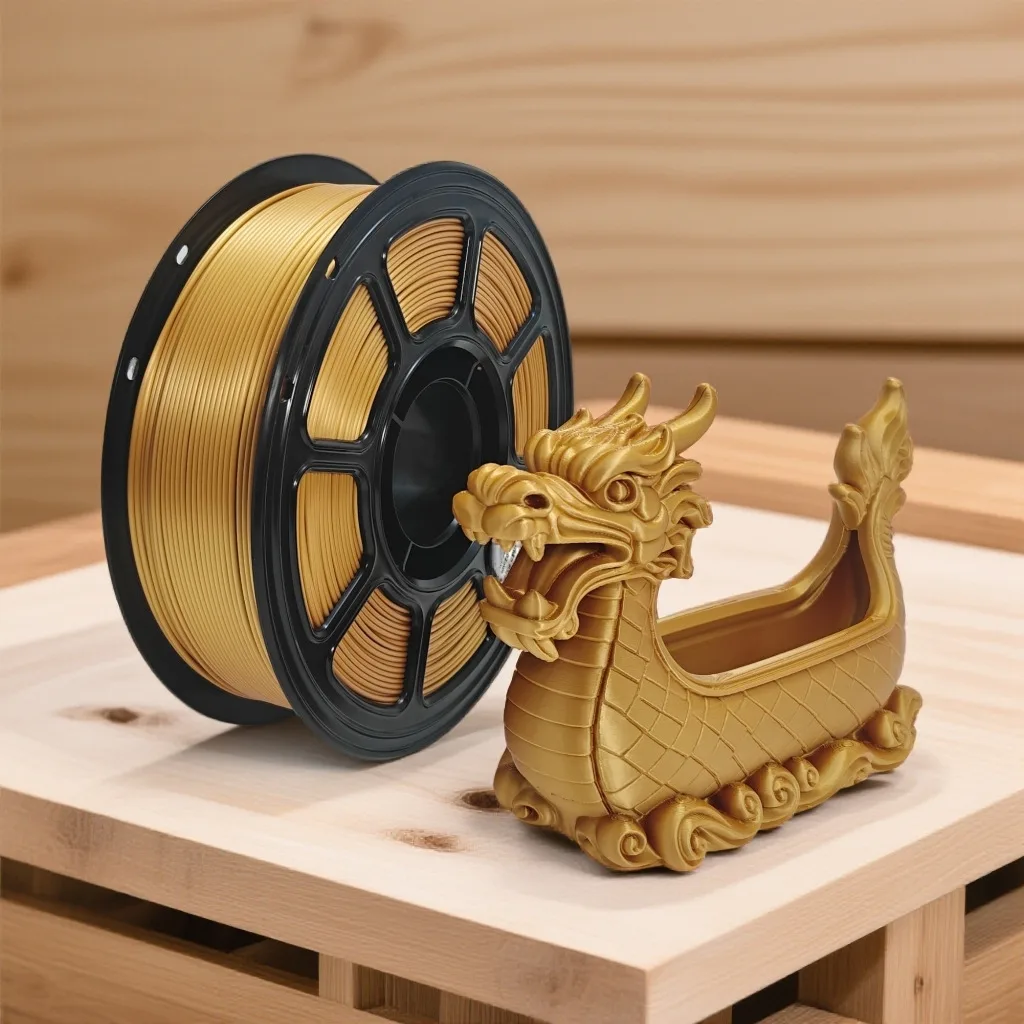



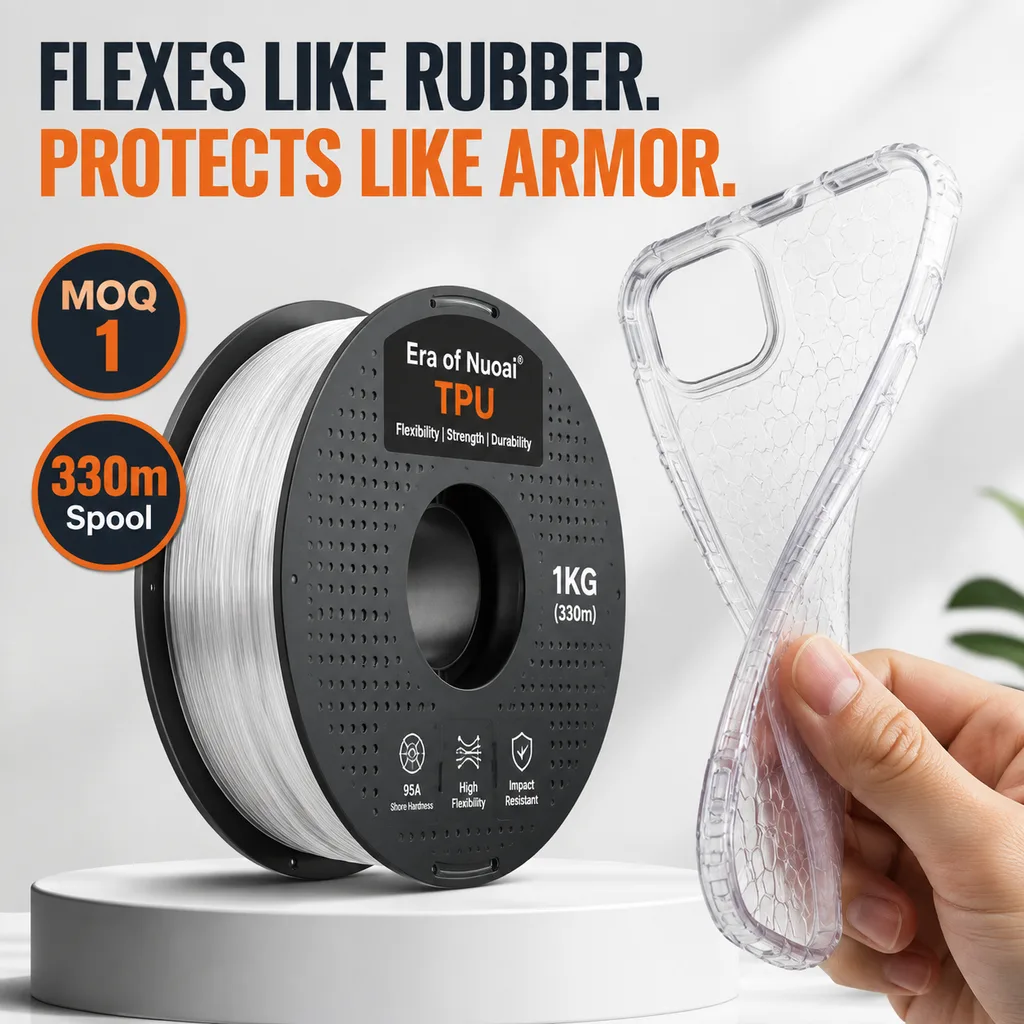
TPU 3D Printer Filament 1.75mm 1kg 330m Flexible Rubber Like

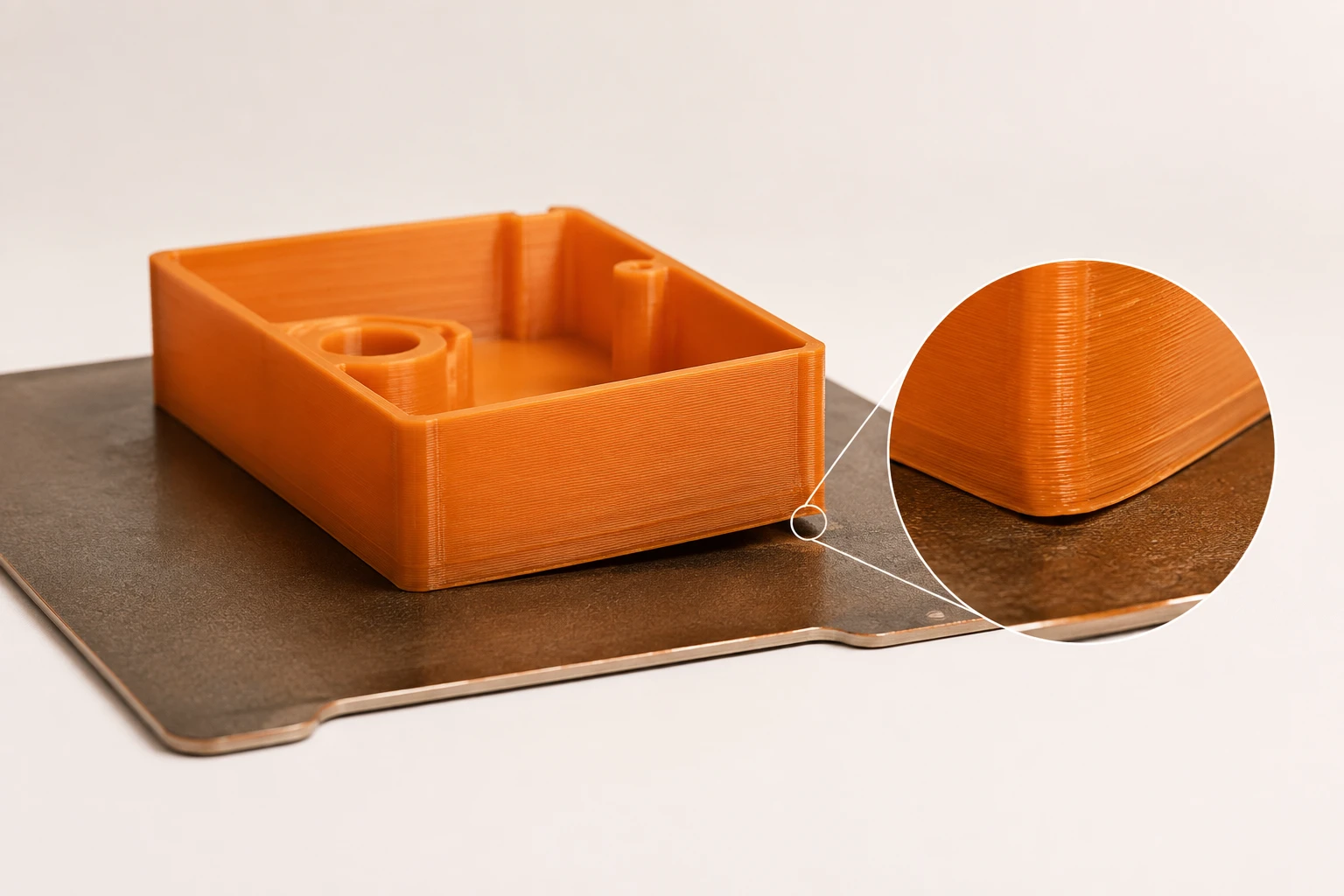
Brand: Yiqiu3D · Soft filament is sold as flexible and then fails as fragile: the part takes a shape once and cracks at the fold the second time it is stretched. This Flexible TPU Filament 330m range is specified for parts that flex again and again - high elasticity, good abrasion and oil resistance, and shock absorption - so straps, sleeves and bumpers keep working instead of tearing at the layer line.

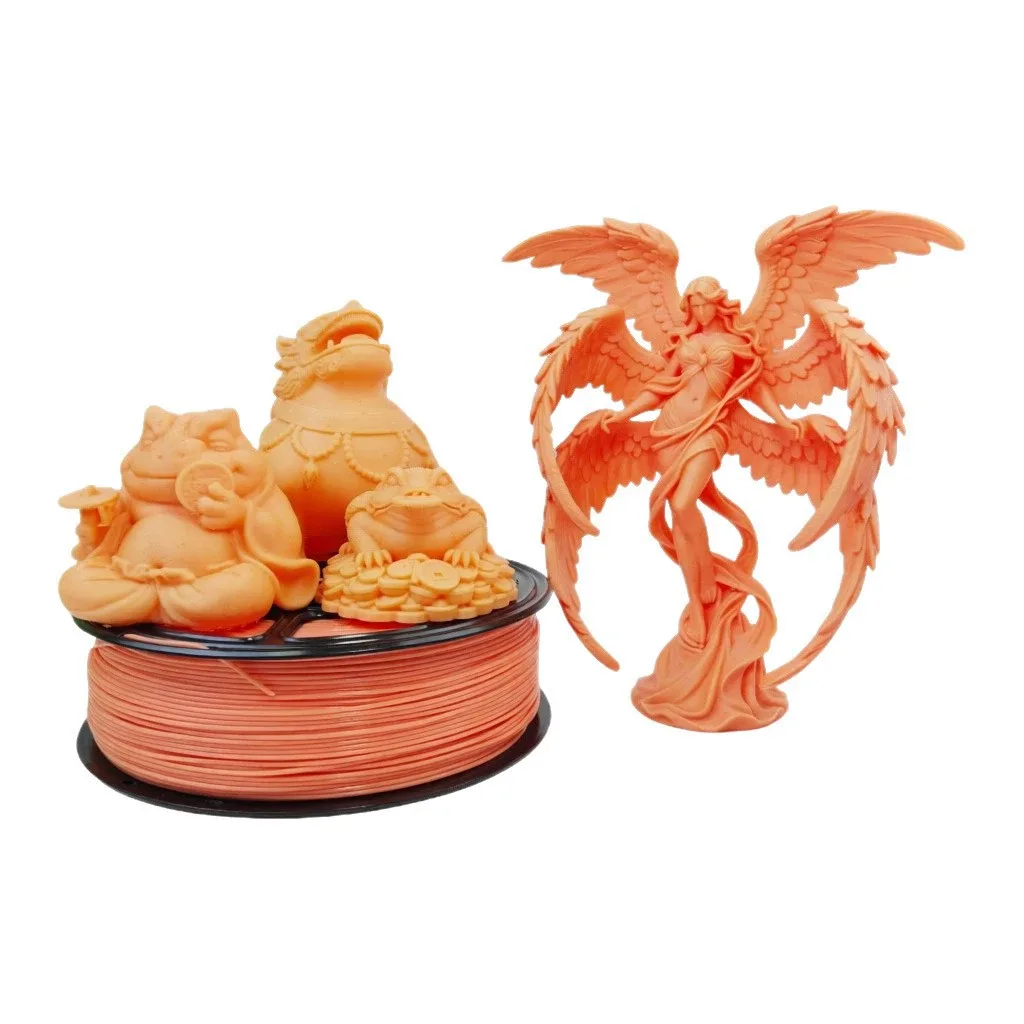
  • Ordering by colour is where flexible-filament buying usually slows down: buyers see 'coloured' and cannot agree a shade with the factory. We ship coloured TPU with the shade list confirmed with the supplier per order
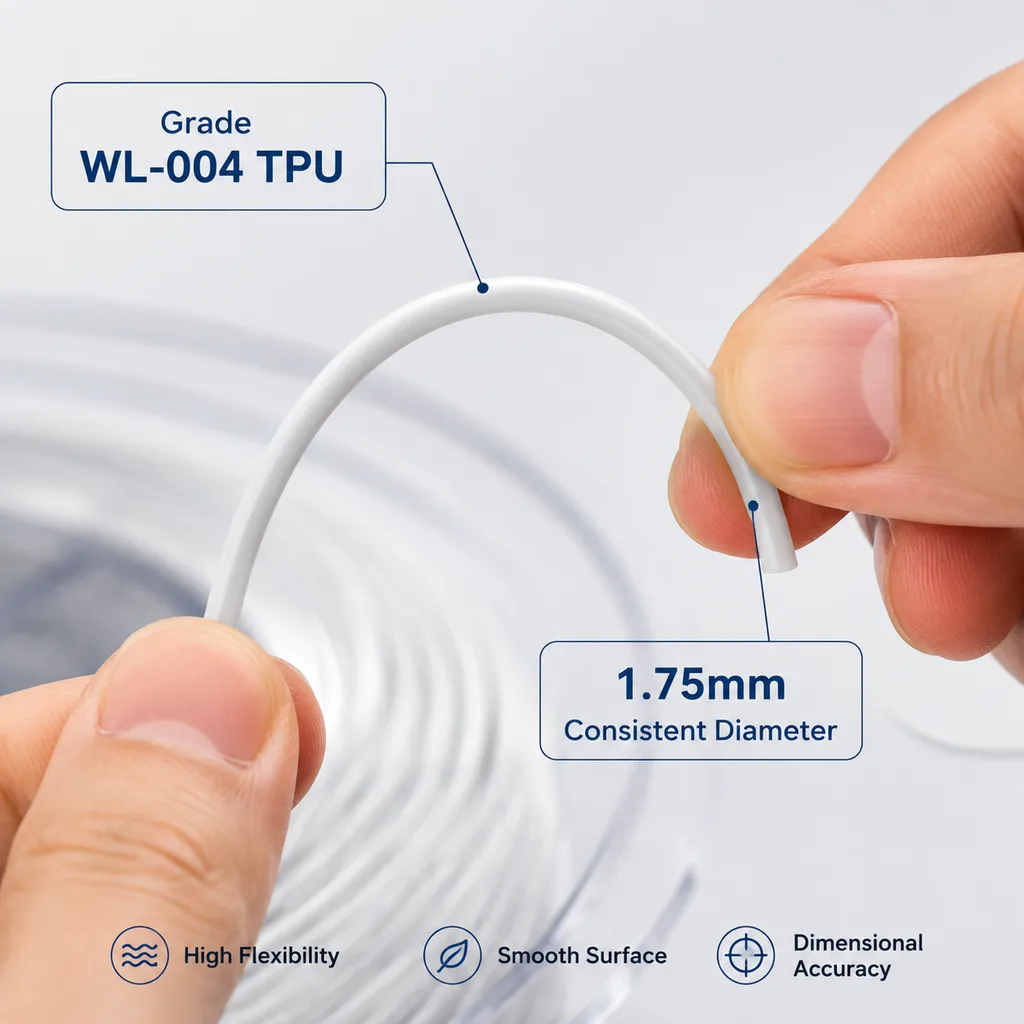
  • 1.75mm diameter on a standard round spool
  • TPU is soft filament: run it on a direct-drive or short Bowden extruder at slow print speeds or the strand buckles between the drive gear and the nozzle. Dropped into that window it feeds like a normal FDM material on Bambu Lab
Compare filaments
Diameter 1.75mm
Material TPU
Quick Answer

How does TPU survive repeated flexing where other filaments crack?

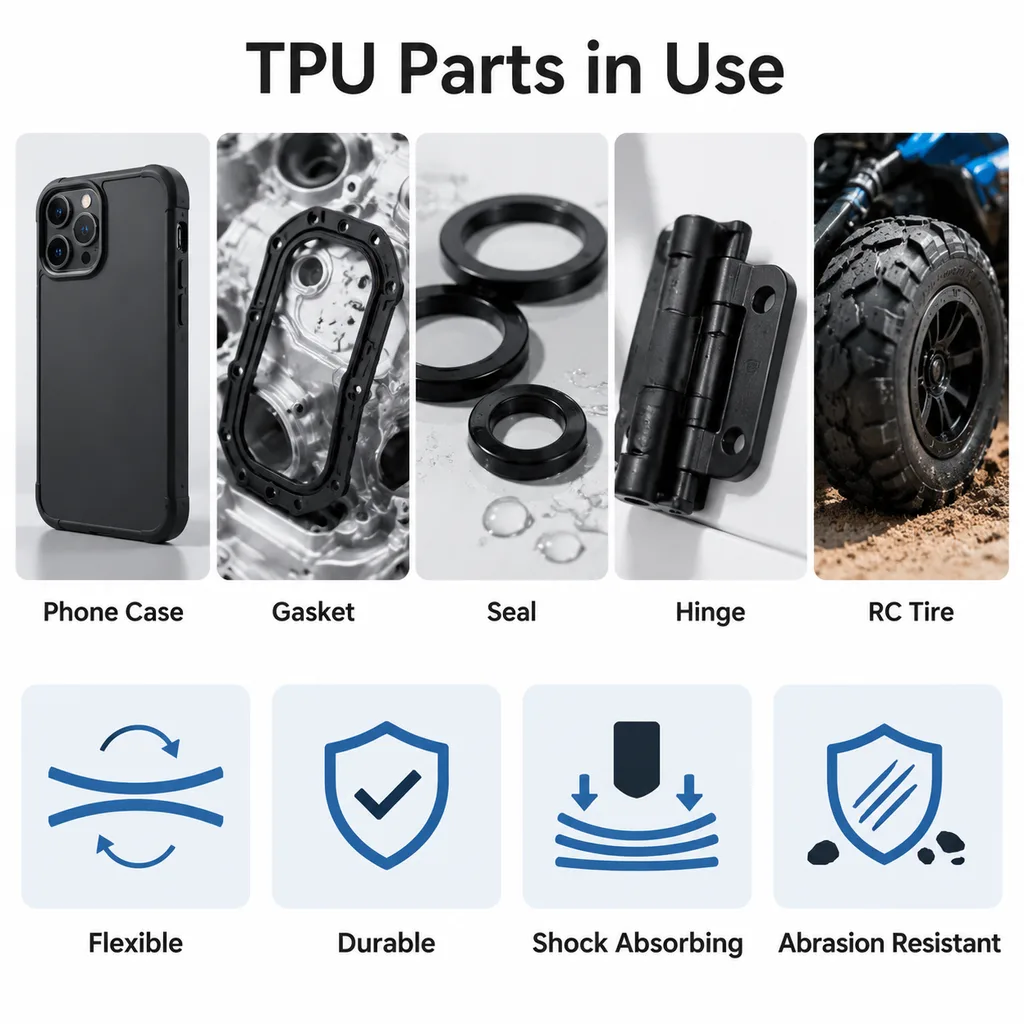
TPU is an elastic polymer, not a rigid one: it stores and returns strain instead of building the stress that splits a rigid layer line. In practice a printed strap, sleeve or bumper can be stretched and released many times without the whitening and cracking you see on a rigid filament at the same fold.

Full answers below
Is it right for my project?

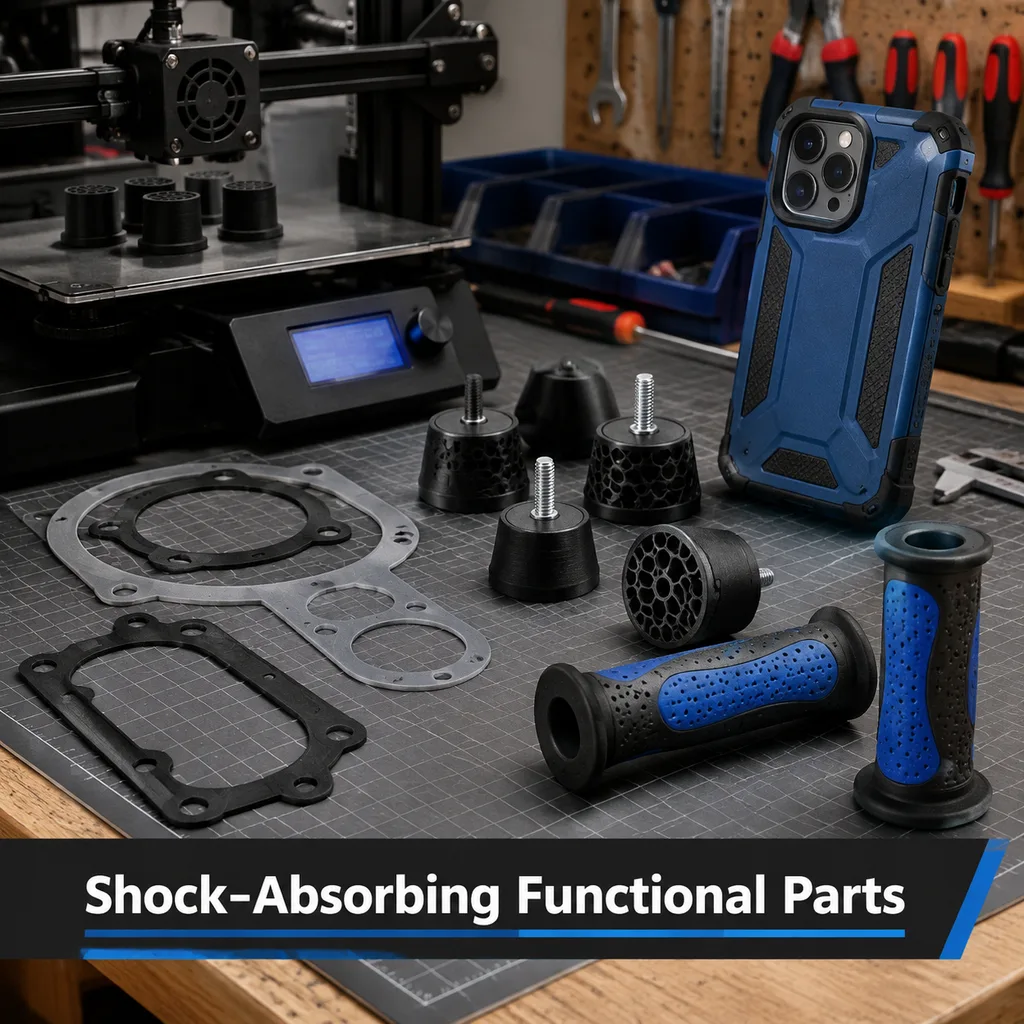
Best for: Where a part must bend and recover: wearables, grips and protective bumpers - 1kg spools; lead colour Colored. Not ideal for: Avoid on direct-drive-less setups at high speed - flexible filament needs a suitable extruder - 1kg spools; lead colour Colored.

Print settings

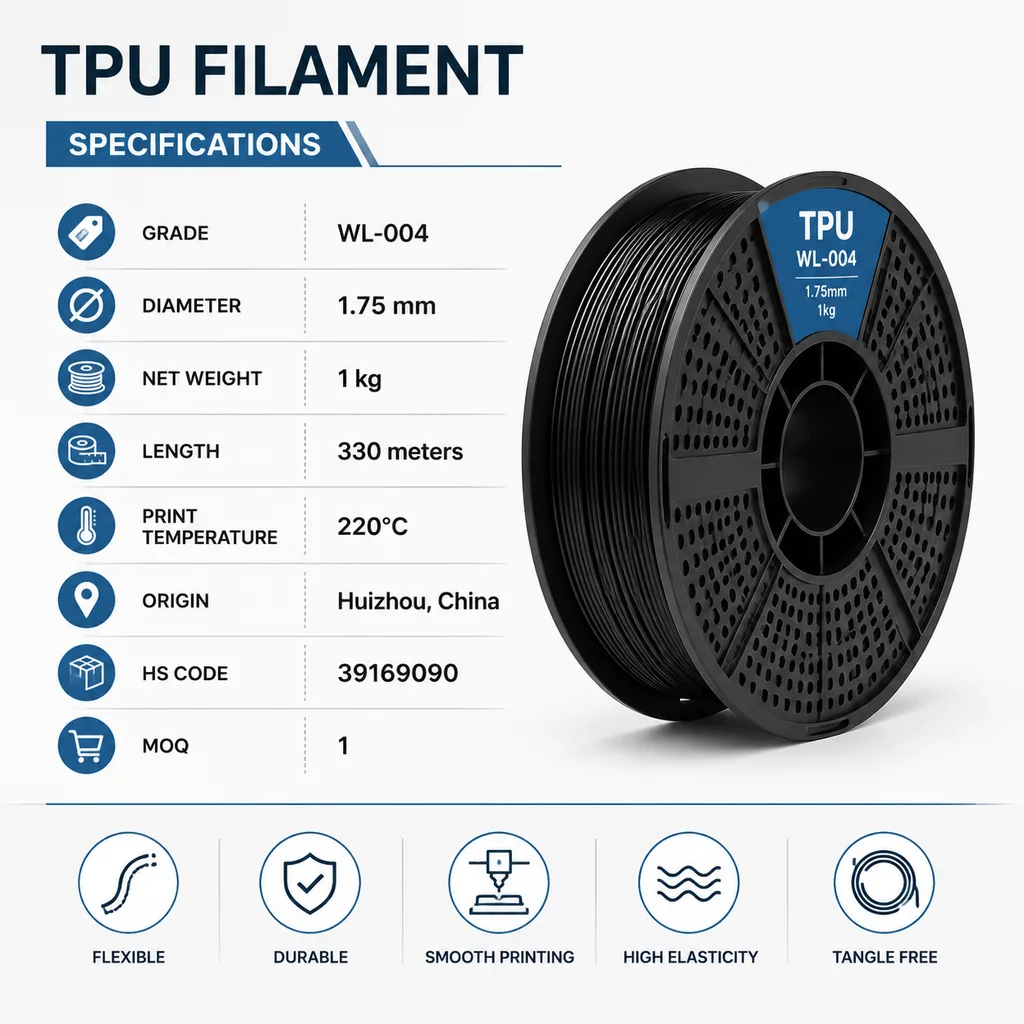
Nozzle 220°C

01 · Why this one

Product highlights

3 reasons

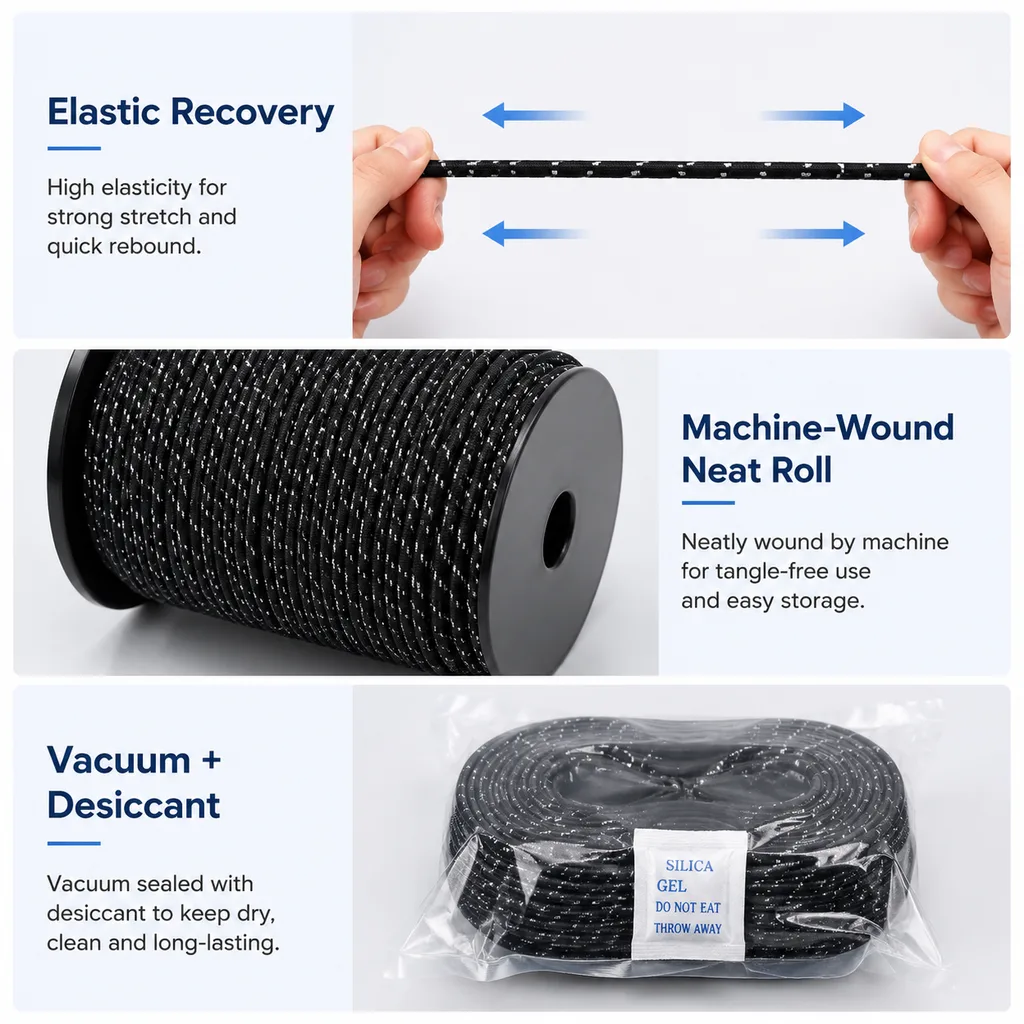
Ordering by colour is where flexible-filament buying usually slows down: buyers see 'coloured' and cannot agree a shade with the factory. We ship coloured TPU with the shade list confirmed with the supplier per order, so the colour is fixed in writing before the order is released, and the spool is wound tight and even so the strand feeds without snagging midway through a print.

1.75mm diameter on a standard round spool, 1 kg net filament per spool and a the nozzle temperature confirmed for this grade, with approximately 330 m of strand on the spool - a generous run for a flexible grade, so one spool covers more wearables than a short roll.

TPU is soft filament: run it on a direct-drive or short Bowden extruder at slow print speeds or the strand buckles between the drive gear and the nozzle. Dropped into that window it feeds like a normal FDM material on Bambu Lab, Creality and Prusa style machines, and the round spool seats in a standard holder or dry box without an adapter.

Available Colors

Technical Data

Specifications

Diameter 1.75mm
Material TPU

Print Profile

TPU 3D Printer Filament 1.75mm 1kg 330m Flexible Rubber Like prints best at 220°C nozzle.

Nozzle Temp220°C

Spool Specification

Spool details for your feeding and handling setup.

Gross Weight1.3 kg
Lengthapprox. 345m
Spool Size (L×W×H)21 × 21 × 7 cm
Pack FormatPiece
Spool TypeRound Spool

Attributes

Country / Regionchina
HS Code39169090
Item No.era-of-nuoai-tpu
Product Name TPU 3D Filament
Grade WL-004
Item No. WL-004
Length 330 meters
Specification Colored
Diameter 1.75mm
Diameter 1.75mm
Length approx. 345m
Appearance Round Spool
Before You Ask

Frequently Asked Questions

How does TPU survive repeated flexing where other filaments crack?
TPU is an elastic polymer, not a rigid one: it stores and returns strain instead of building the stress that splits a rigid layer line. In practice a printed strap, sleeve or bumper can be stretched and released many times without the whitening and cracking you see on a rigid filament at the same fold.
Will it print on the FDM machines I already run?
Yes, if the extruder path is short: a direct-drive extruder or a short Bowden path on a Bambu Lab, Creality, Prusa or other common 1.75mm FDM machine. A long Bowden tube adds friction and lets the soft strand buckle, so slow print speeds apply whatever machine you use.
What nozzle temperature and print speed should I use?
A nozzle temperature confirmed for your application is the figure for this range. Flexible filament needs slower print speeds than rigid filament - reduce speed and retraction together, because a fast retraction drags soft material back into the extruder. Bed settings follow your own machine profile.
How much filament is on one spool and how far does it go?
Each spool carries 1 kg net filament per spool at 1.75mm diameter, which on this grade is approximately 330 m of strand. Length moves a little with run tolerance, so plan the run from the slicer estimate for 1 kg and treat the metre figure as nominal.
Which colours does this TPU come in?
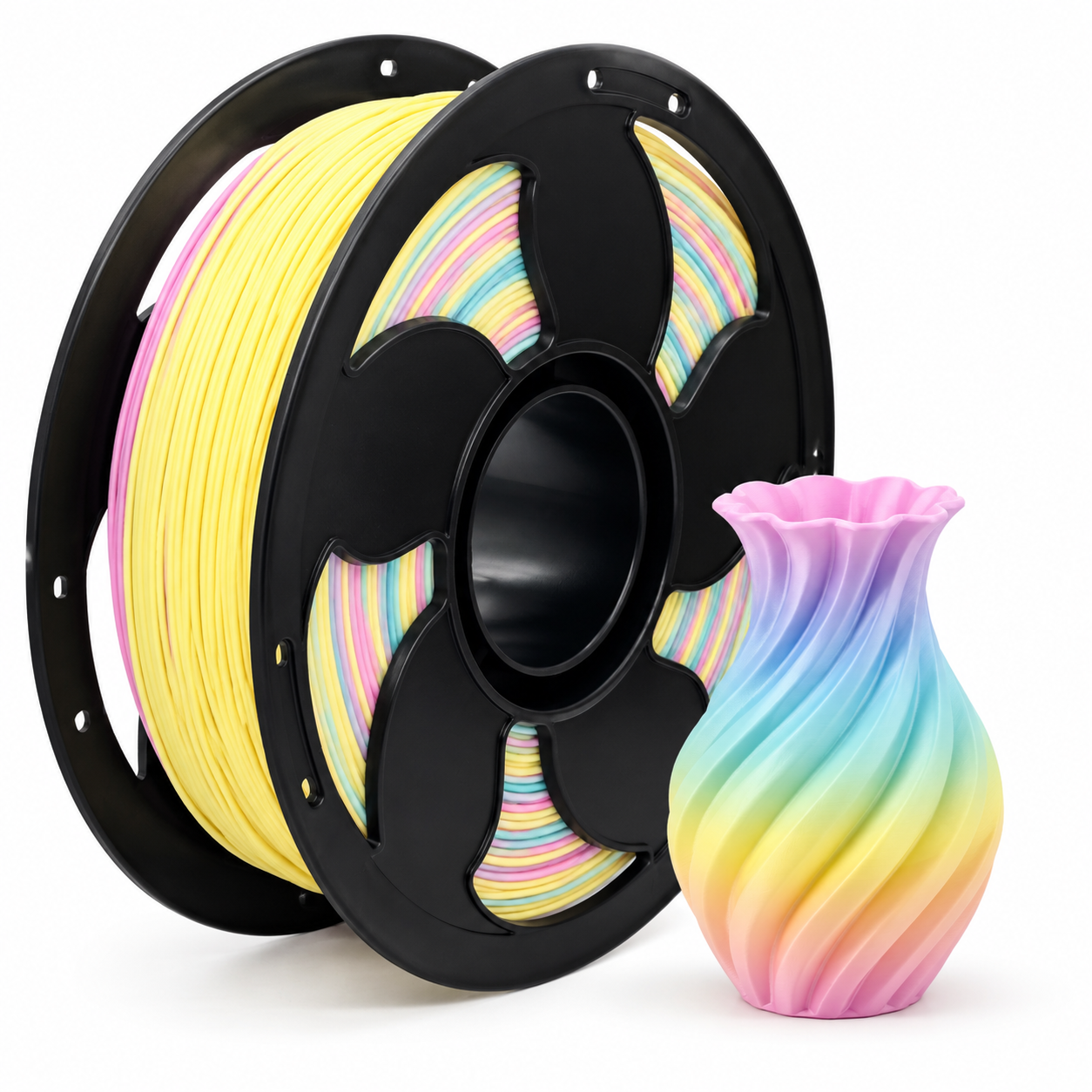
It is supplied as coloured TPU rather than a single fixed shade, and the shade list is confirmed with the supplier per order, so the colour is agreed in writing before release instead of being assumed from the word coloured. Place a trial order in the shade your line sells and compare it on the plate before committing to a range.
What is this flexible TPU best used for?
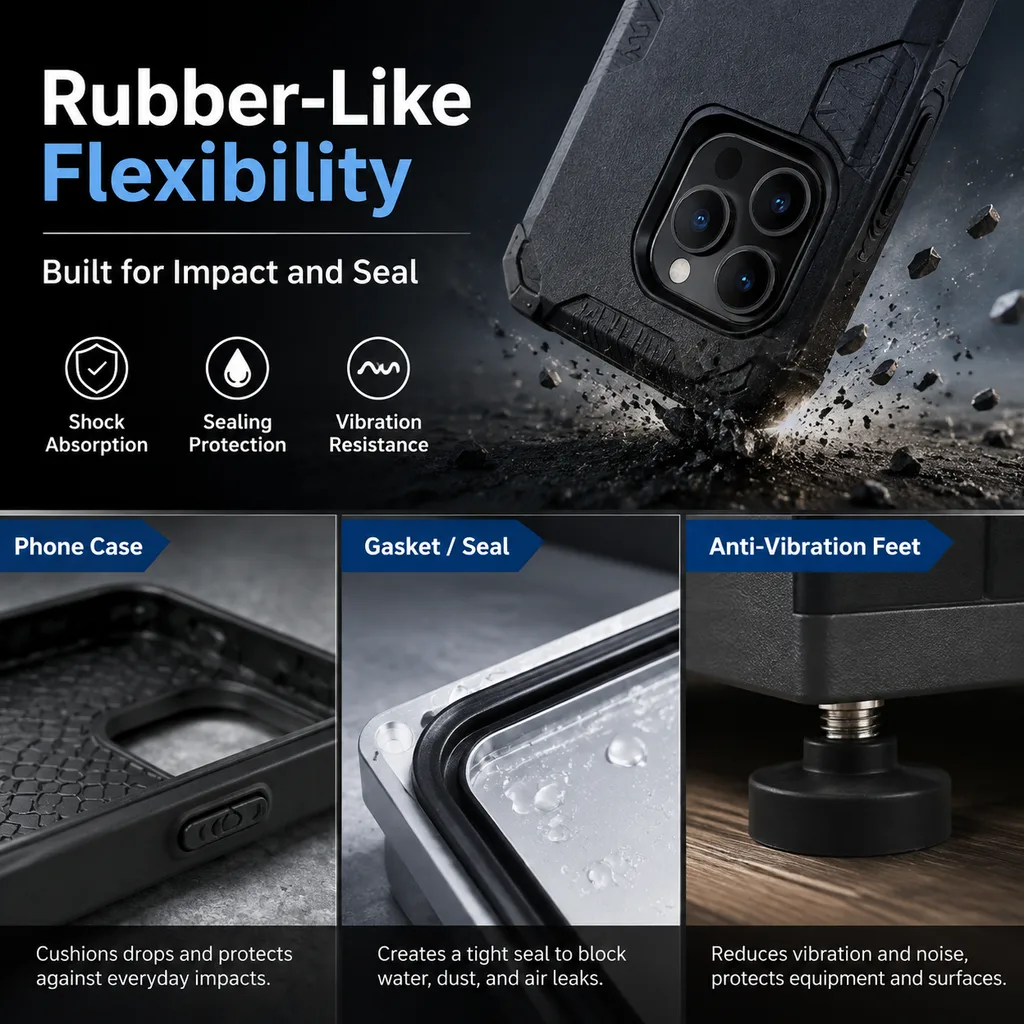
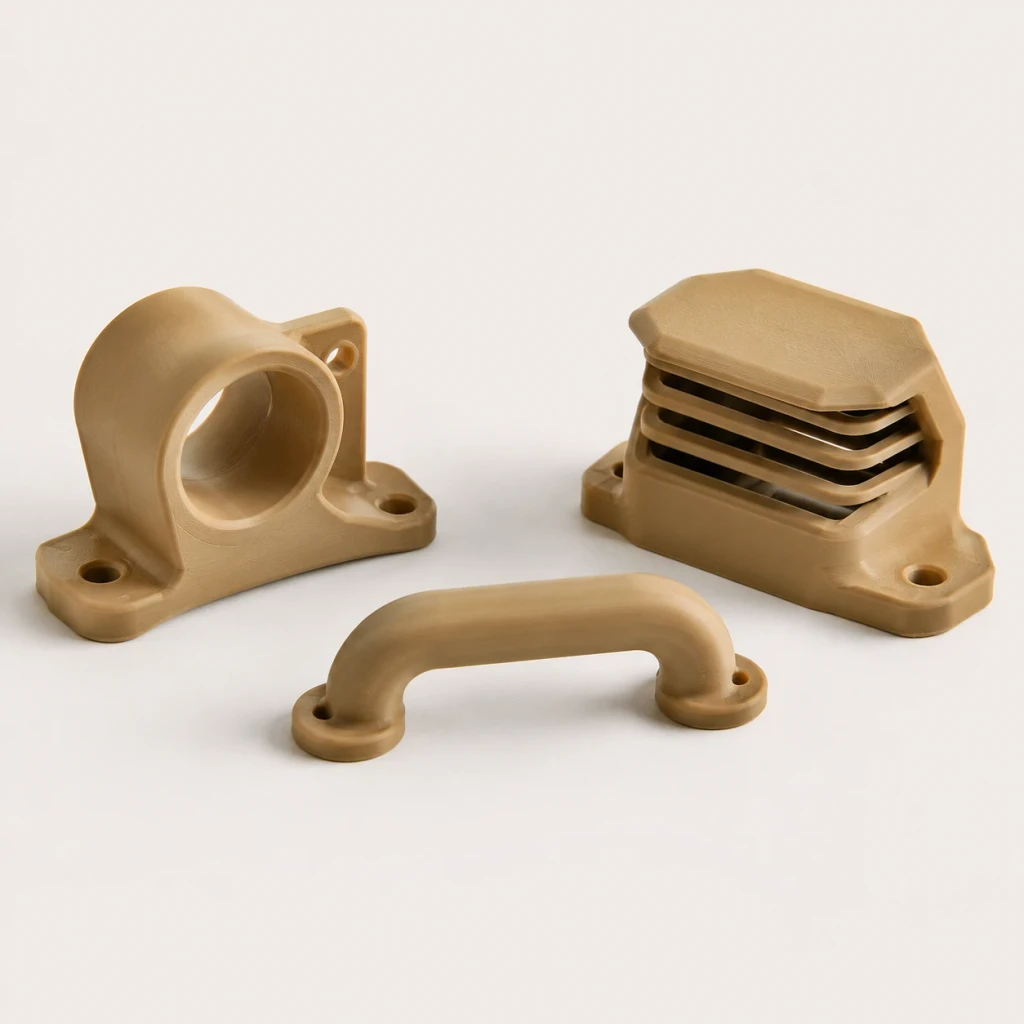
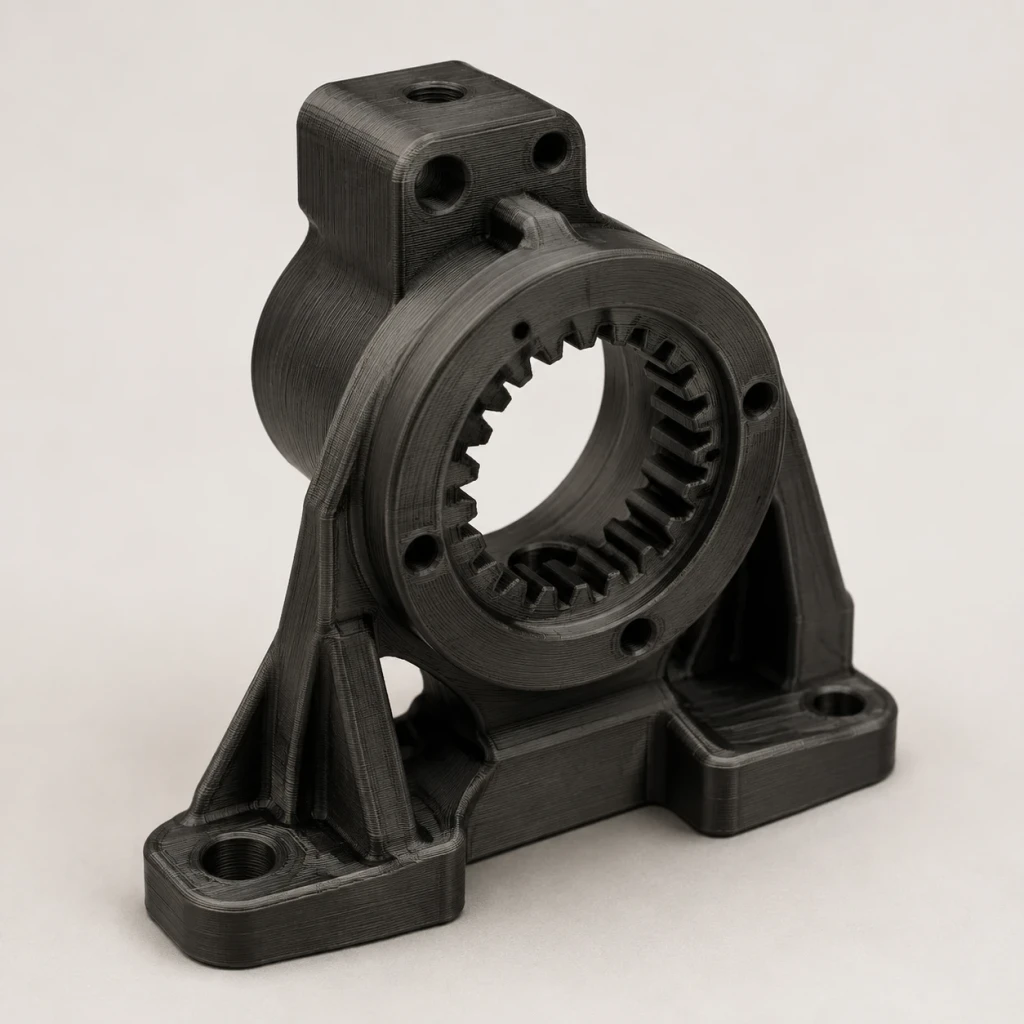
Parts that must bend and recover: wearable straps and bands, grips and overmoulded handles, protective bumpers and corner guards, cable sleeves, seals and vibration dampers. It is not the material for rigid structural parts, and for sustained heat or UV exposure a different polymer family is the better choice.
How is the spool packed and how should I store it?
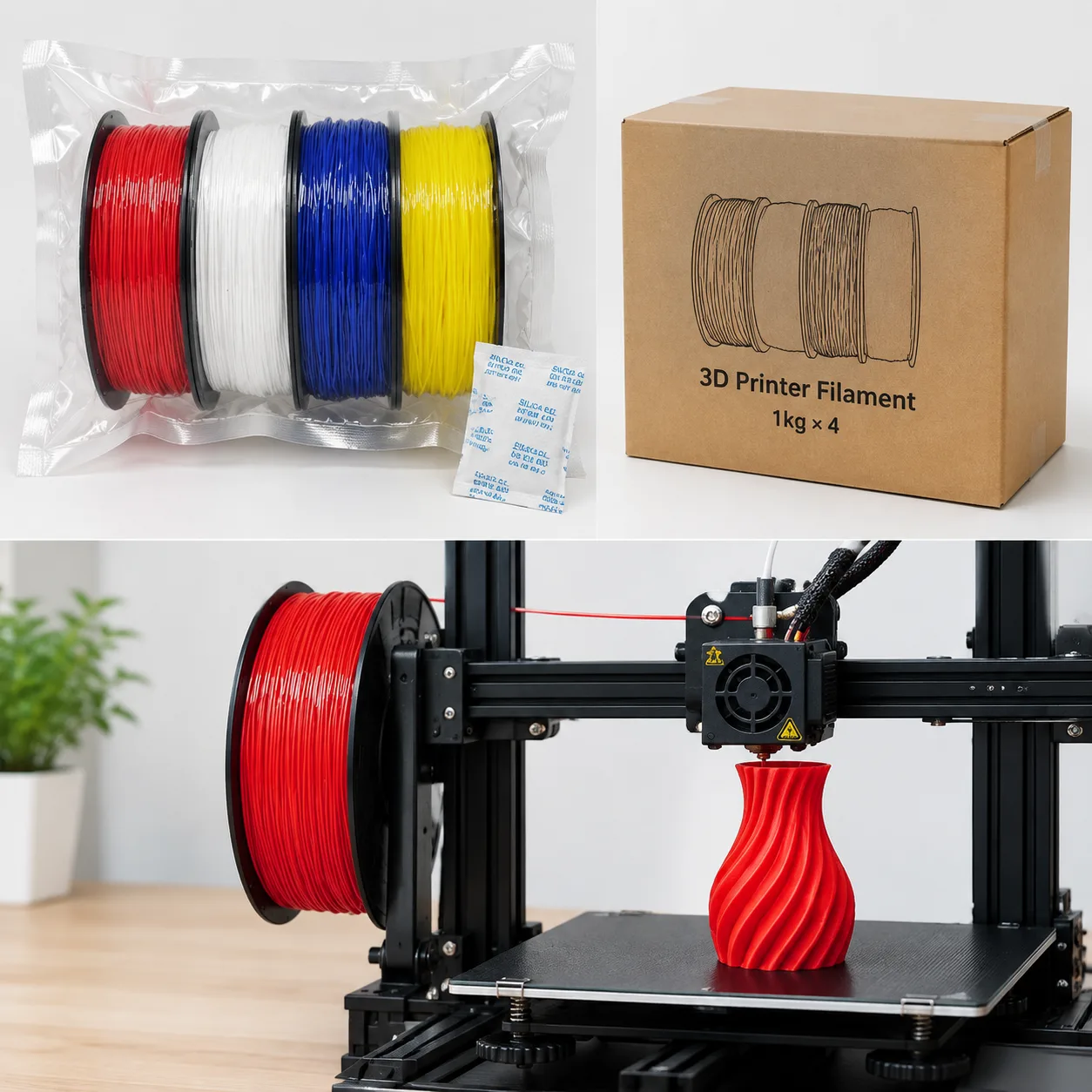
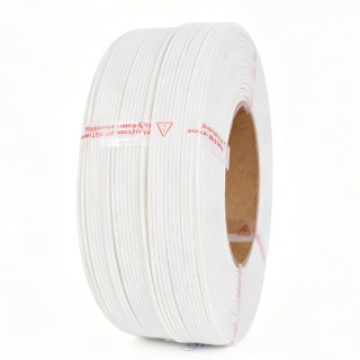
Each spool is vacuum sealed in a moisture-barrier bag with a desiccant pack and shipped on a round spool that fits standard holders and dry boxes. After opening, reseal the bag or move the spool into a dry box with desiccant and keep it out of sunlight: damp TPU pops in the nozzle, strings and prints weak layers.

Documentation & Downloads

Everything we publish for this material, in one place.

Ready to Order

Get factory-direct pricing on TPU 3D Printer Filament 1.75mm 1kg 330m Flexible Rubber Like

Not sure this is the right material? → Compare filaments