
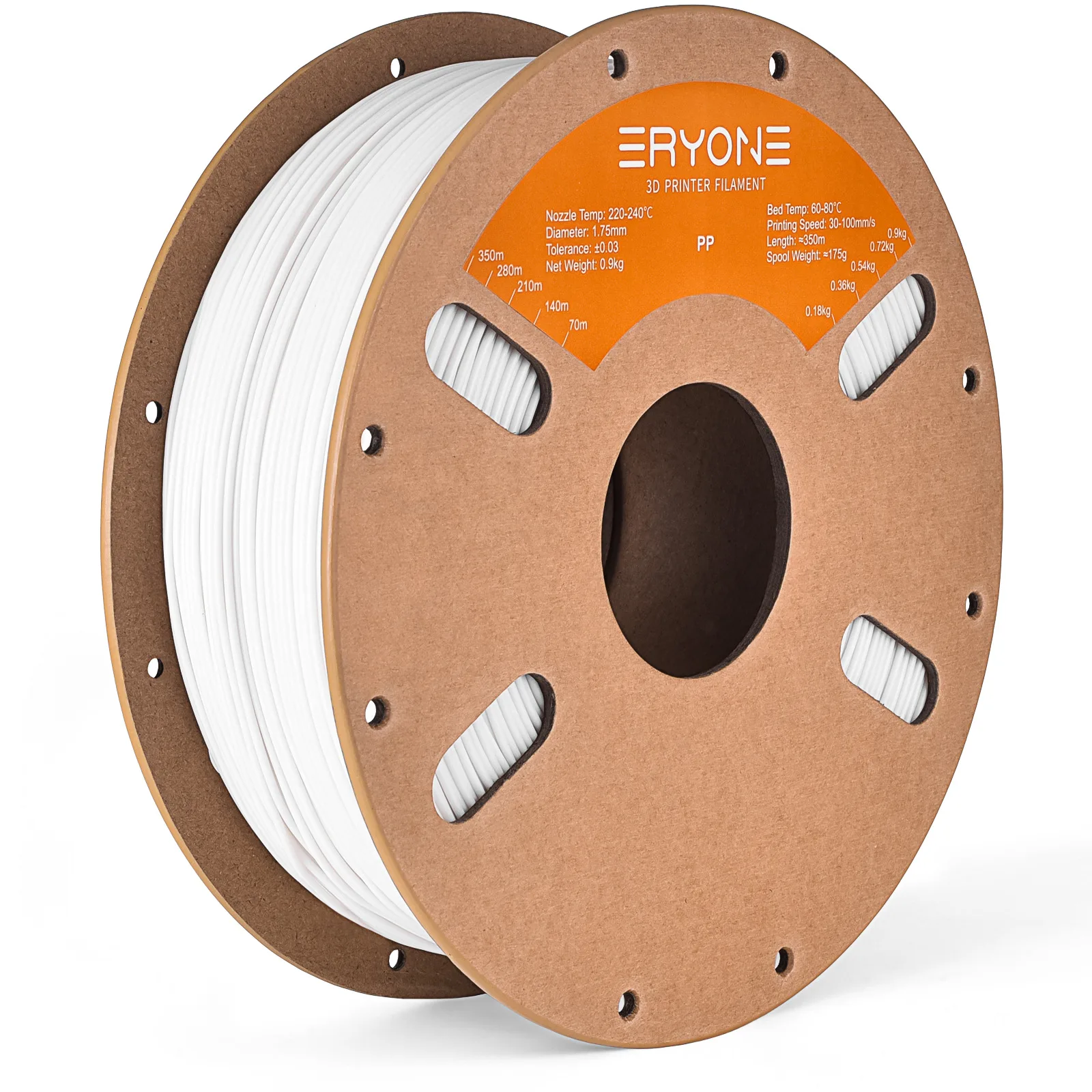
PP Filament 900g 1.75mm Yiqiu3D Chemical-Resistant

Brand: Yiqiu3D · Model: PP 1.75mm 900g · Chemical contact makes PLA and PETG parts swell or craze. This PP grade resists acids, alkalis, oils and most solvents, and its low water absorption keeps the strand dry even after months in a humid store room, so prints behave the same from the first metre to the last. It goes where ordinary filament is replaced twice a year - lab trays, rinse tanks, chemical ducting, wipe-down fixtures - and because PP is weldable, a cracked tank or duct is repaired instead of reprinted.

  • Two references are stocked for this listing: Black
  • Specifications you can quote onward: 1.75 mm diameter
  • Low water absorption is the practical advantage: no drying ritual before every job
Compare filaments
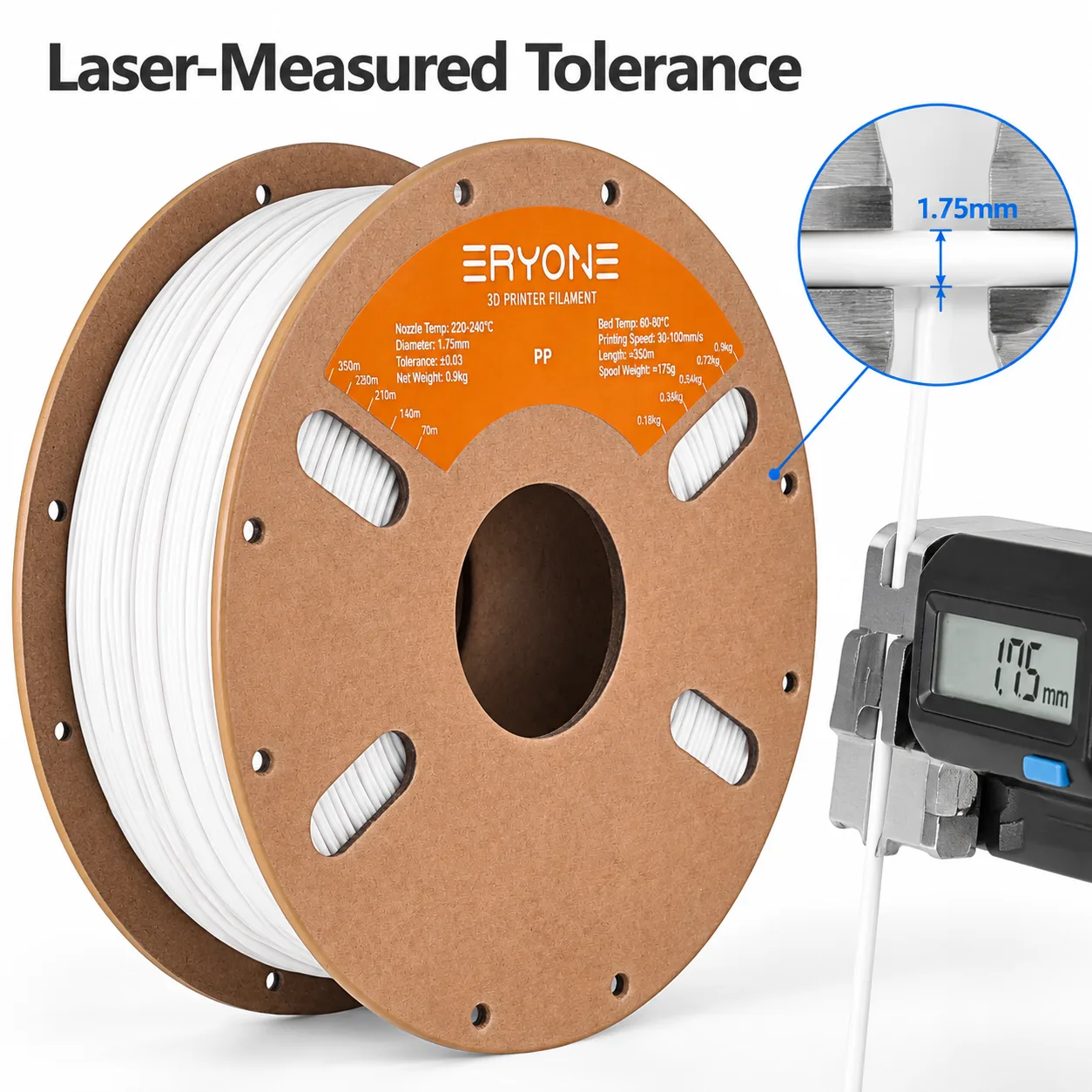
Diameter 1.75mm
Tolerance ±0.03mm
Material PP
Quick Answer

What makes PP different from PLA or PETG, and where does it actually make sense?

Different chemistry, different job. PLA is stiff and easy to print but softens in heat and is attacked by many solvents; PETG is tougher but still swells when it sits in some chemicals. PP resists acids, alkalis, oils and most solvents and absorbs very little water, so it is the grade for parts that live in wet or chemical service and for parts that are wiped down with cleaners. What it does not do is fine cosmetic detail - treat it as a working part, not a display part.

Full answers below
Is it right for my project?

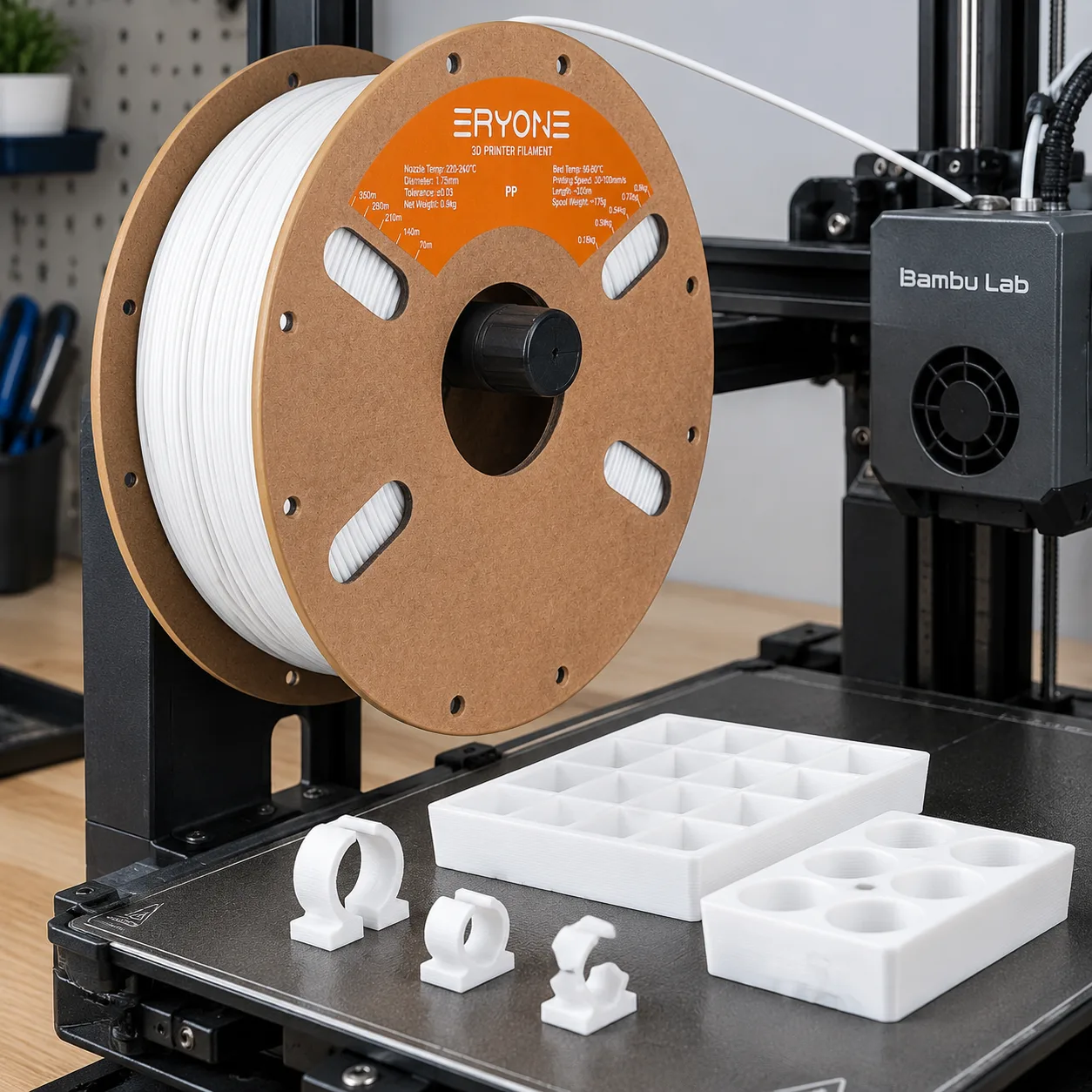
Best for: For parts where chemical exposure and repeated flexing combine: industrial and lab-adjacent parts - available in 2 colours; 900g spools; lead colour Black. Not ideal for: Avoid for fine cosmetic detail; PLA or resin prints sharper surfaces - available in 2 colours; 900g spools; lead colour Black.

Print settings

Nozzle 220°C

01 · Why this one

Product highlights

3 reasons

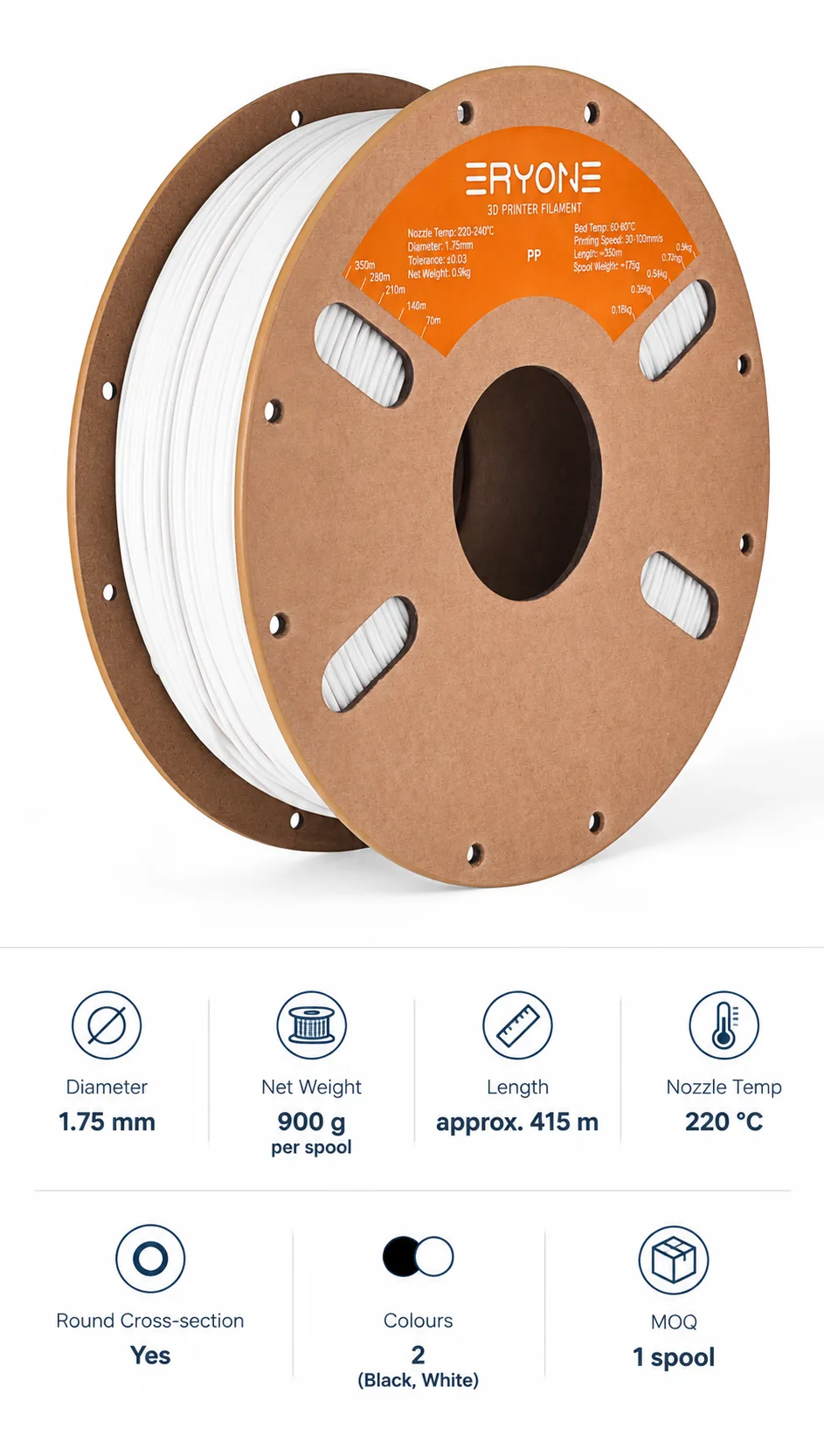
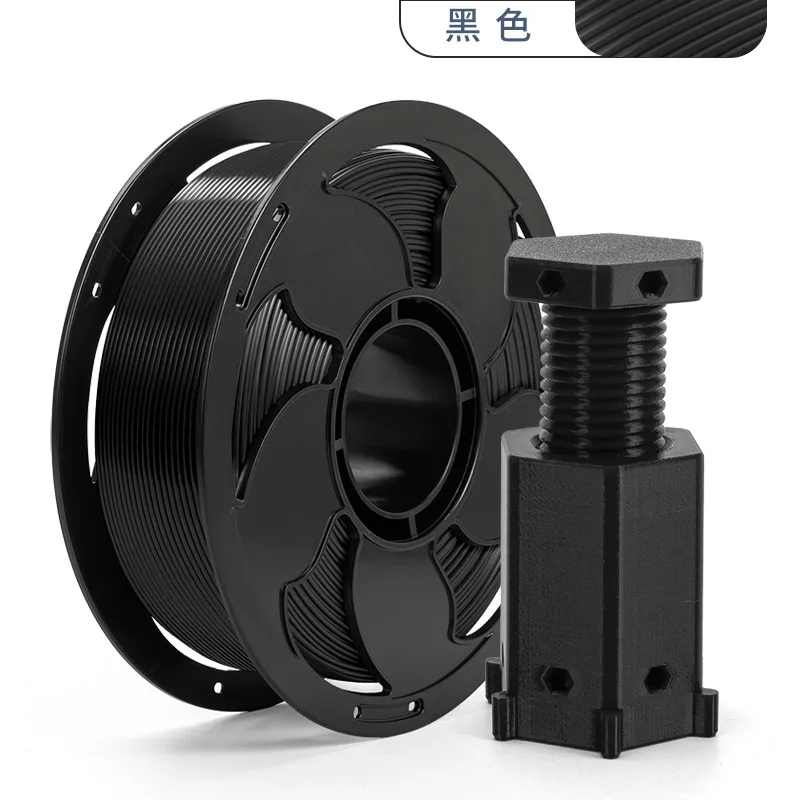
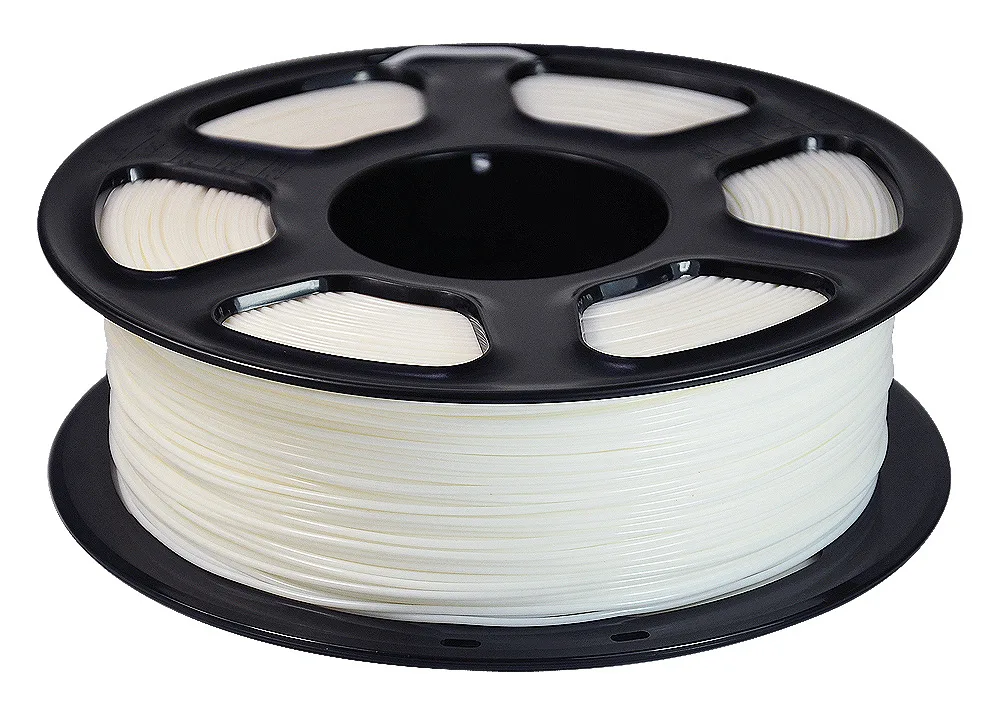
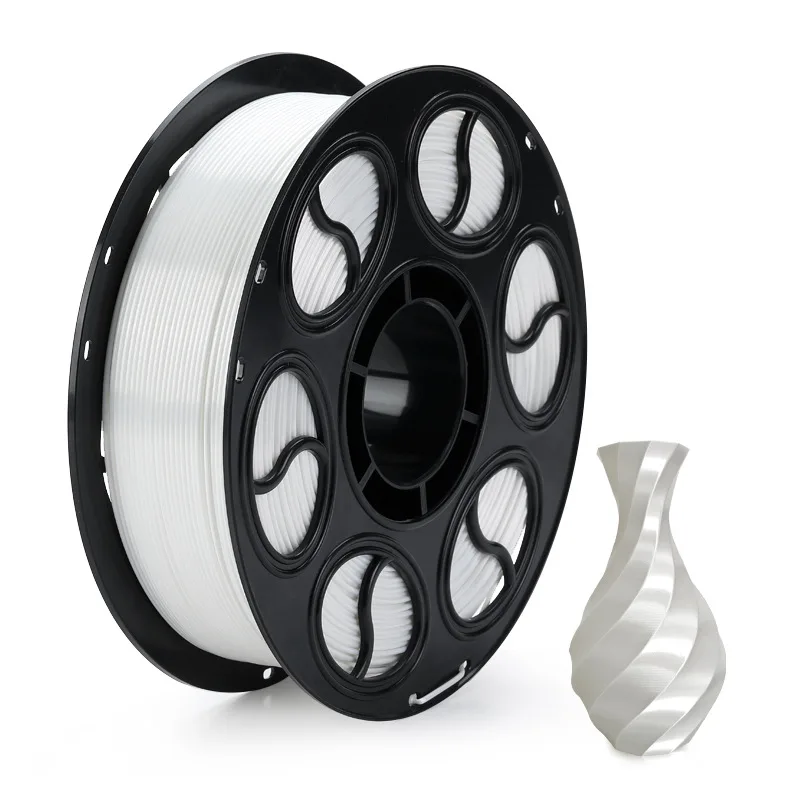
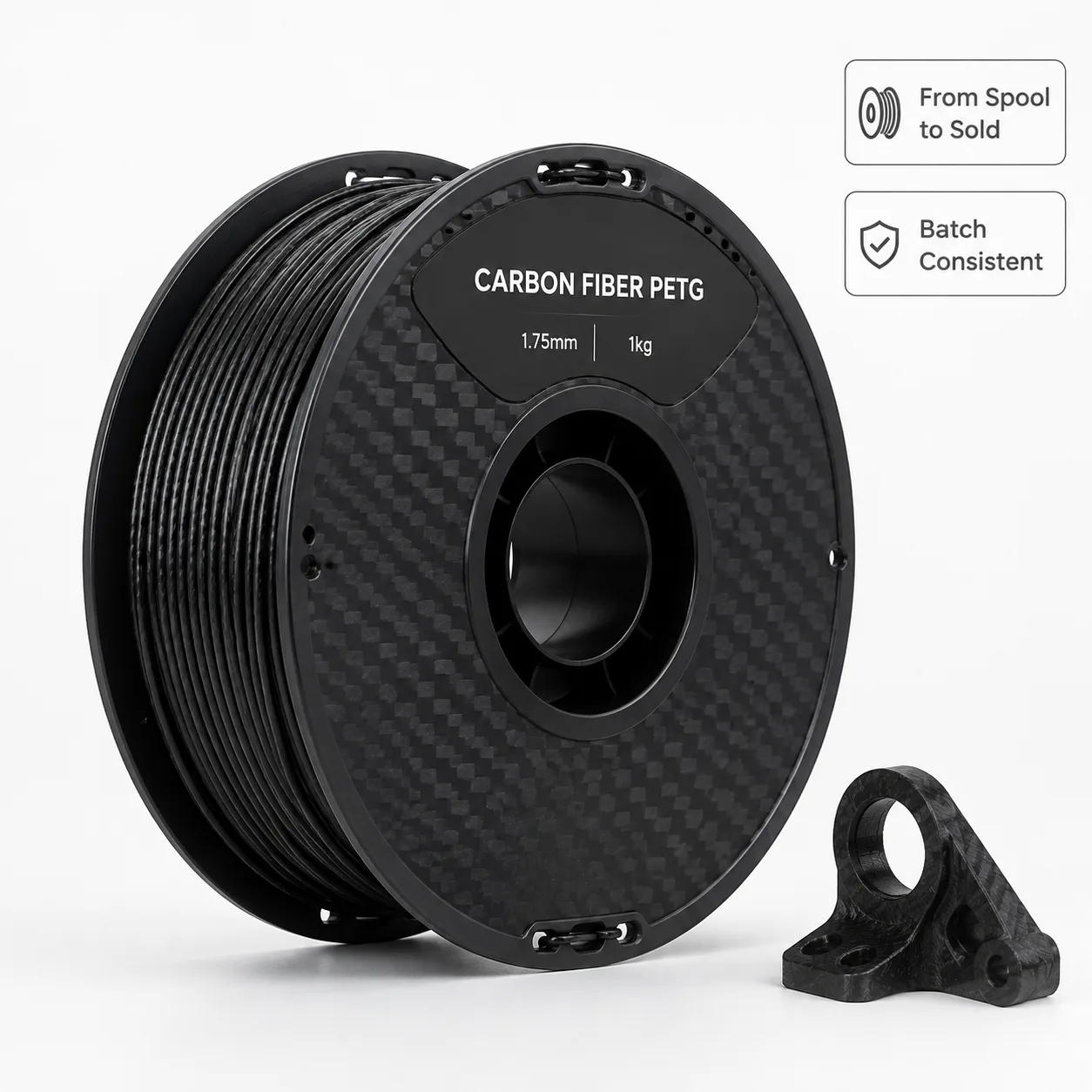
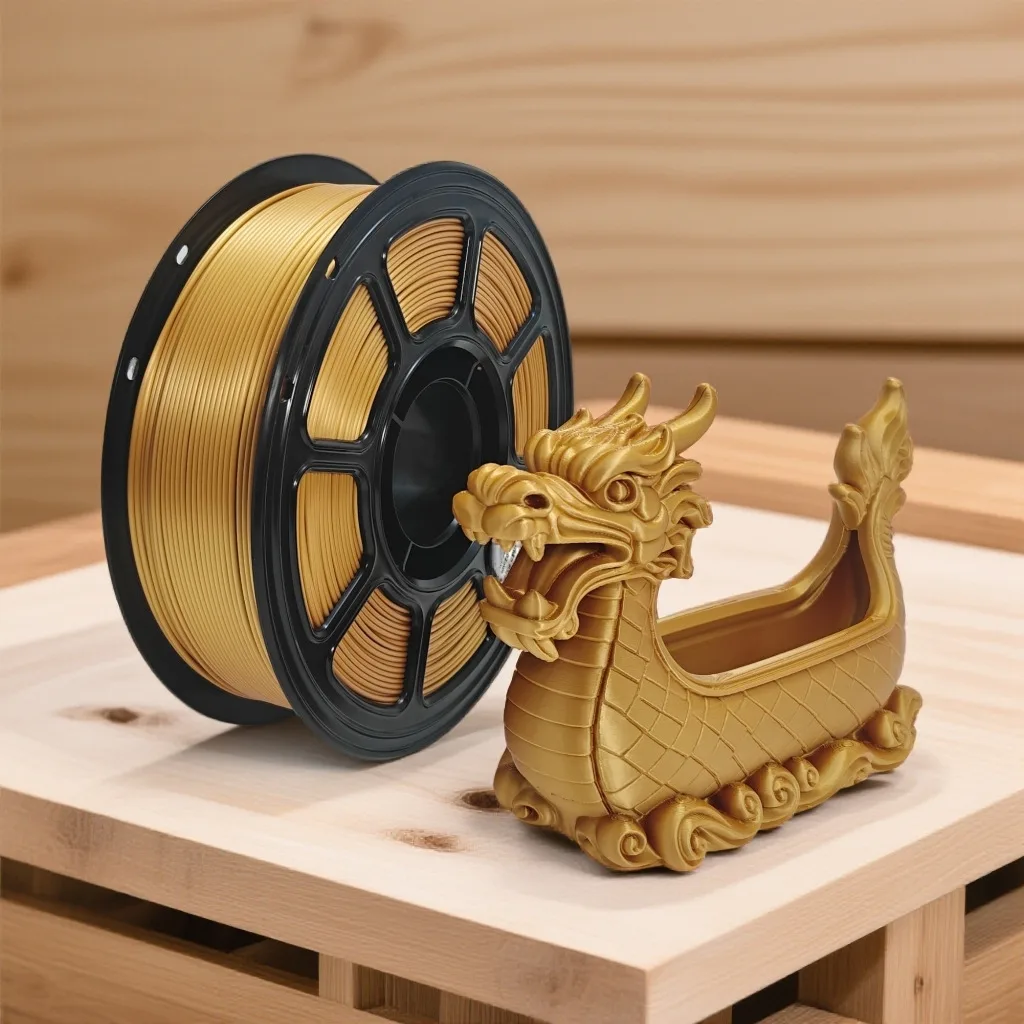
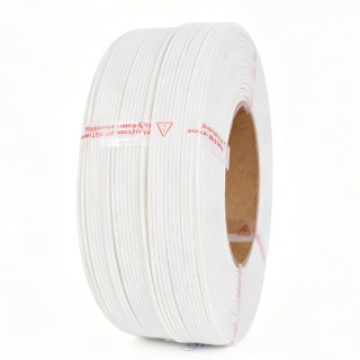
Two references are stocked for this listing: Black, the lead colour, and White. Pigment is compounded into the resin before extrusion, so the colour runs through the wall of the part rather than sitting on the surface. Each spool label carries its colour name, which means a reorder is placed against the same reference instead of being matched by eye from a photo. Both references ship in one consignment, so a distributor can hold the range on a single purchase order.

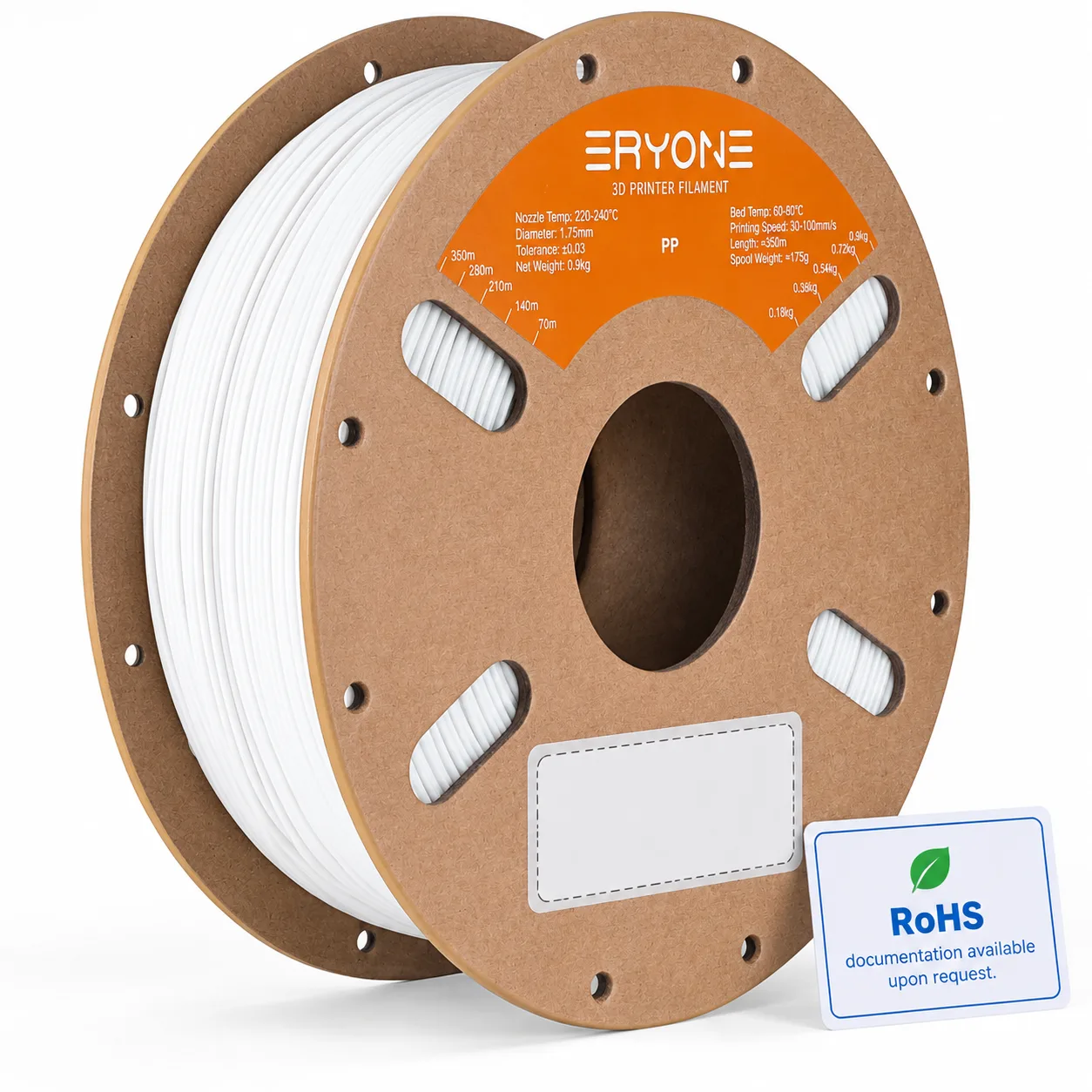
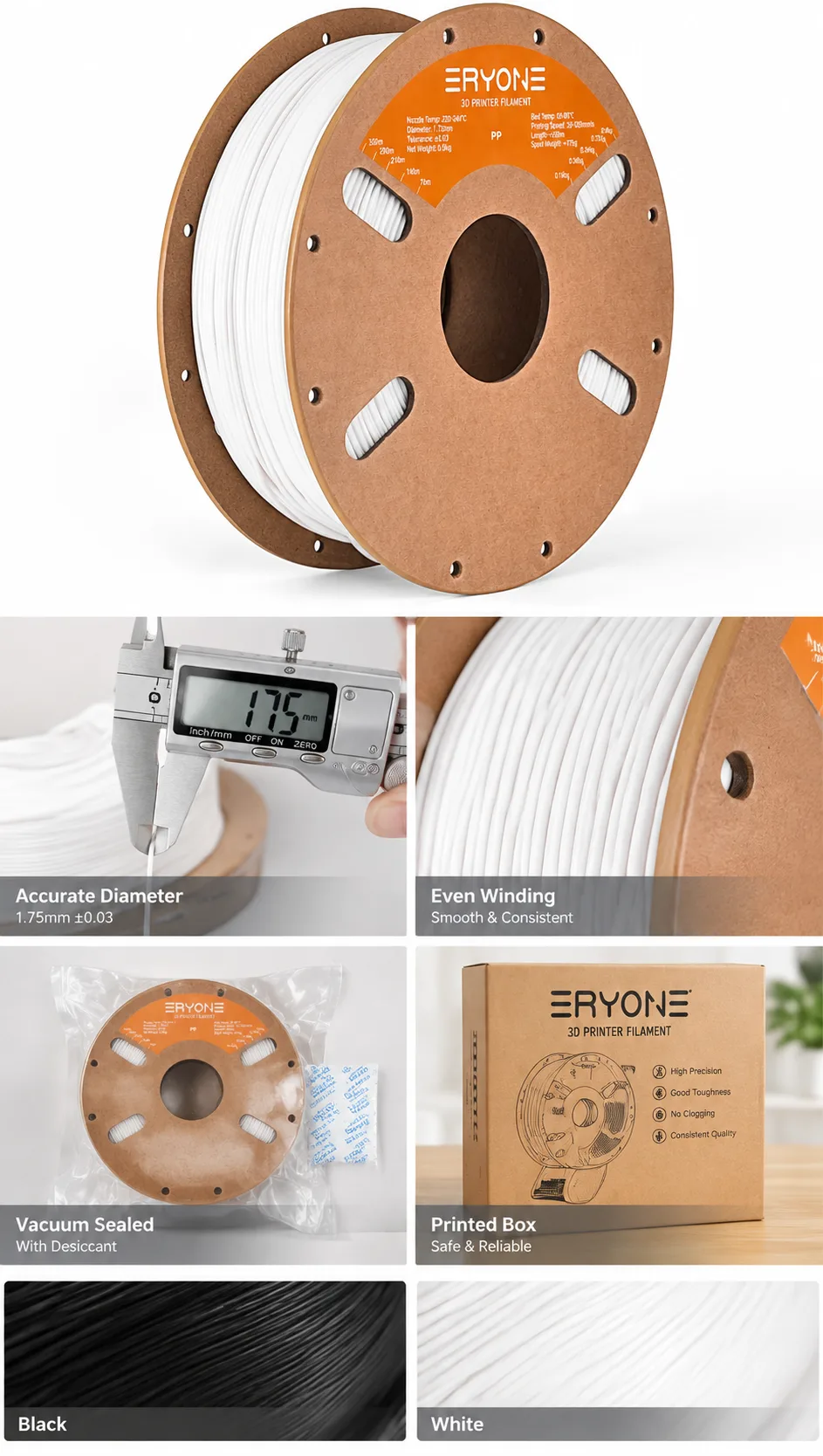
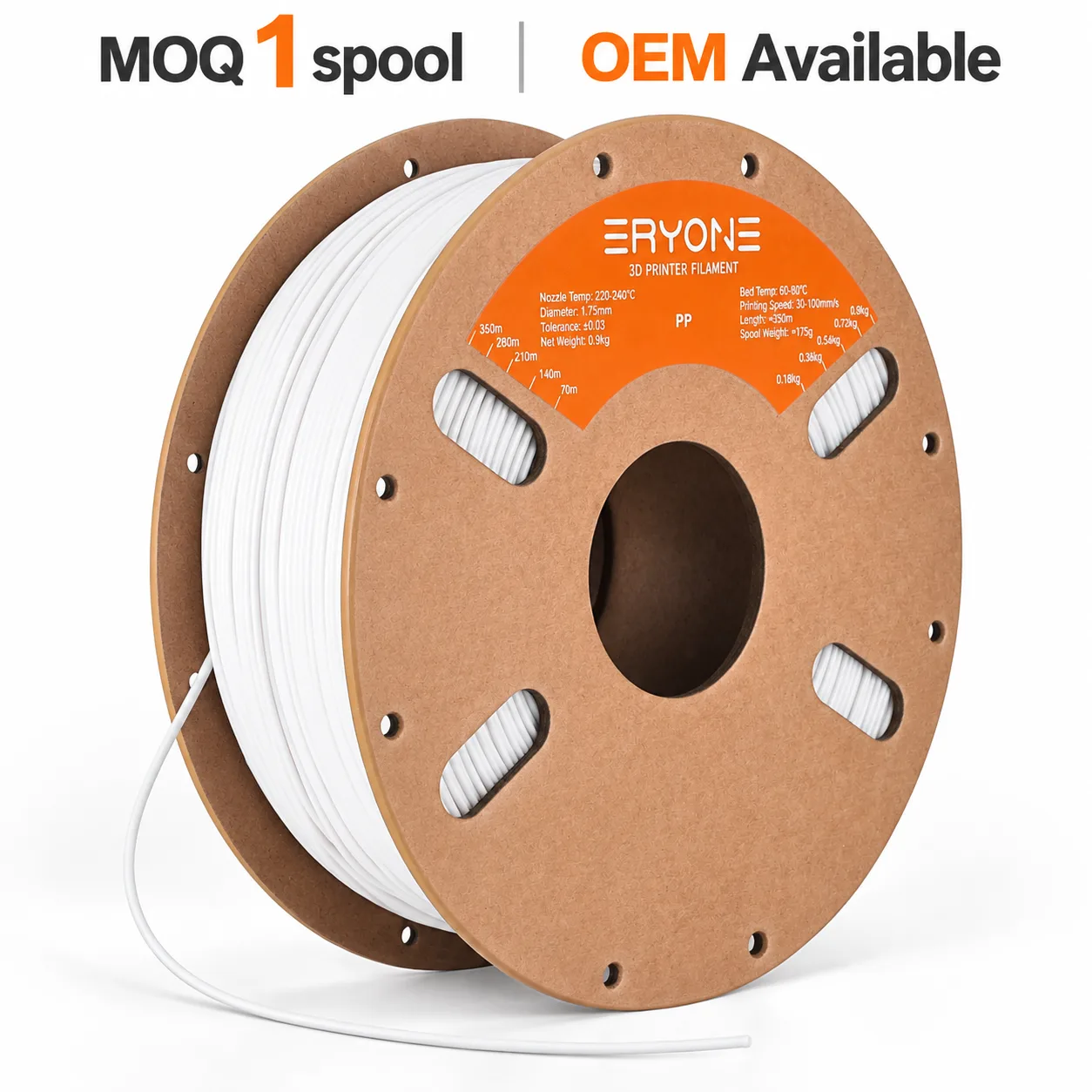
Specifications you can quote onward: 1.75 mm diameter, round cross-section, 900 g net filament per spool, approximately 415 m of strand, with the nozzle window confirmed per application - tell us your end use and we will send the matching setting sheet. Diameter and roundness are held through the run, so the extrusion bead stays even instead of drifting thin near the end of a spool, and tension-controlled winding lays the strand flat so it does not cross over itself and stall a long job. A

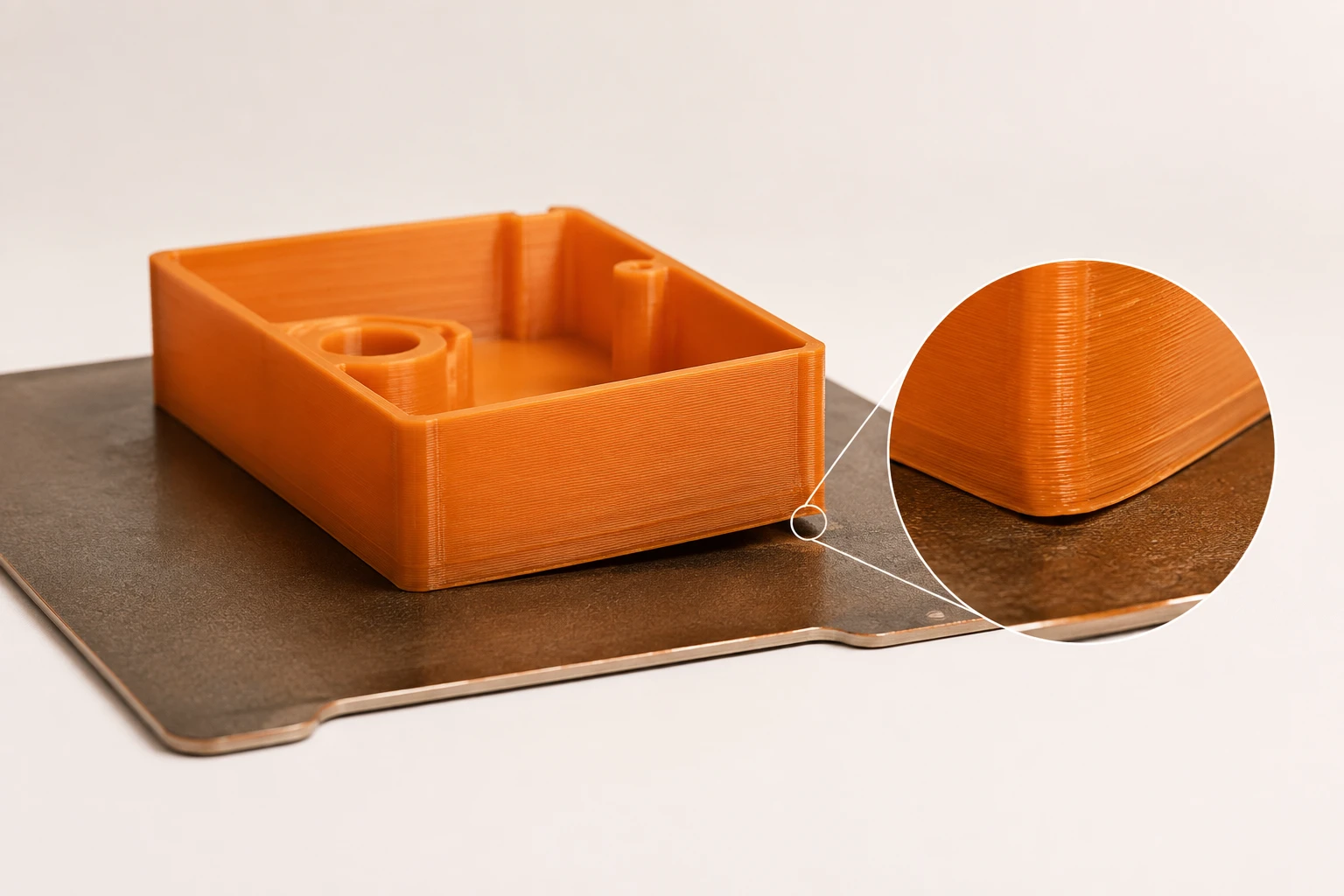
Low water absorption is the practical advantage: no drying ritual before every job, so a spool goes from the shelf to the holder and prints. It runs on standard 1.75 mm FDM machines with direct-drive or Bowden extruders and needs no enclosure and no hardened nozzle. Print the first layer slowly and keep part cooling low, because PP is soft and chills into warped edges when it is cooled hard. Even winding keeps long unattended runs feeding without tangles, which is where most scrap comes from.

Technical Data

Specifications

Diameter 1.75mm
Tolerance ±0.03mm
Material PP

Print Profile

PP Filament 900g 1.75mm Yiqiu3D Chemical-Resistant prints best at 220°C nozzle.

Nozzle Temp220°C

Spool Specification

Spool details for your feeding and handling setup.

Gross Weight1.35 kg
Lengthapprox. 415m
Spool Size (L×W×H)21 × 21 × 7 cm
Pack FormatPiece
Spool TypeRound Spool

Attributes

Country / Regionchina
HS Code39169090
Item No.pp-chemical-resistant-low-water-absorption-lab
Product Name PP
Cross-Section Round
Application Print 3D model
Payment Method Payment Before Delivery
Specification Black,White
Length approx. 415m
Appearance Round Spool
Before You Ask

Frequently Asked Questions

What makes PP different from PLA or PETG, and where does it actually make sense?
Different chemistry, different job. PLA is stiff and easy to print but softens in heat and is attacked by many solvents; PETG is tougher but still swells when it sits in some chemicals. PP resists acids, alkalis, oils and most solvents and absorbs very little water, so it is the grade for parts that live in wet or chemical service and for parts that are wiped down with cleaners. What it does not do is fine cosmetic detail - treat it as a working part, not a display part.
Which printers does this filament run on?
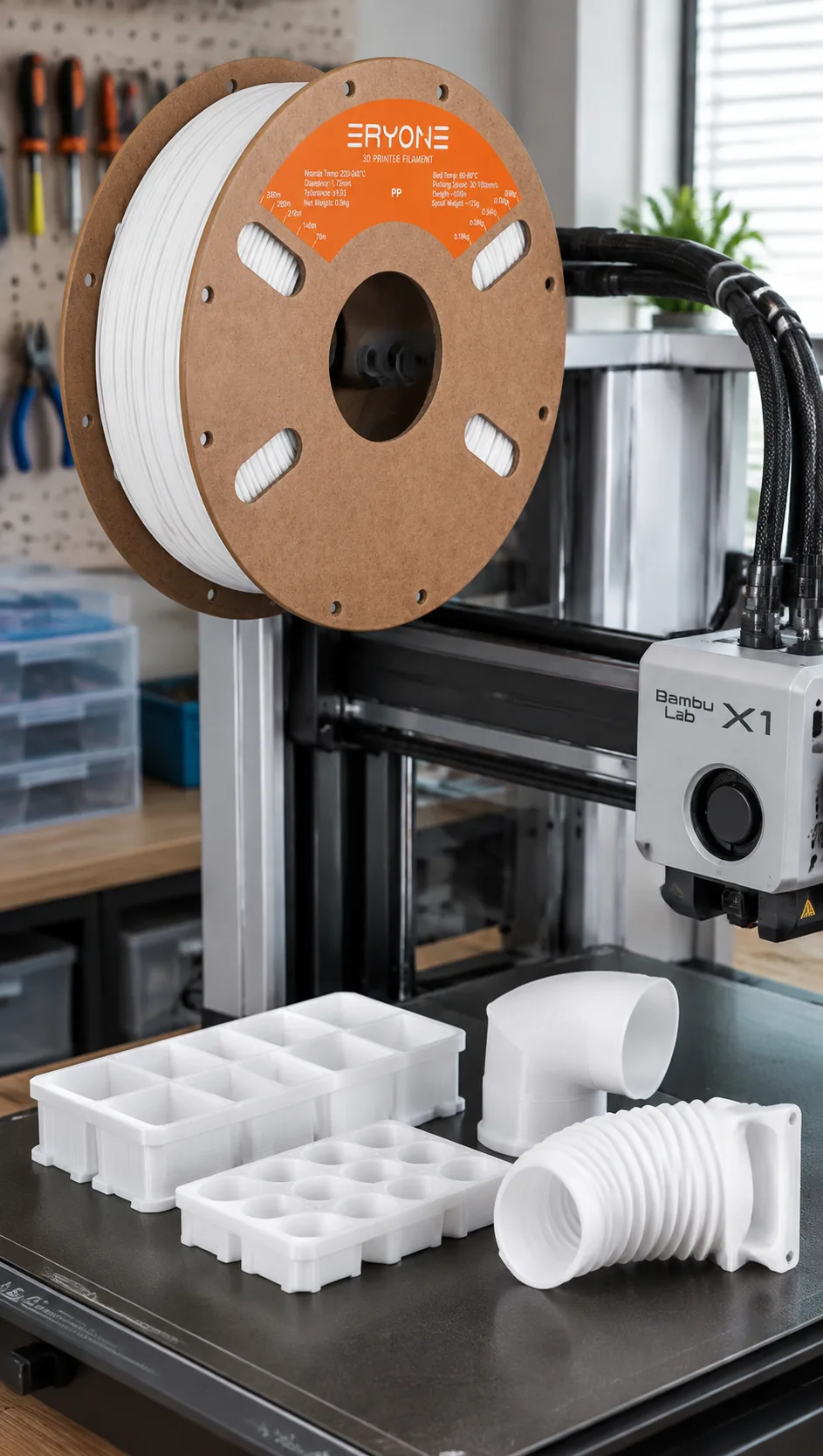
Any FDM printer that uses 1.75 mm filament, including Bambu Lab, Creality, Prusa and Anycubic, with direct-drive or Bowden extruders. No hardened nozzle, no enclosure and no special upgrade is needed, and the spool is a standard round format that fits common external holders. PP bonds poorly to bare glass, so pair it with a heated bed and a PP-friendly build surface; this listing does not quote a bed temperature, so take that value from your own profile.
What print settings do you recommend?
We confirm the nozzle temperature for your application rather than publishing a single figure for this grade; tell us your end use and we will send the matching setting sheet. Print a slow first layer and keep the part cooling fan low, because PP is soft and chills into warped edges when it is cooled hard. A 0.4 mm nozzle with 0.2 mm layers is a good starting point. A heated bed is strongly recommended and the build surface should suit PP; this listing does not quote a bed value, so take it from your own PP profile.
How much filament is on one spool, and how far does it go?
Each spool carries 900 g net of filament, which works out to approximately 415 m of 1.75 mm strand. That is enough for a run of trays, jigs or duct sections before a reorder. Quote the 900 g net figure onward rather than any shipping weight, because net is the material your customer actually prints with.
Which colours are available, and can I order a mixed set?
Two references are stocked: Black, the lead colour on this listing, and White. Pigment is compounded into the resin, so the colour runs through the part wall, and each spool label carries the colour name so a reorder is placed against the same reference. Both references can ship in one consignment, which is the practical way to test the range before a volume order.
What should I print with it?
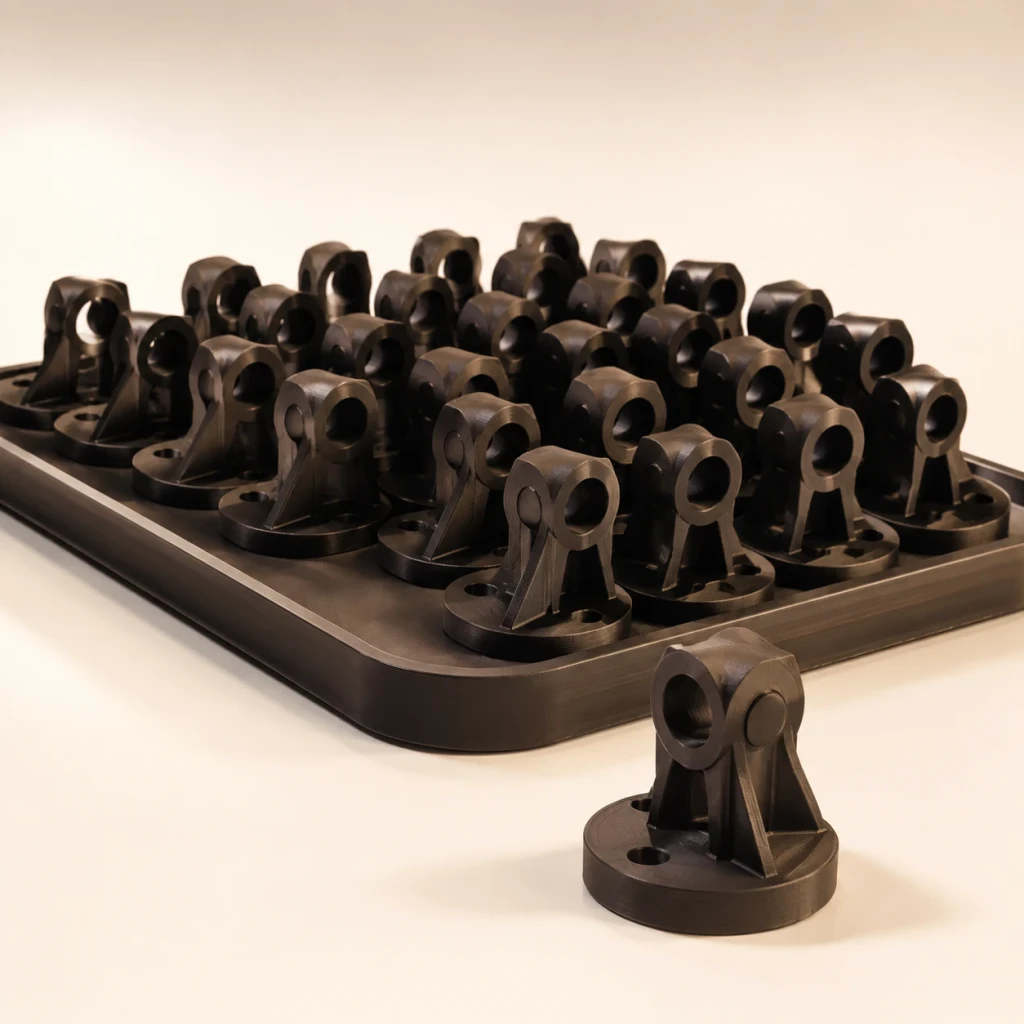
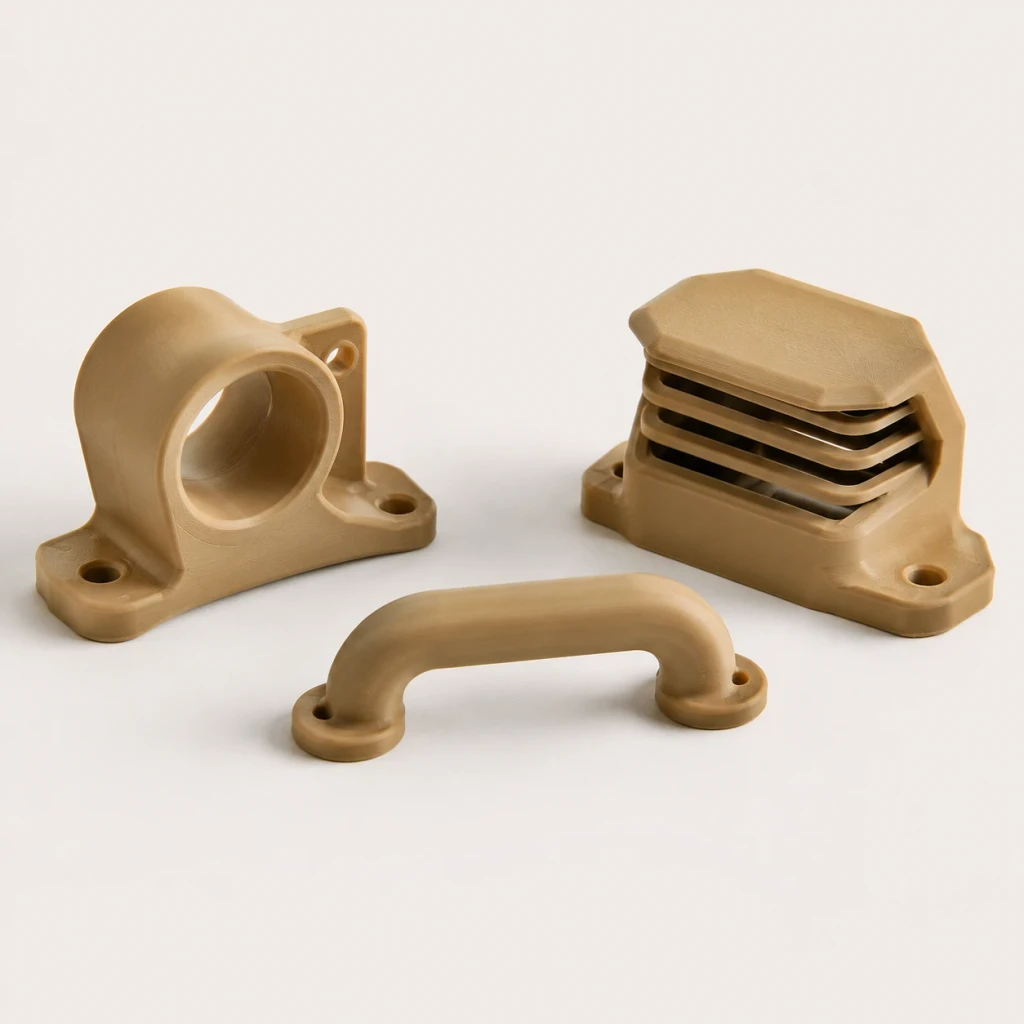
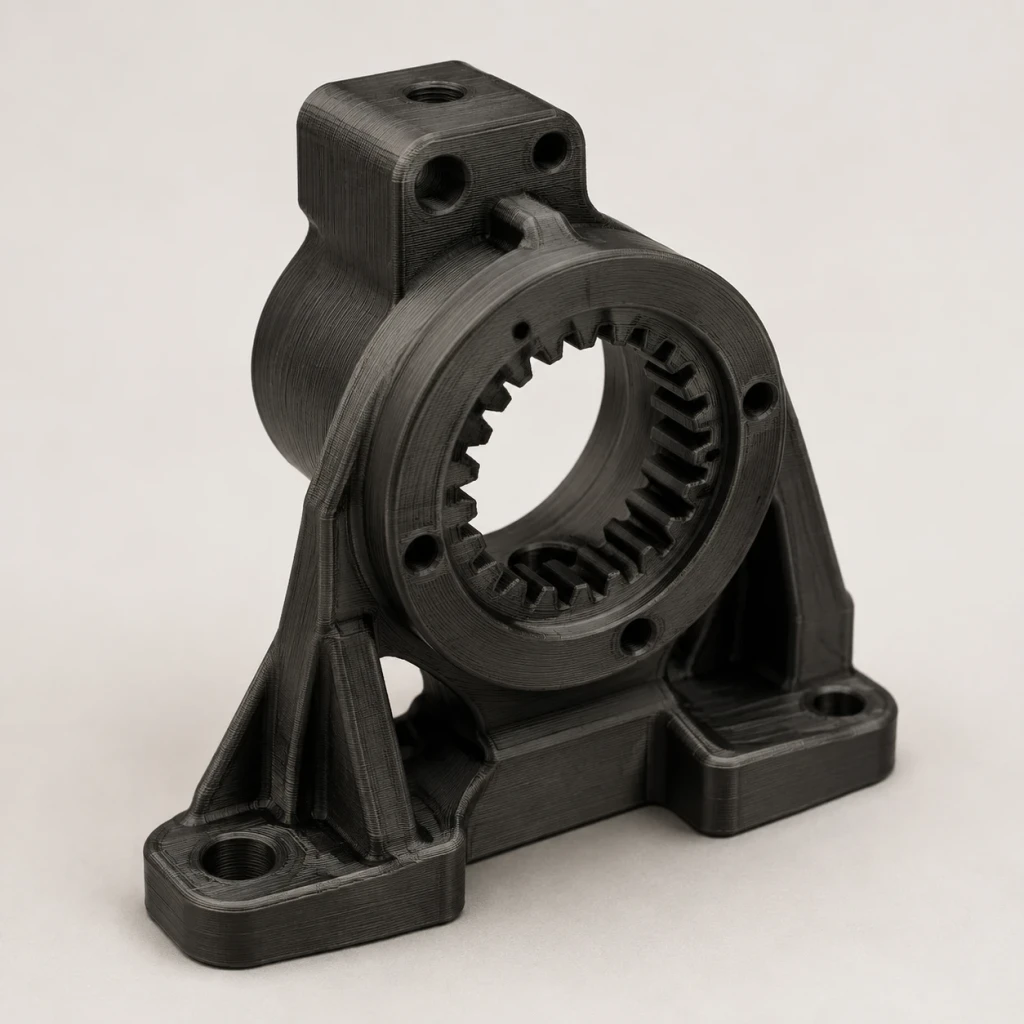
Parts that meet chemicals or water: lab trays and racks, rinse and plating tanks and liners, chemical ducting and fume hood components, plating jigs, wipe-down fixtures, pump housings and clips that flex in service. PP is also weldable, so a cracked tank or duct can often be repaired in place. It is the wrong choice for display models and fine cosmetic detail, where PLA or resin prints a sharper surface.
How should the spool be stored?
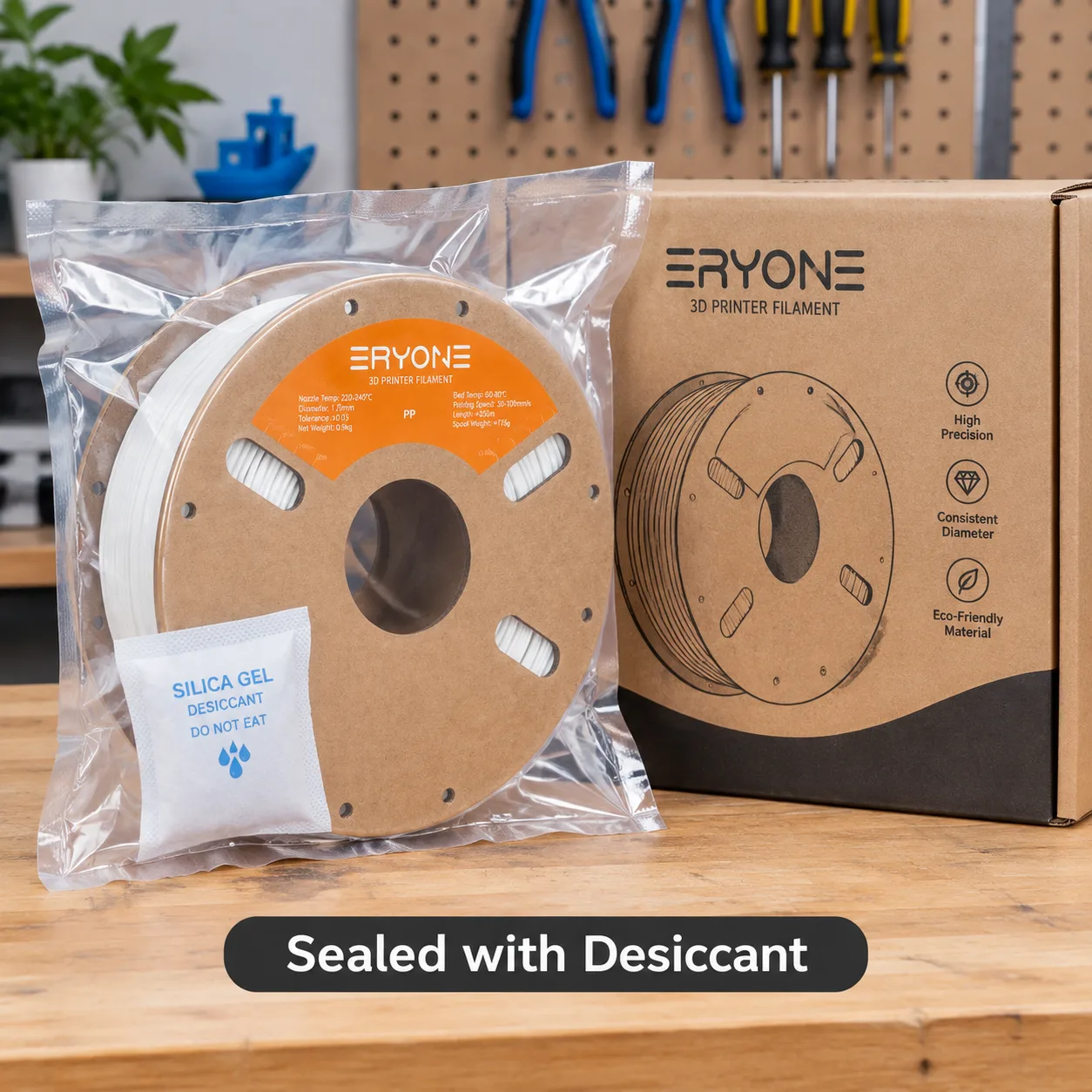
The spool ships vacuum sealed with a desiccant sachet inside the printed box, so it arrives dry. PP takes up very little moisture, so it tolerates a normal workshop shelf far better than nylon or PETG, and it does not need a drying cycle before every job. For long storage, reseal the spool or keep it in a dry cabinet out of direct sunlight; the winding holds its shape, so the strand still feeds cleanly on the next job.

Documentation & Downloads

Everything we publish for this material, in one place.

Ready to Order

Get factory-direct pricing on PP Filament 900g 1.75mm Yiqiu3D Chemical-Resistant

Not sure this is the right material? → Compare filaments