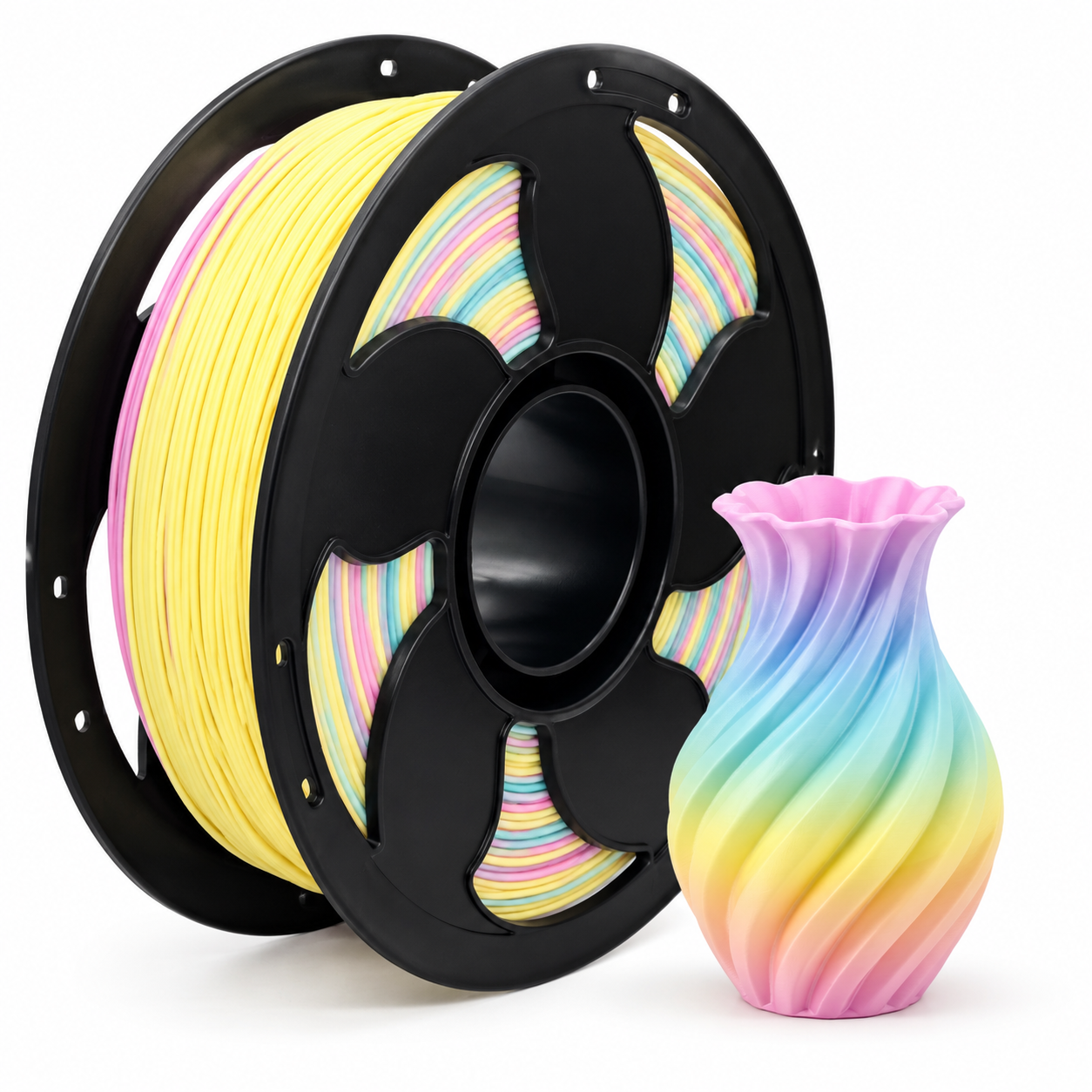
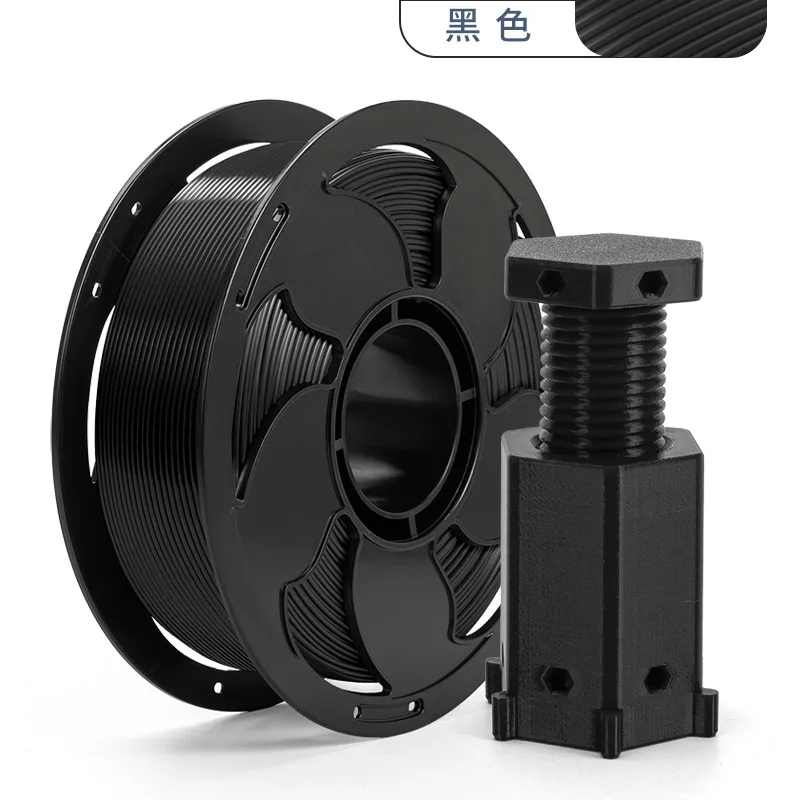
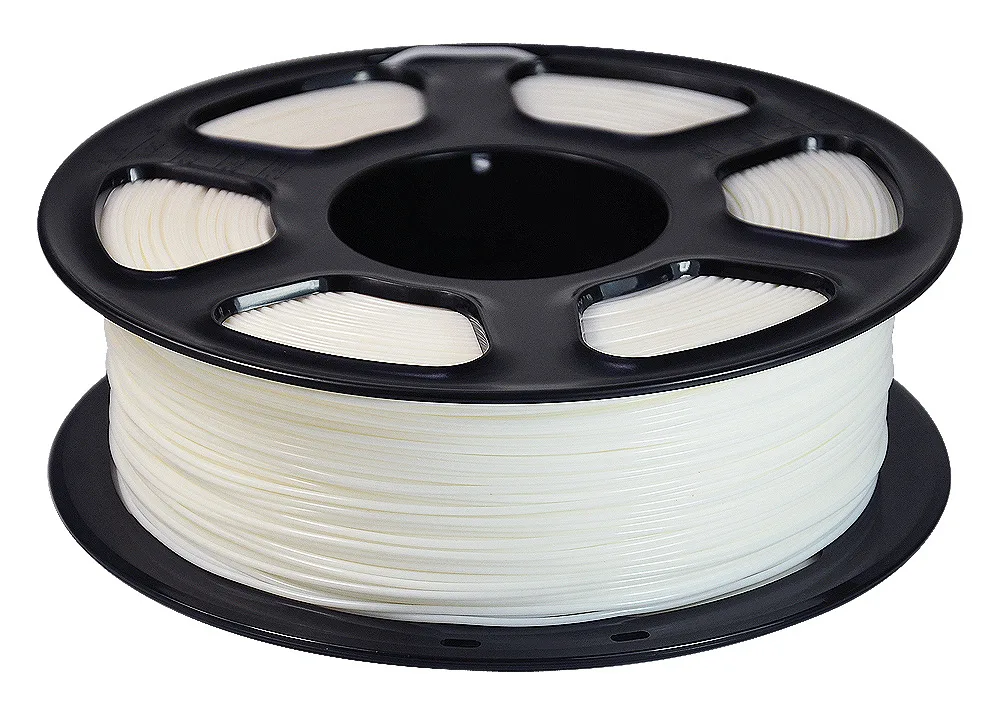
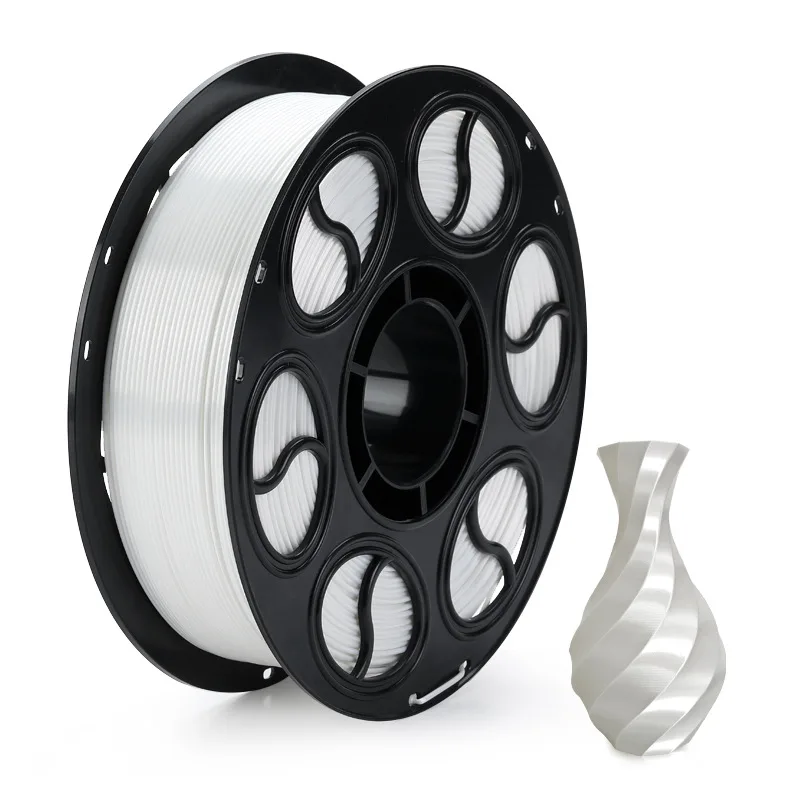

PP Filament 1.75mm White Polypropylene Chemical Resistant Living Hinge

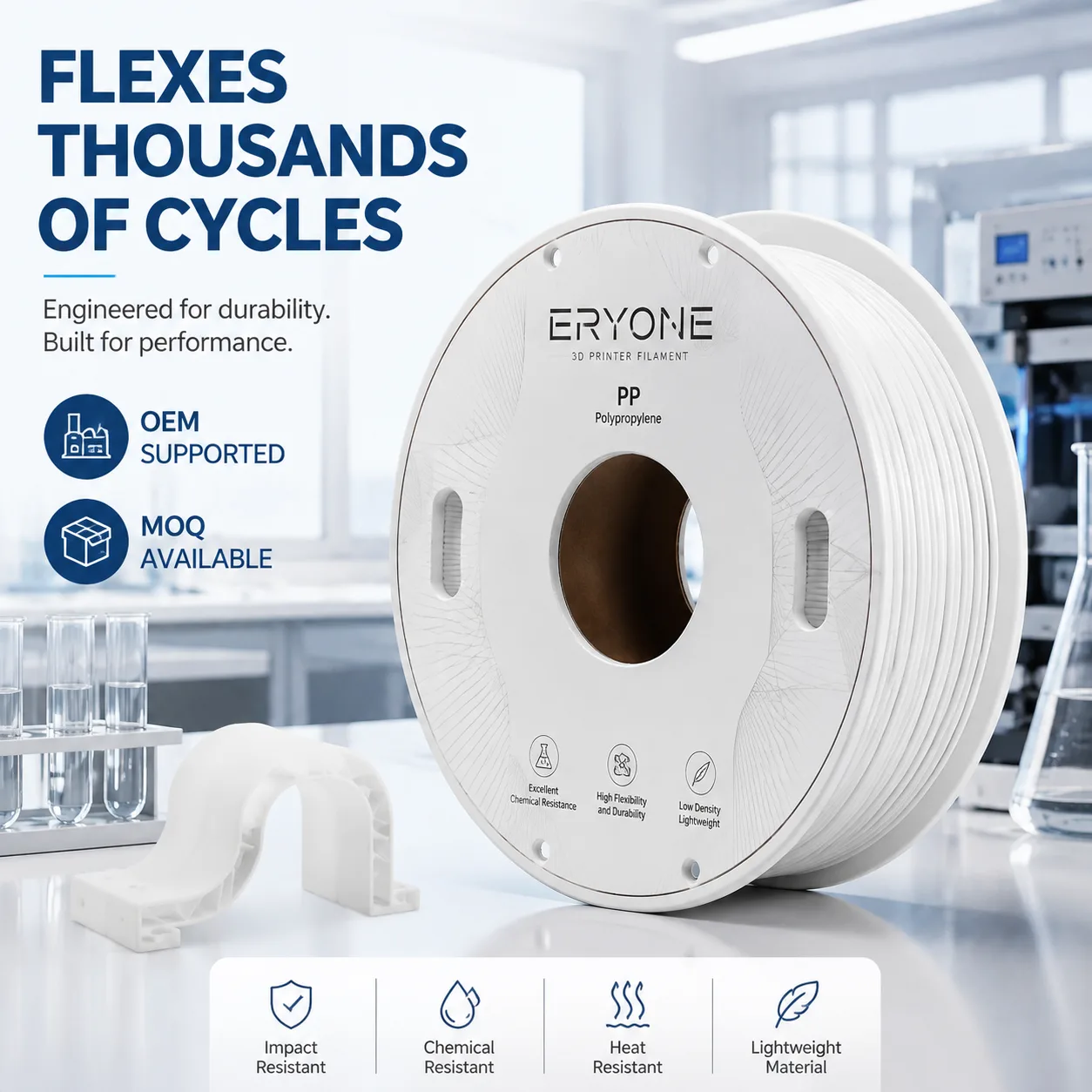
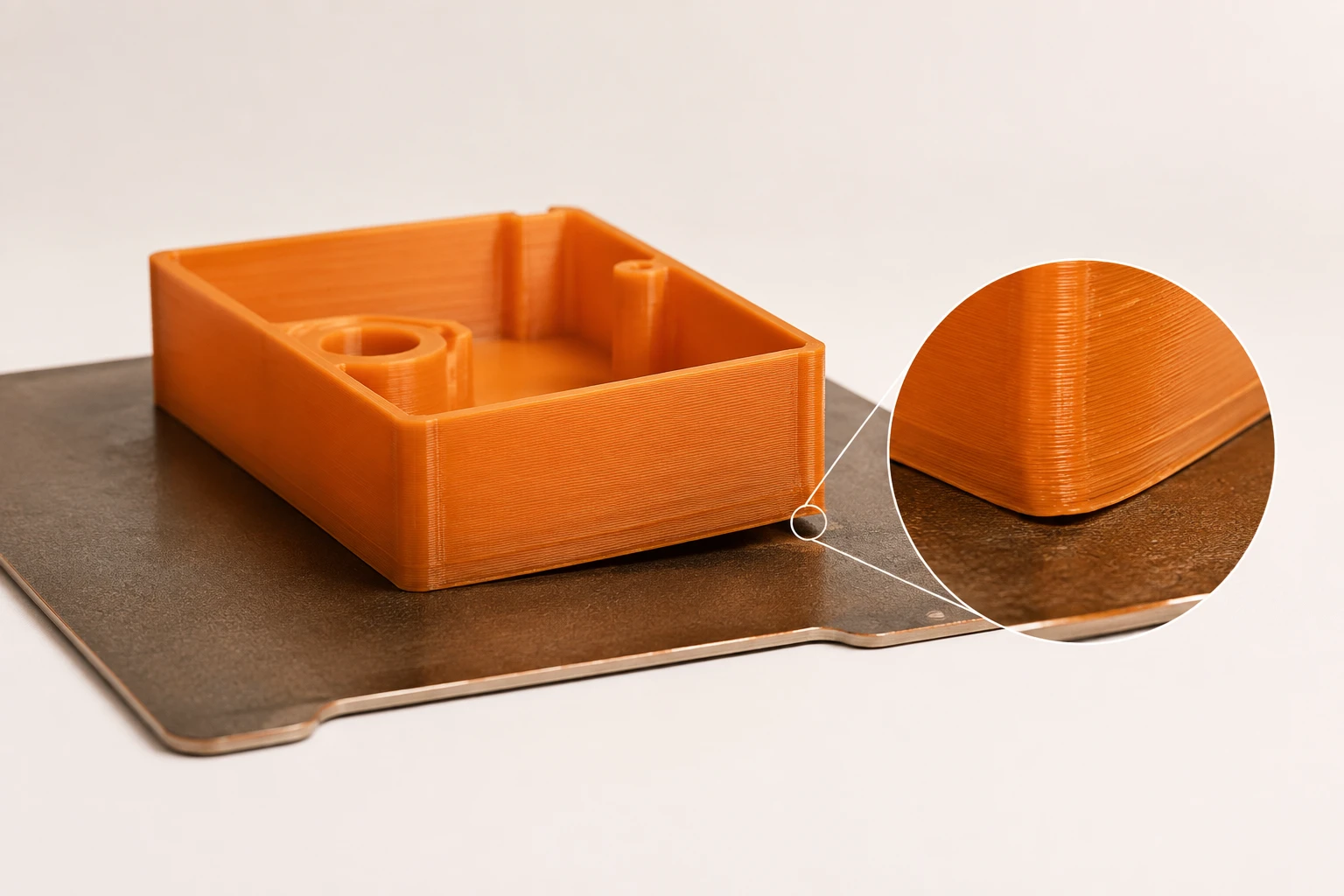
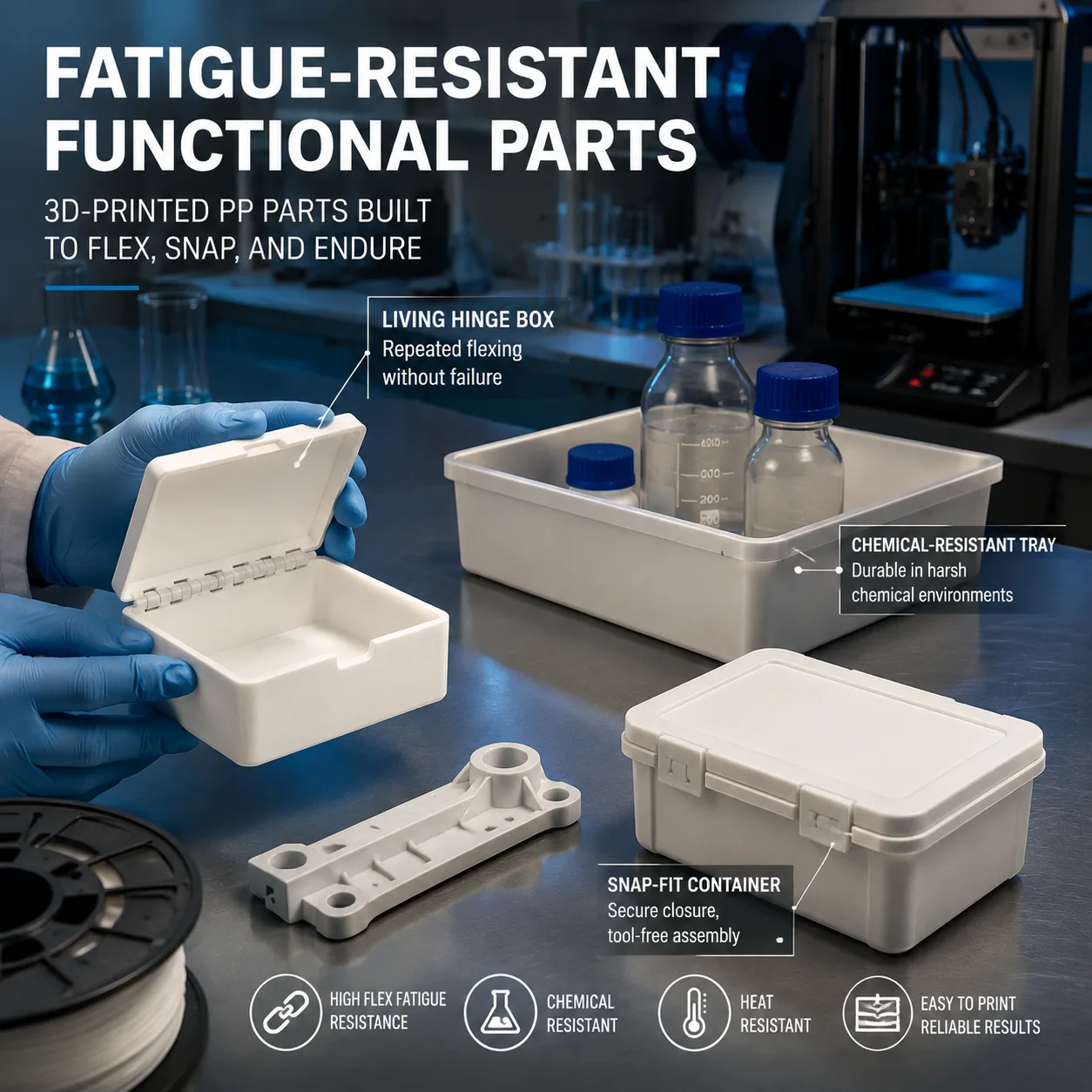
Brand: Yiqiu3D · Living hinges and snap-fit parts crack after a few bends in brittle materials, limiting what you can actually design. PP polypropylene flexes thousands of cycles without breaking, resists chemicals and moisture, and is lightweight, making it the material of choice for functional hinges, containers, and lab parts.

  • Pure white PP keeps a clean
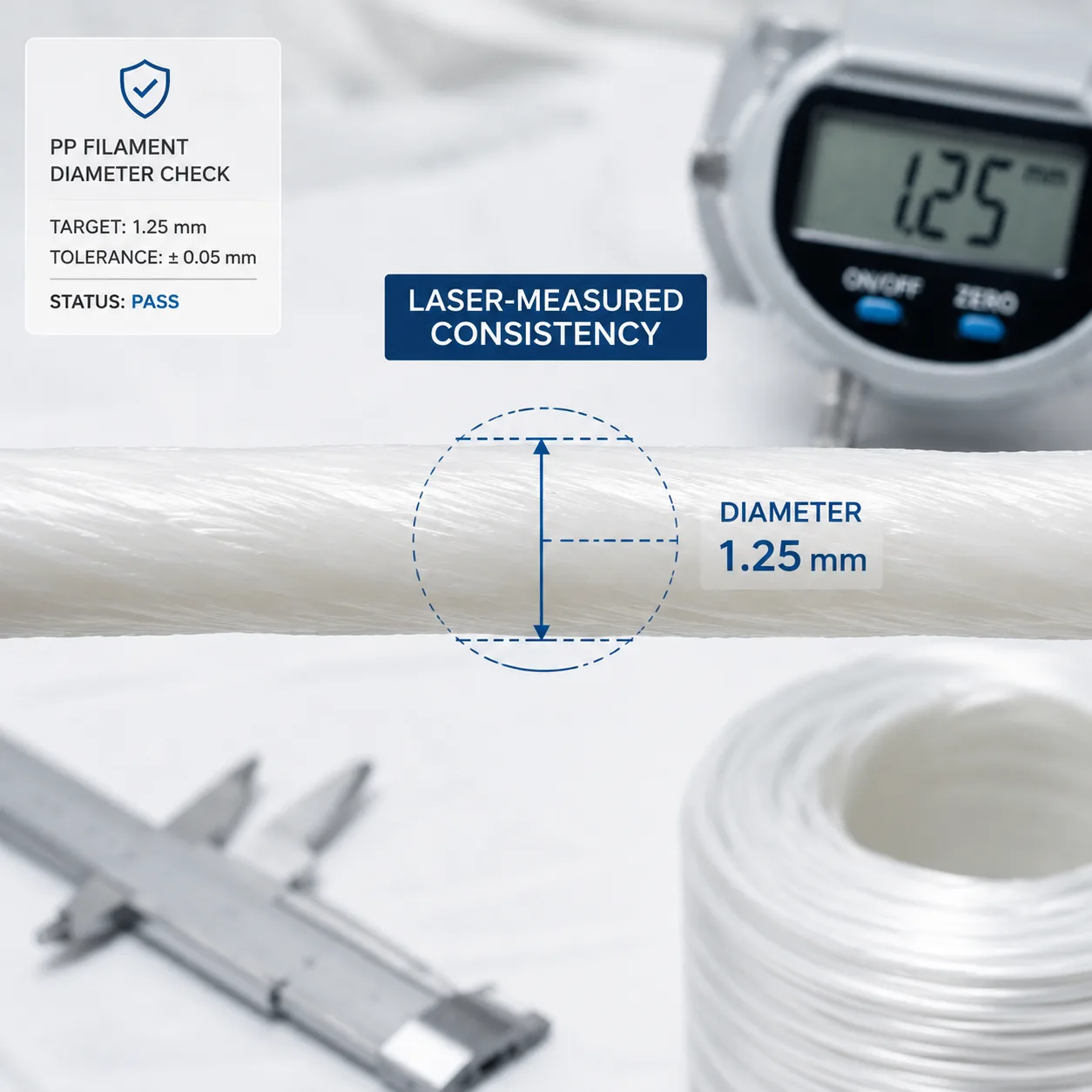
  • Premium materials deserve premium QA: every spool is laser-measured for diameter consistency
  • PP is famously hard to print because of low bed adhesion
Compare filaments
Diameter 1.75mm
Material PP
Quick Answer

What makes PP different from PLA and PETG?

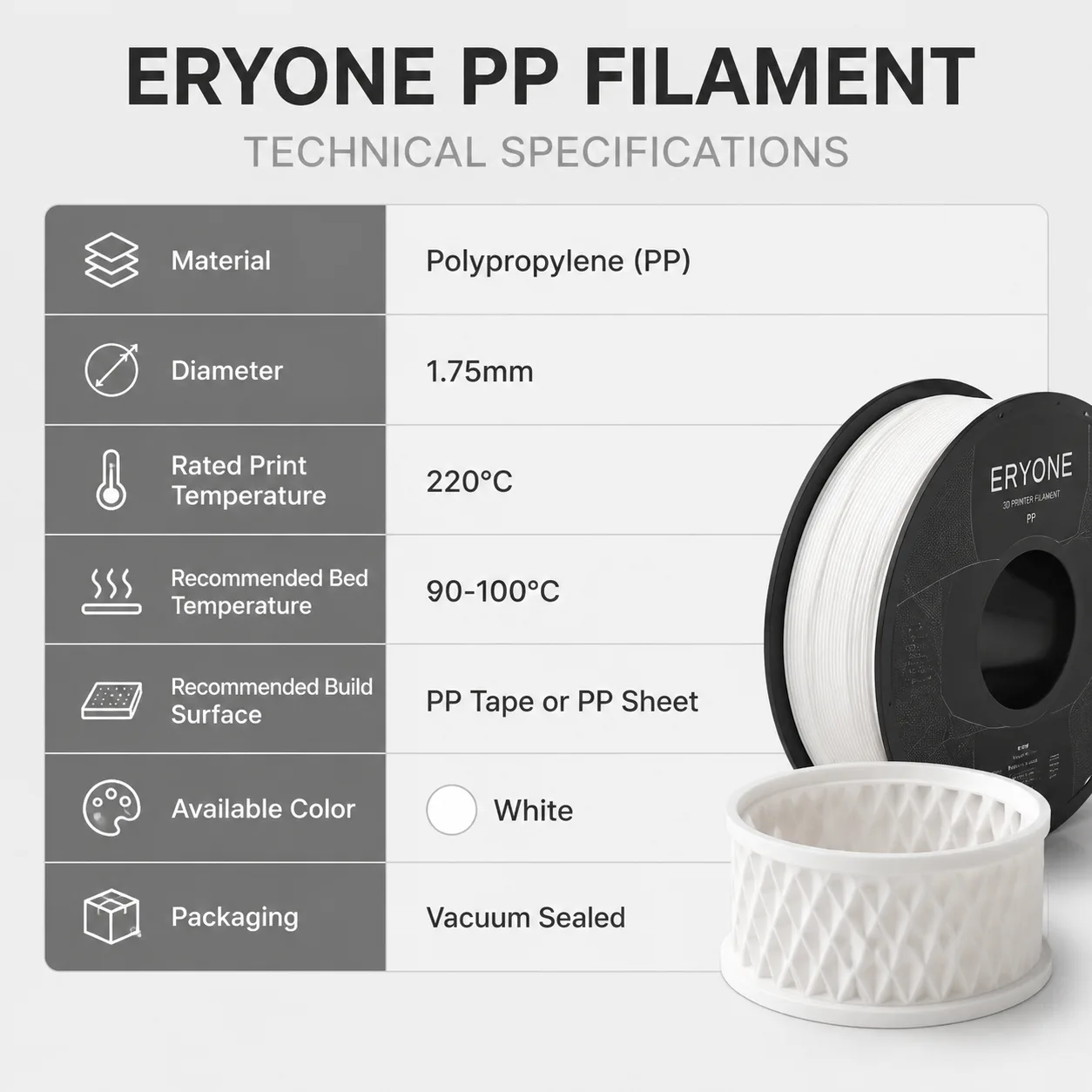
PP is a polyolefin with exceptional fatigue resistance, so it survives repeated bending that cracks PLA and PETG, plus it resists acids, alkalis, and moisture and floats as the lightest common 3D printing polymer. That combination makes it the go-to for living hinges, chemical containers, and laboratory parts. It is rated for a 220°C print temperature.

Full answers below
Is it right for my project?

Best for: For chemically resistant, living-hinge parts - containers, hinges and battery separators - available in 2 colours; lead colour Black. Not ideal for: Not for high-stiffness structural parts; use a CF or PC grade when rigidity is needed - available in 2 colours; lead colour Black.

Print settings

Nozzle 220°C

01 · Why this one

Product highlights

3 reasons

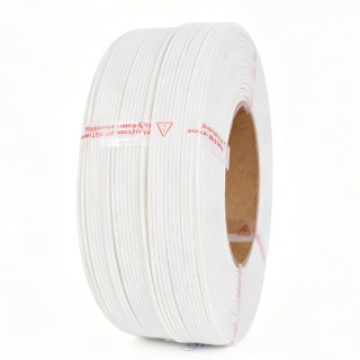
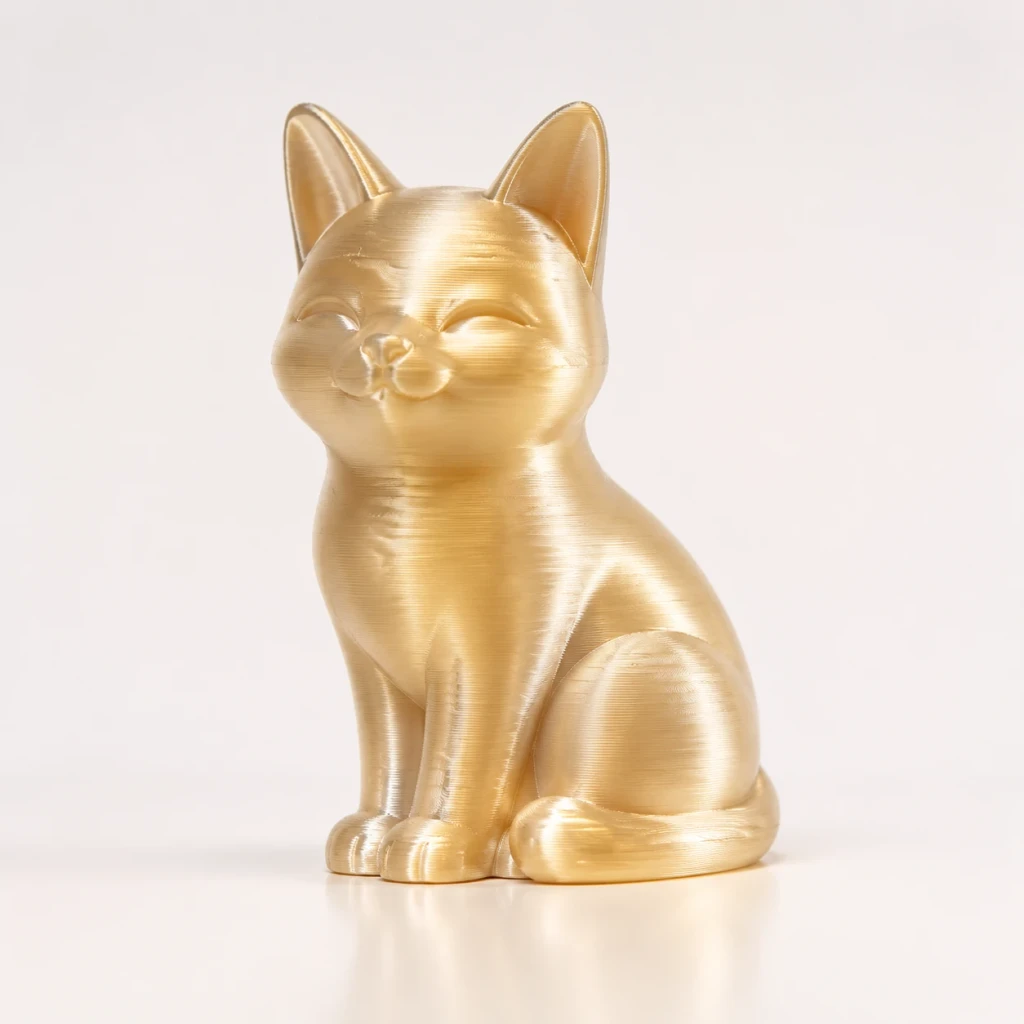
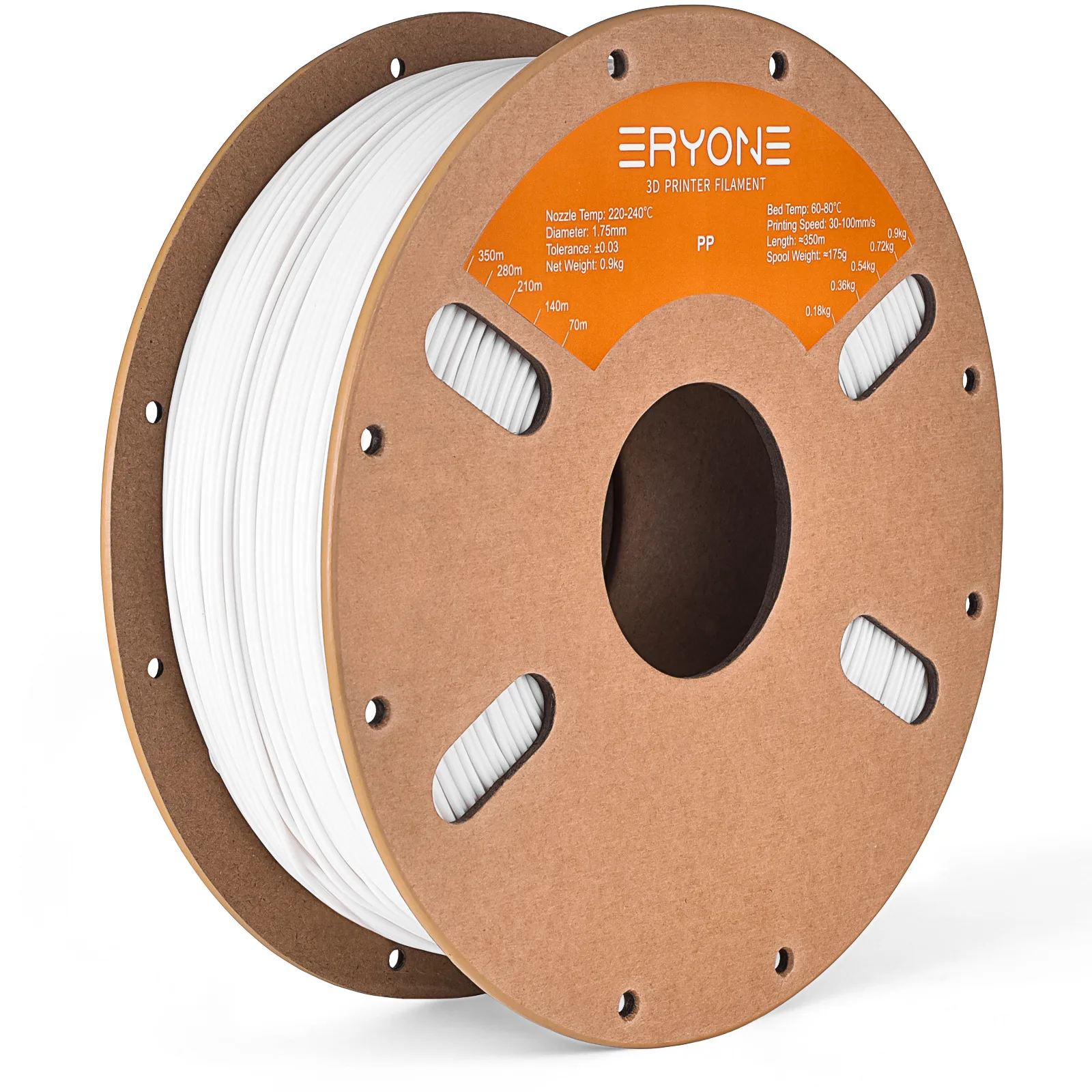
Pure white PP keeps a clean, opaque appearance that suits medical-style housings, laboratory trays, and food-adjacent containers, with a smooth surface that looks professional in end-use products.

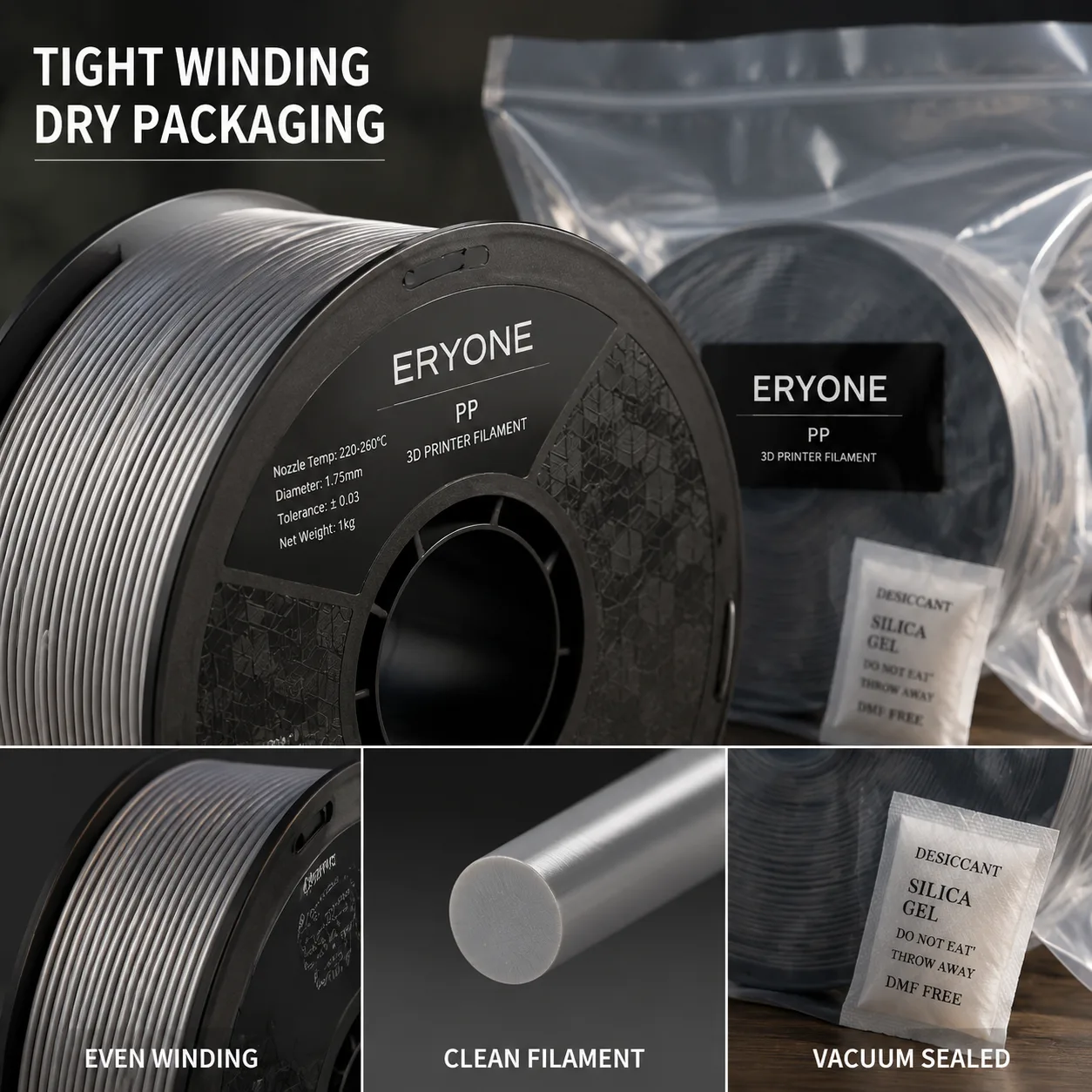
Premium materials deserve premium QA: every spool is laser-measured for diameter consistency, wound with even tension, vacuum sealed with desiccant, and batch-controlled so this demanding material performs predictably.

PP is famously hard to print because of low bed adhesion, but this grade is formulated with adhesion additives: it prints at the rated 220°C with a heated bed and a PP-compatible build surface, giving reliable results on Bambu Lab, Creality, and Prusa machines.

Technical Data

Specifications

Diameter 1.75mm
Material PP

Print Profile

PP Filament 1.75mm White Polypropylene Chemical Resistant Living Hinge prints best at 220°C nozzle.

Nozzle Temp220°C

Spool Specification

Spool details for your feeding and handling setup.

Gross Weight1.3 kg
Spool Size (L×W×H)21 × 21 × 7 cm
Pack FormatPiece
Spool TypeRound Spool

Attributes

Country / Regionchina
HS Code39169090
Item No.pp-filament-white-polypropylene
Diameter 1.75mm
Appearance Round Spool
Before You Ask

Frequently Asked Questions

What makes PP different from PLA and PETG?
PP is a polyolefin with exceptional fatigue resistance, so it survives repeated bending that cracks PLA and PETG, plus it resists acids, alkalis, and moisture and floats as the lightest common 3D printing polymer. That combination makes it the go-to for living hinges, chemical containers, and laboratory parts. It is rated for a 220°C print temperature.
Will this PP filament work with my printer?
Yes, on any machine with a 1.75mm hotend, including Bambu Lab, Creality, Prusa, and Anycubic. The critical requirement is a PP-compatible build surface, such as PP tape or a dedicated PP plate, because standard PEI and glass beds do not grip PP well.
What print settings does PP need?
Use the rated nozzle temperature of 220°C, adjust within 220-250°C for your machine, set the bed to 90-100°C, and prefer a closed chamber to reduce warp. Cover the build plate with PP tape or a PP sheet and run the first layer slowly at 20-30 mm/s.
How long does one spool last?
A full spool typically yields dozens of medium functional parts such as hinge boxes, trays, or containers at 15-25% infill, or hundreds of small components. Exact yield depends on part volume and your slicing settings.
How consistent is the white color?
The white color is color-matched during compounding and verified before packing, so spools across orders keep the same clean, opaque tone. Consistent pellets also keep the melt stable, which preserves the surface finish.
What print speed range works best for PP?
Print PP at 30-60 mm/s for reliable layer bonding; slower speeds reduce warp and improve adhesion. Simple geometry can run near 60 mm/s, while hinged or thin-wall parts benefit from 30-40 mm/s.
What should I build with PP filament?
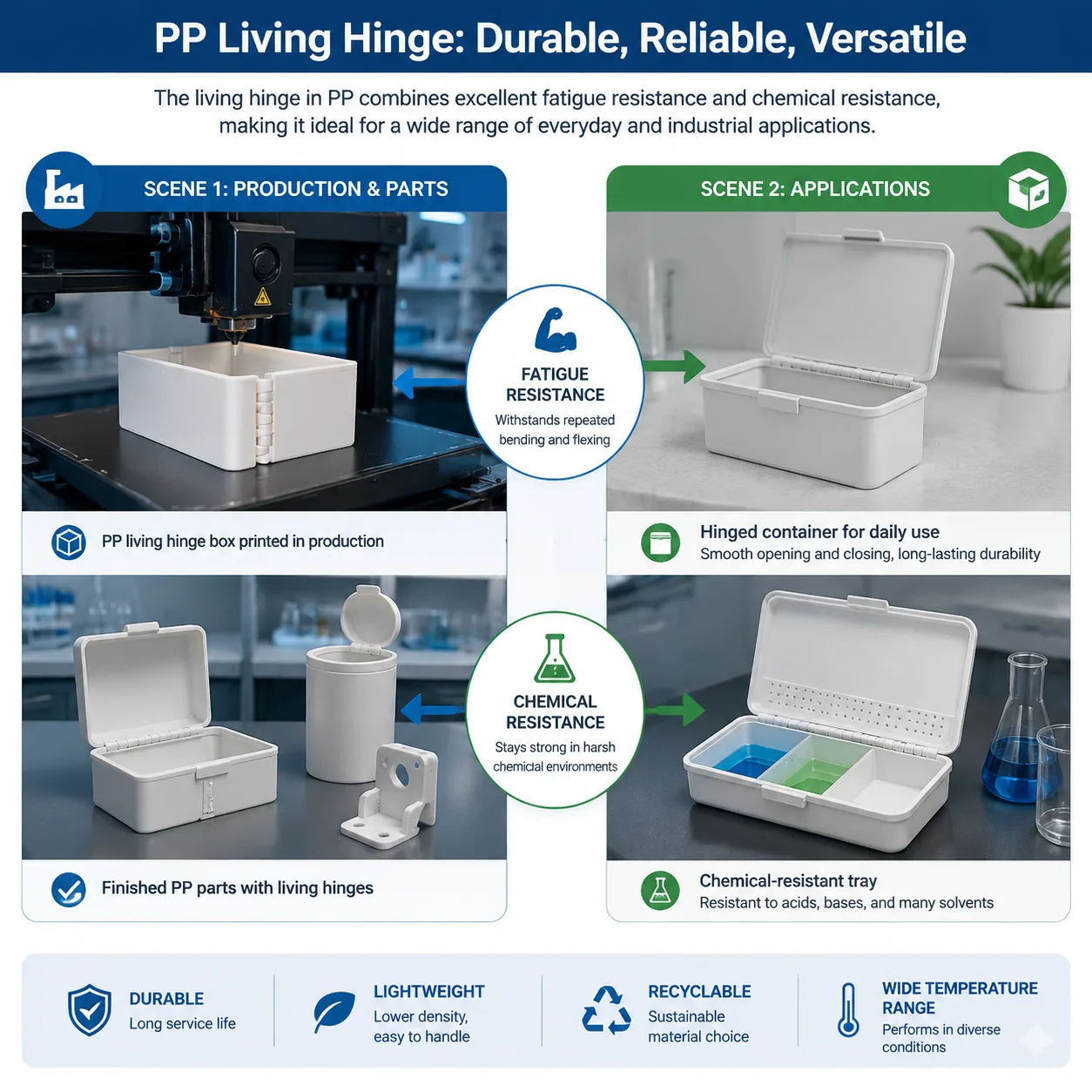
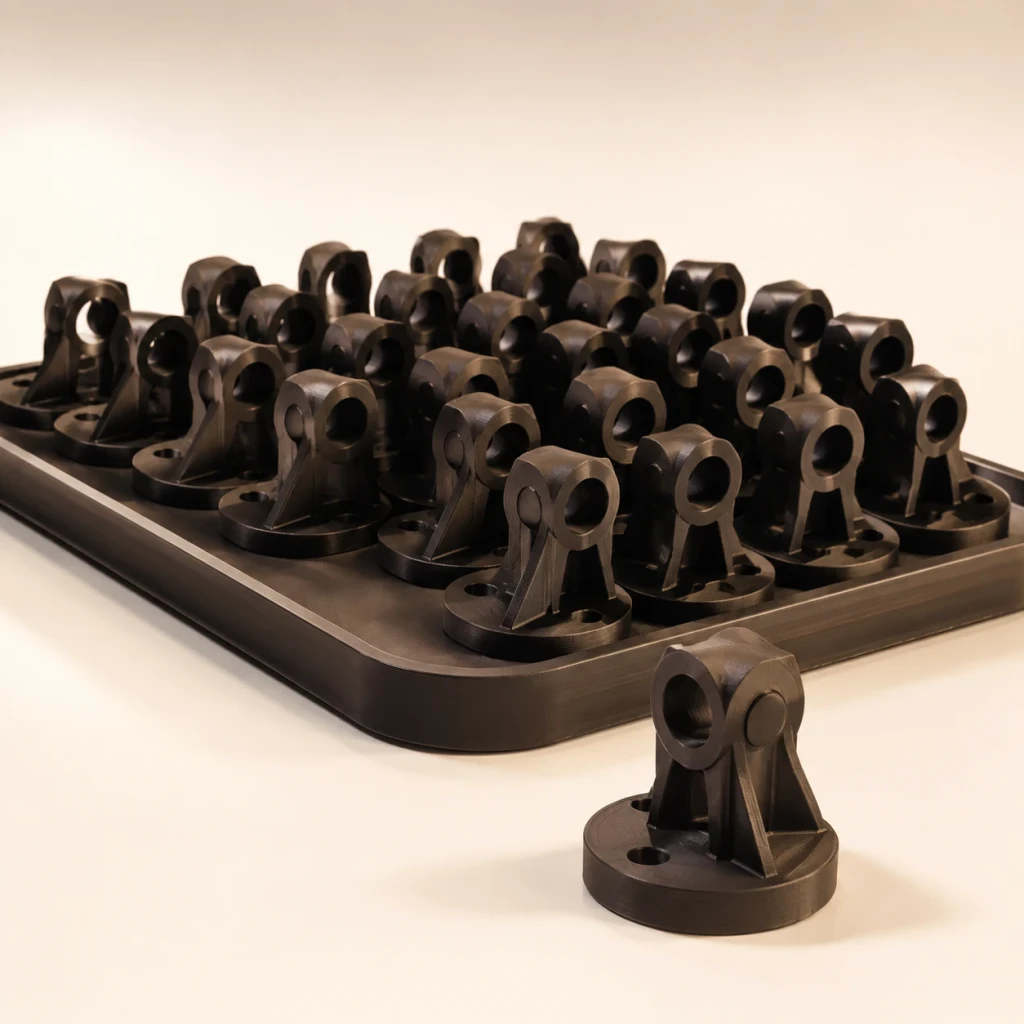
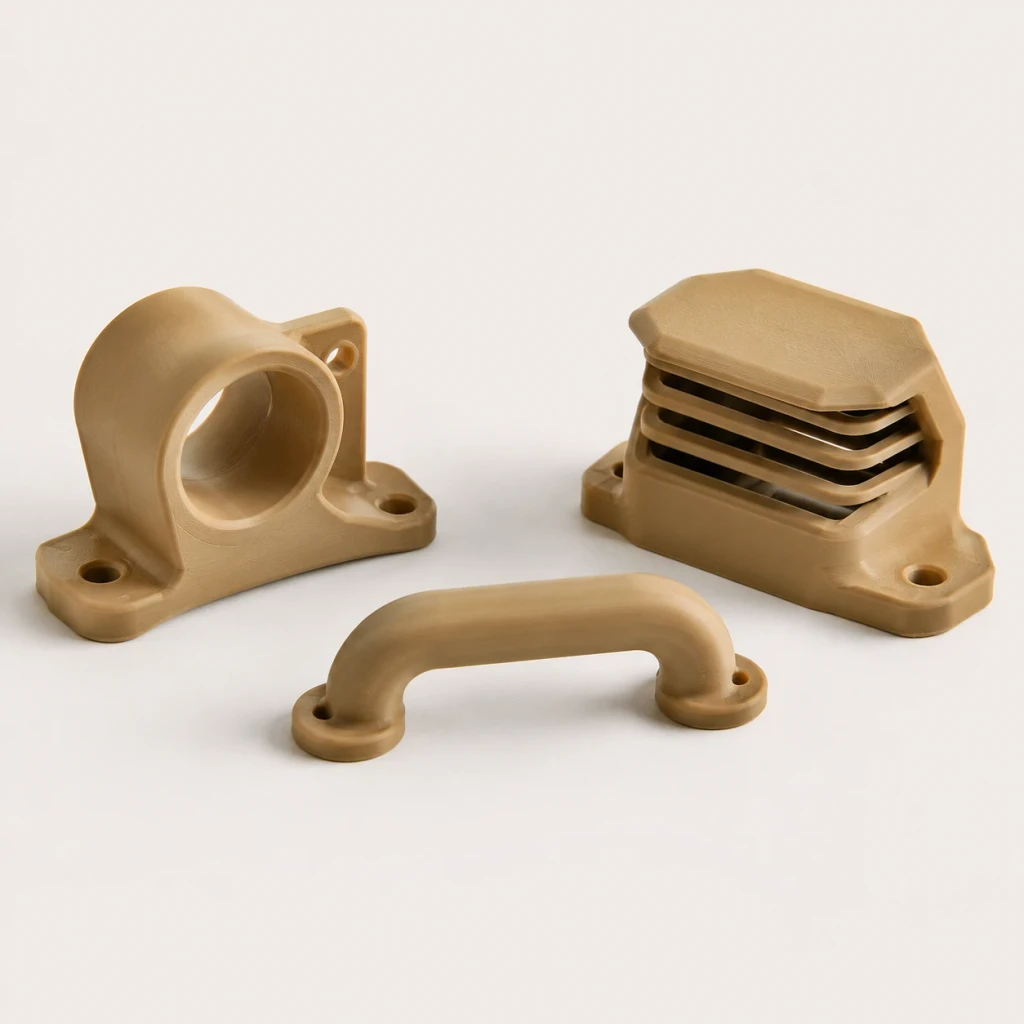
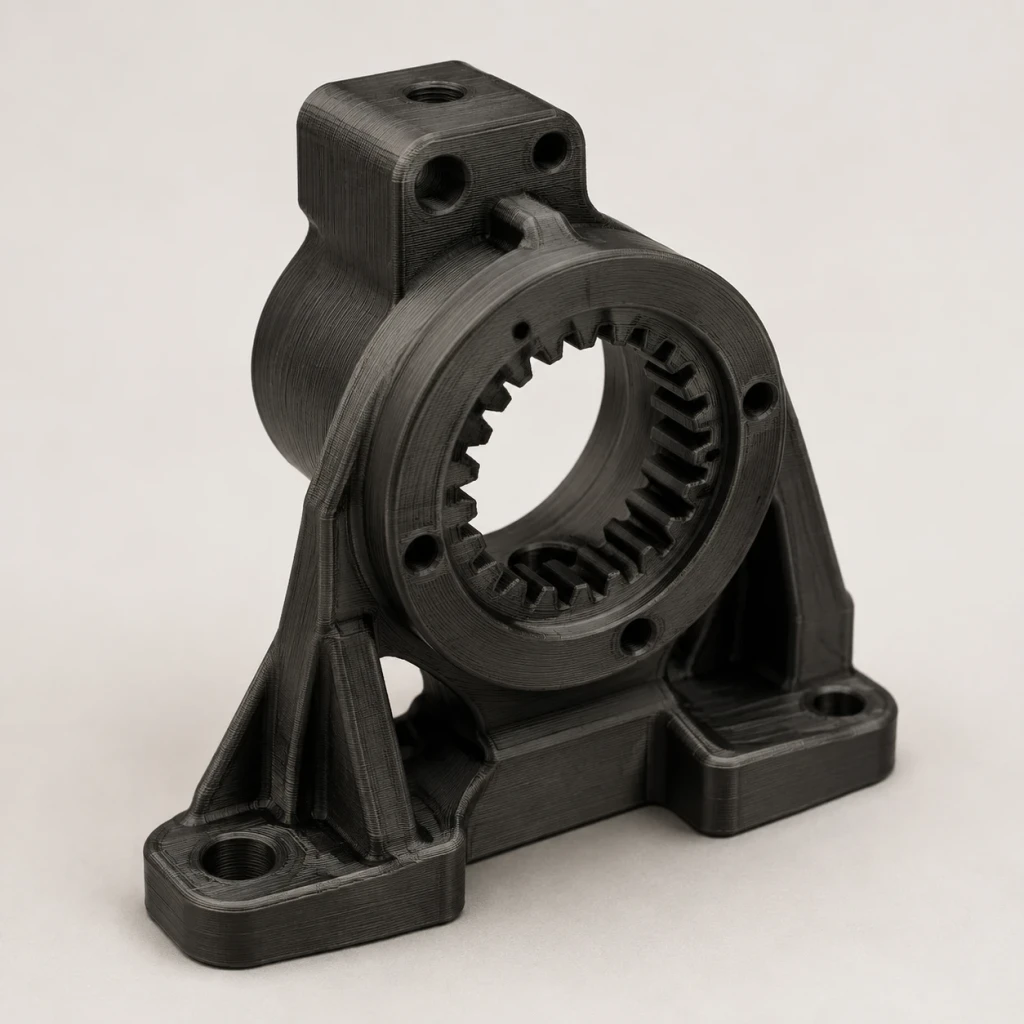
PP is the material for living hinges, snap-fit closures, chemical-resistant containers, lab trays, automotive clips, and lightweight functional parts that see repeated flexing or contact with solvents and moisture.
How should I store this filament?
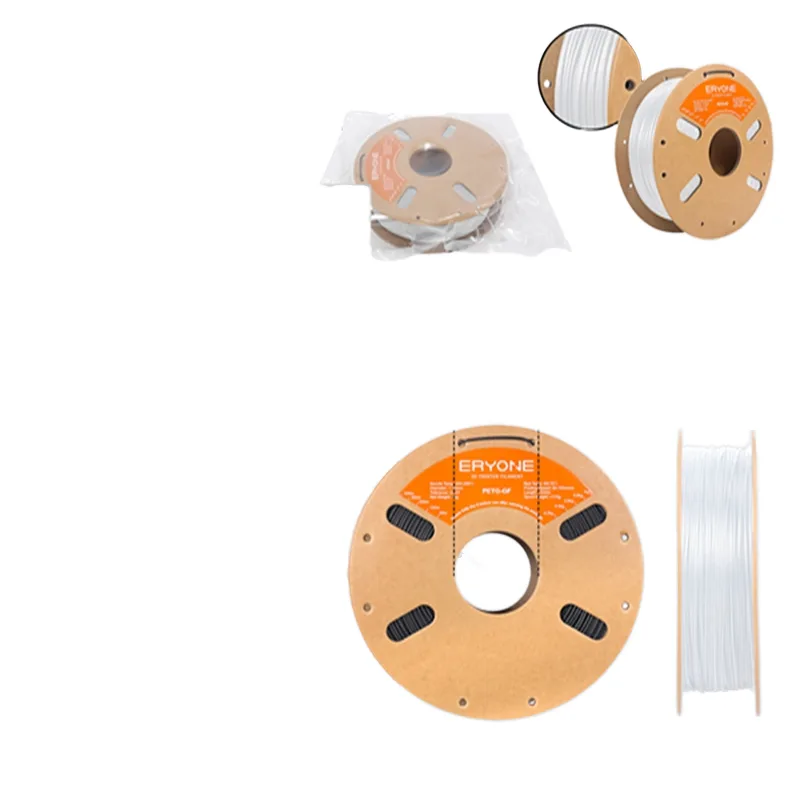
Each spool ships vacuum sealed with a desiccant pouch. PP absorbs little moisture, but store it dry anyway and reseal the bag after opening; if long storage causes issues, dry at around 80°C for 4 hours before printing.

Documentation & Downloads

Everything we publish for this material, in one place.

Ready to Order

Get factory-direct pricing on PP Filament 1.75mm White Polypropylene Chemical Resistant Living Hinge

Not sure this is the right material? → Compare filaments