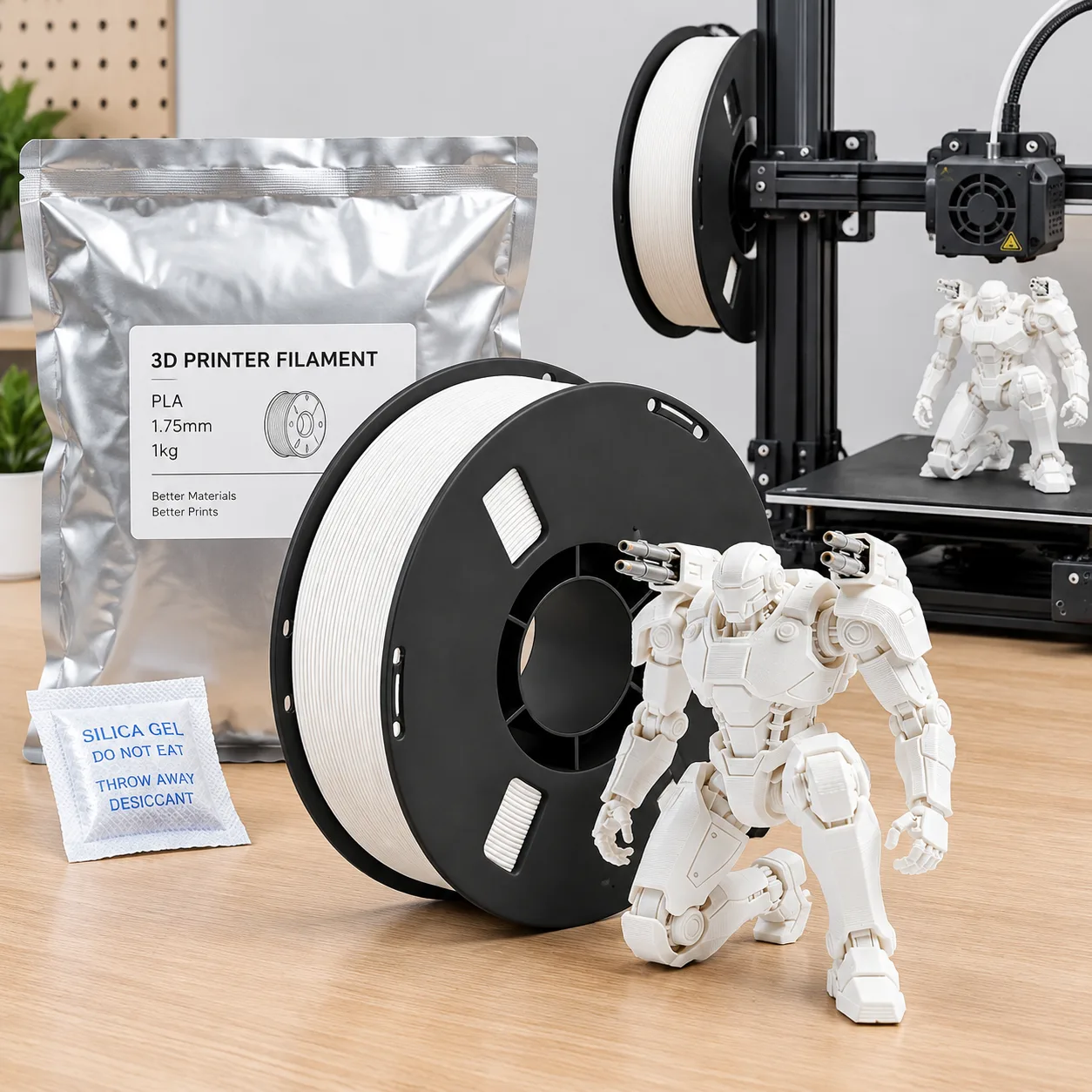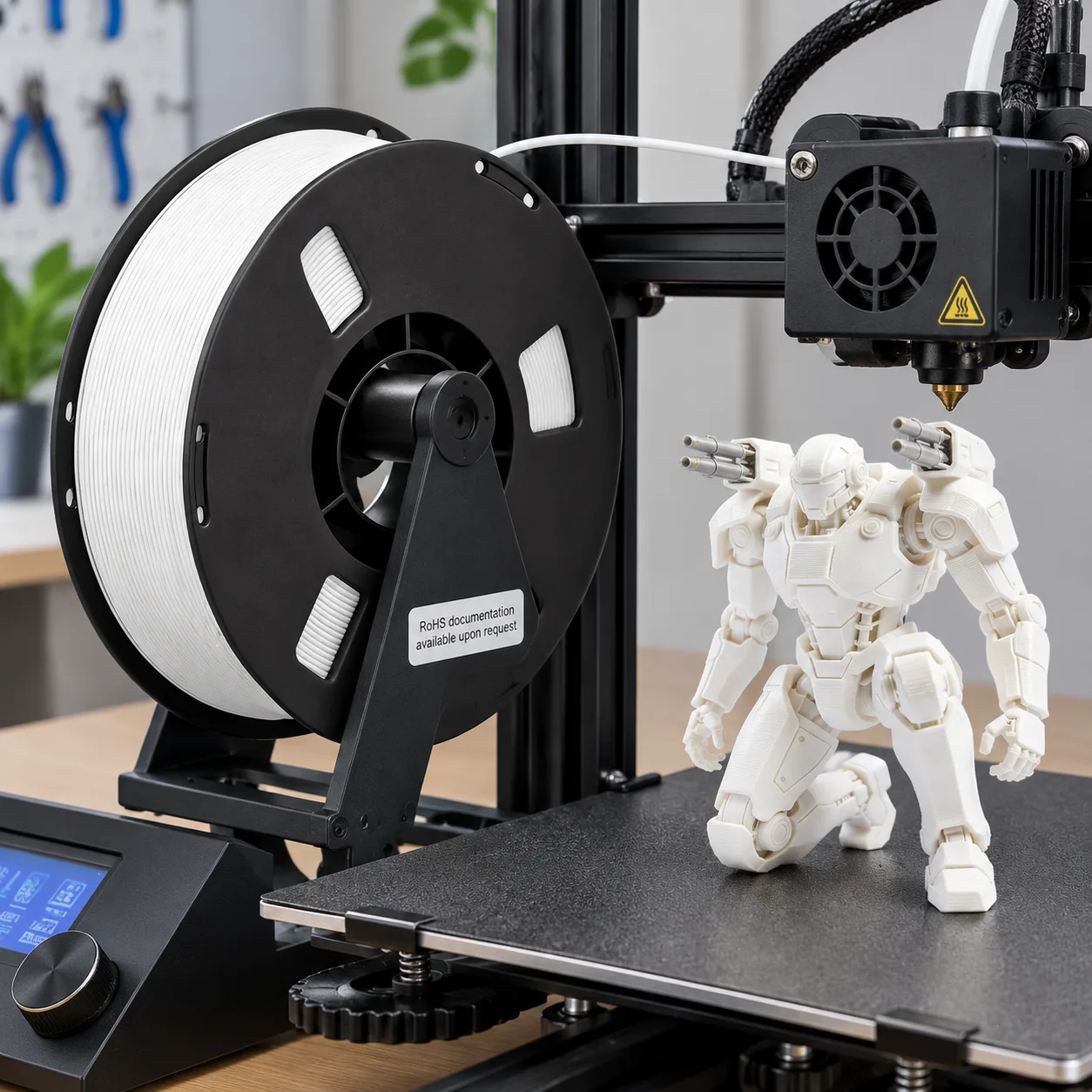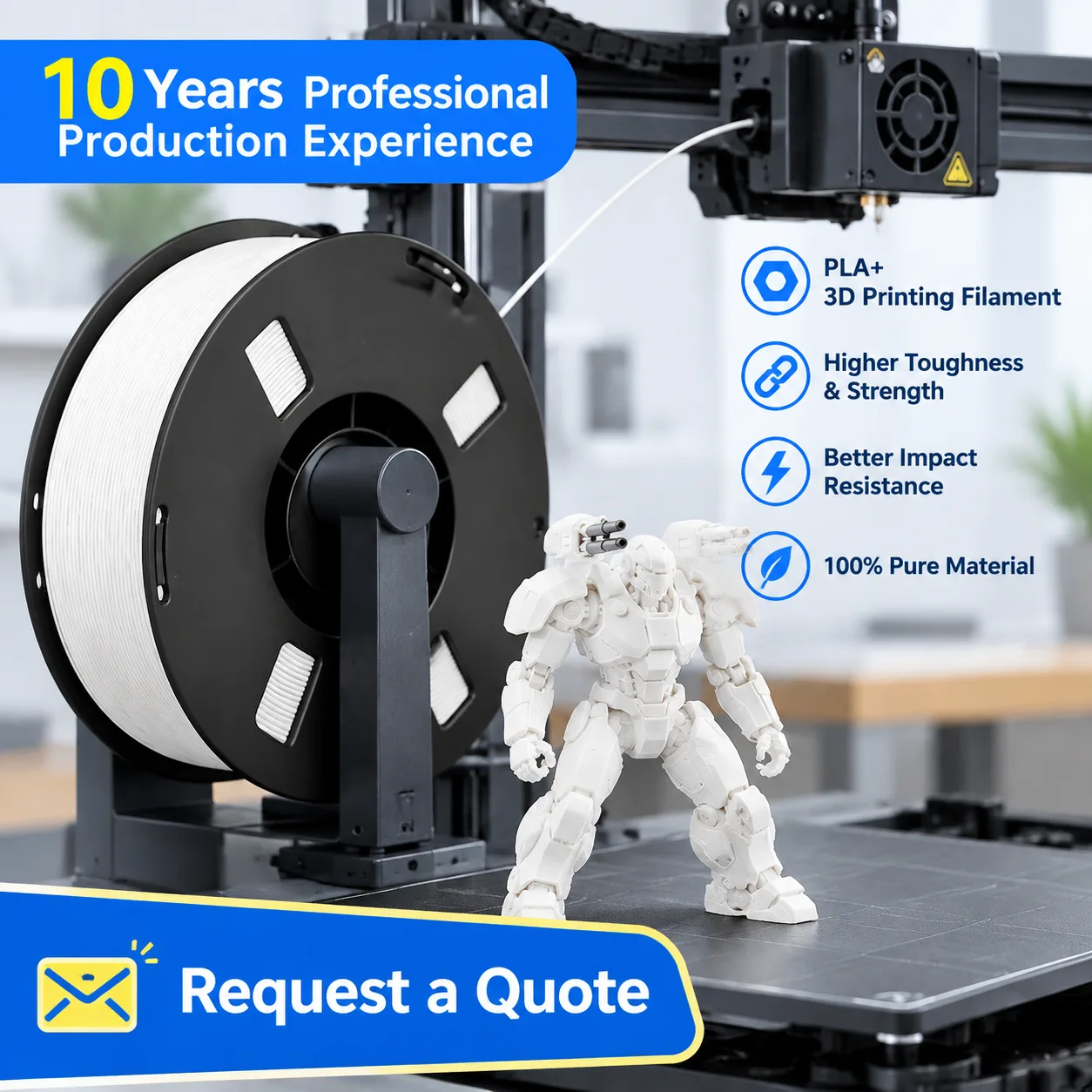
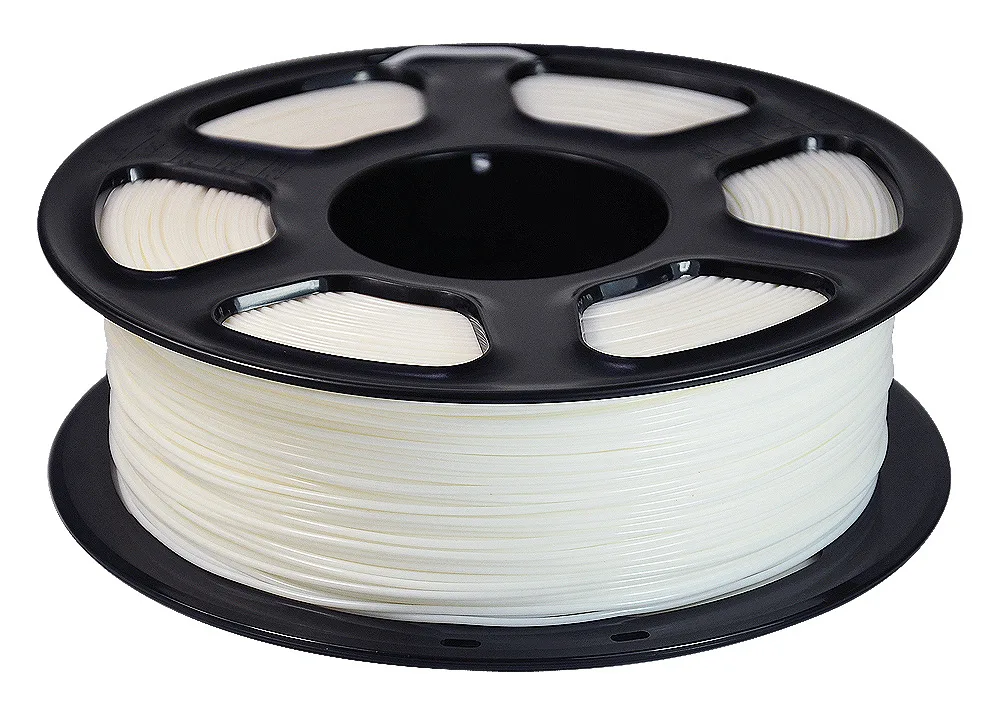
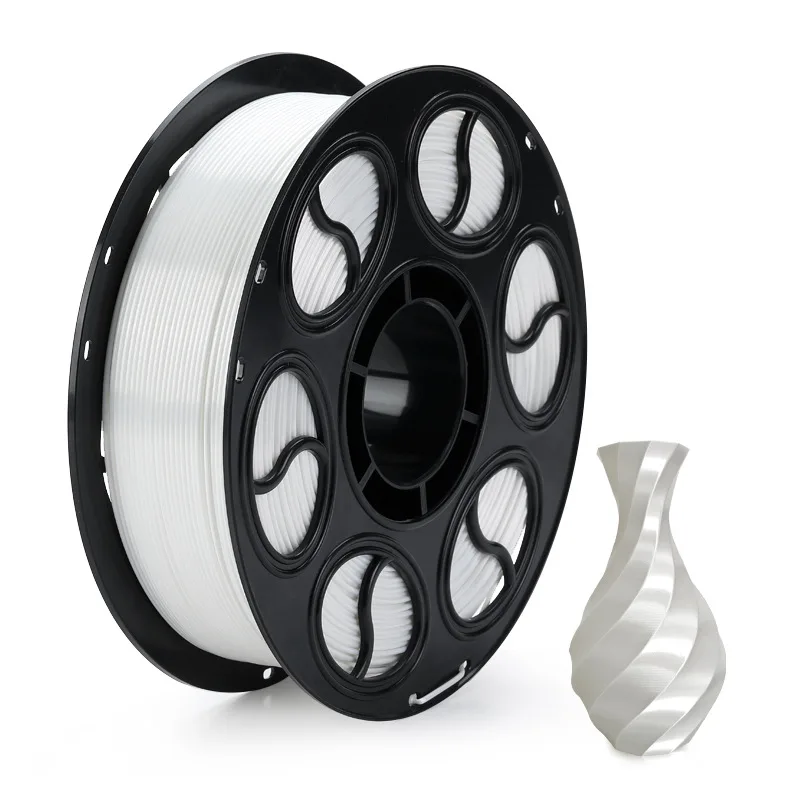
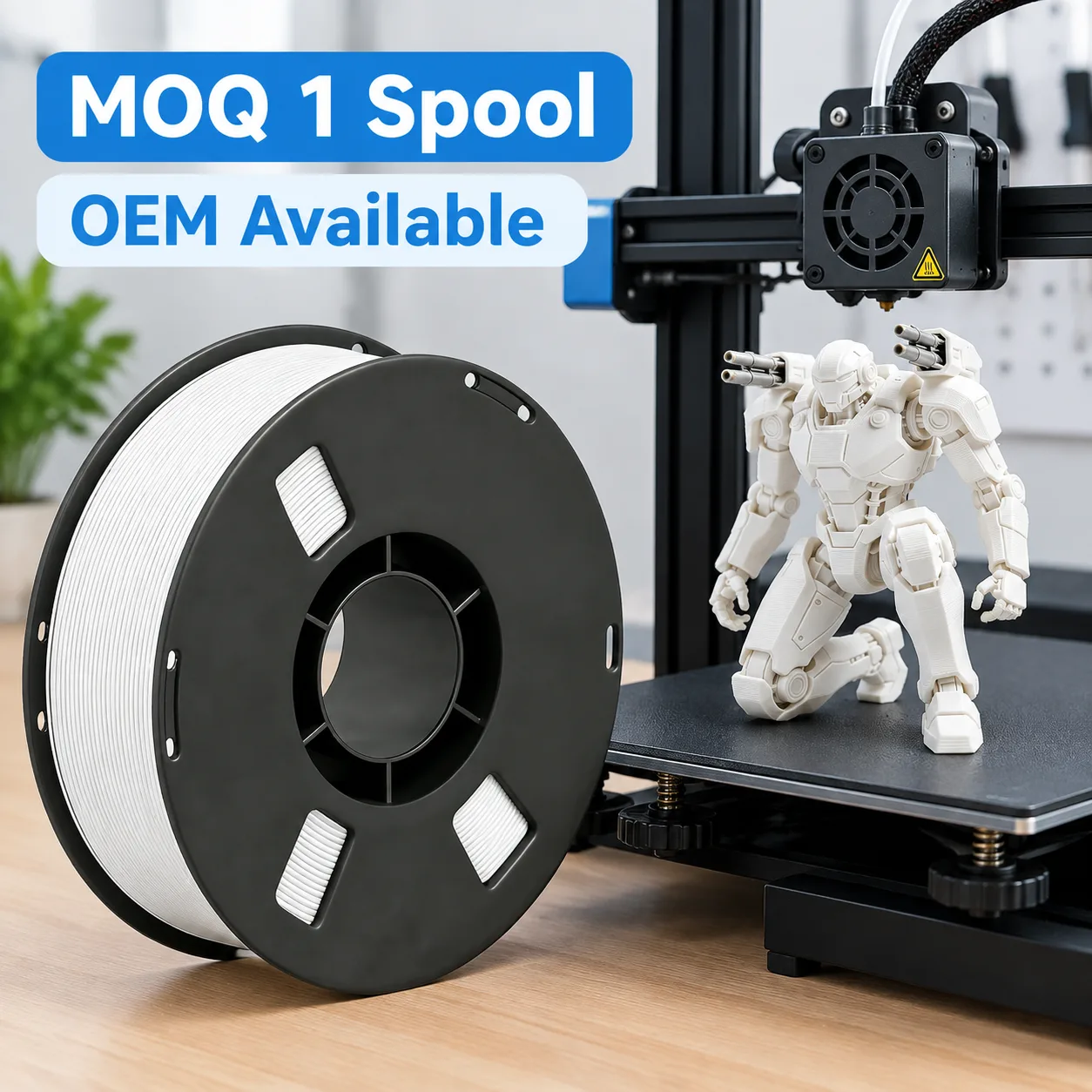
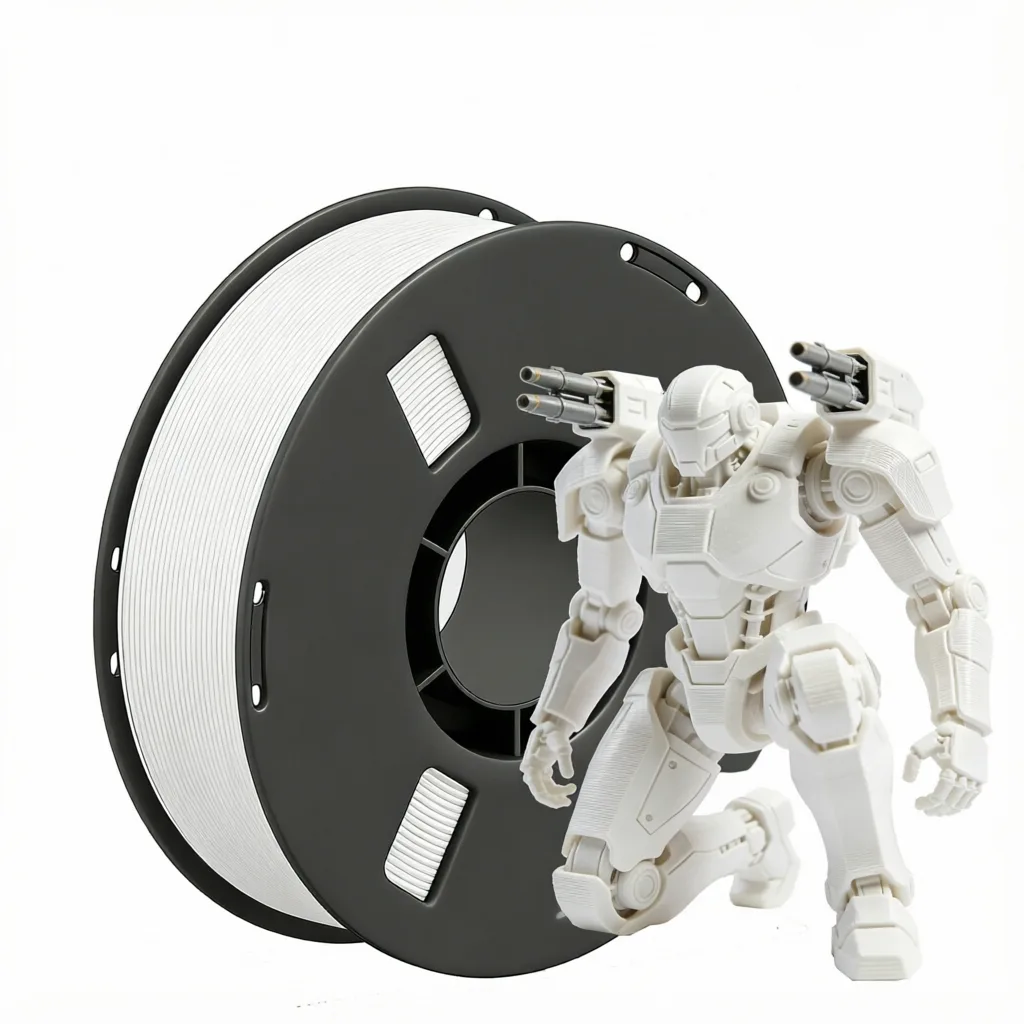
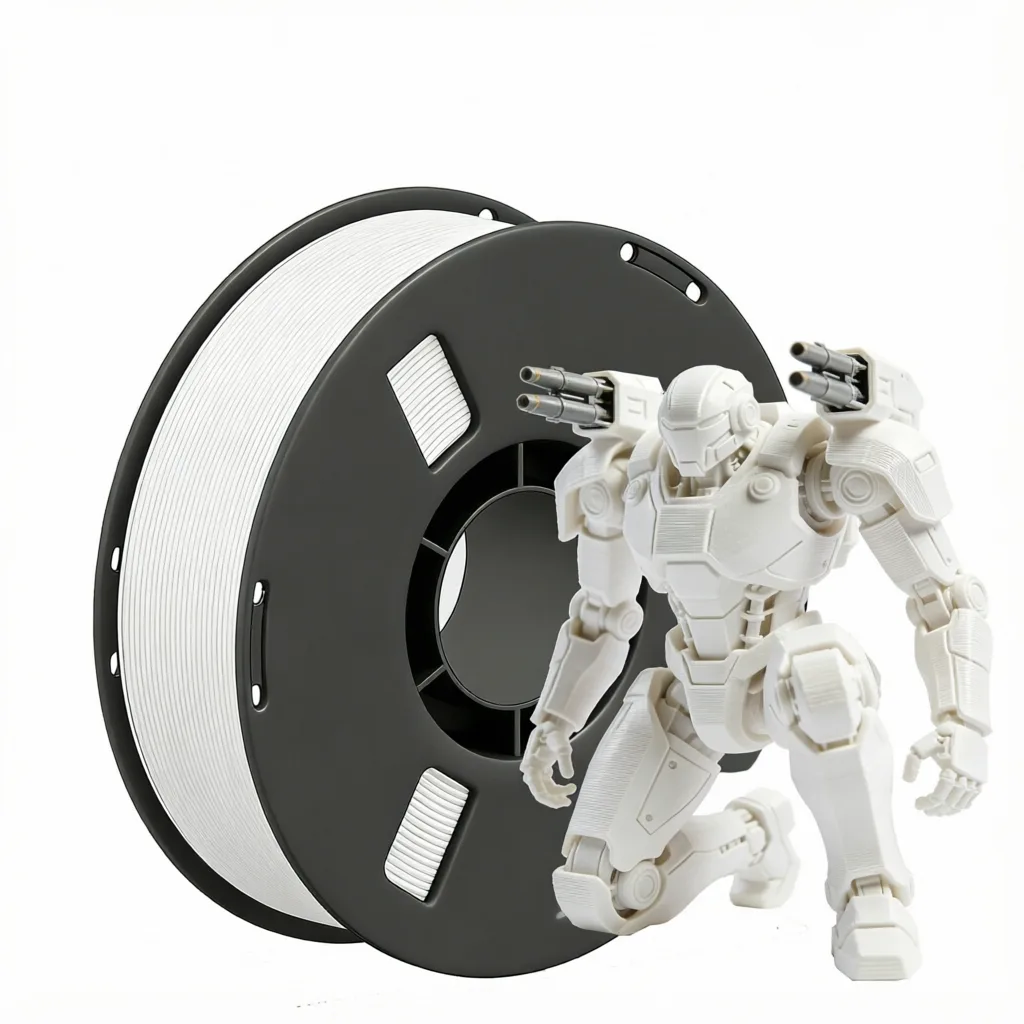
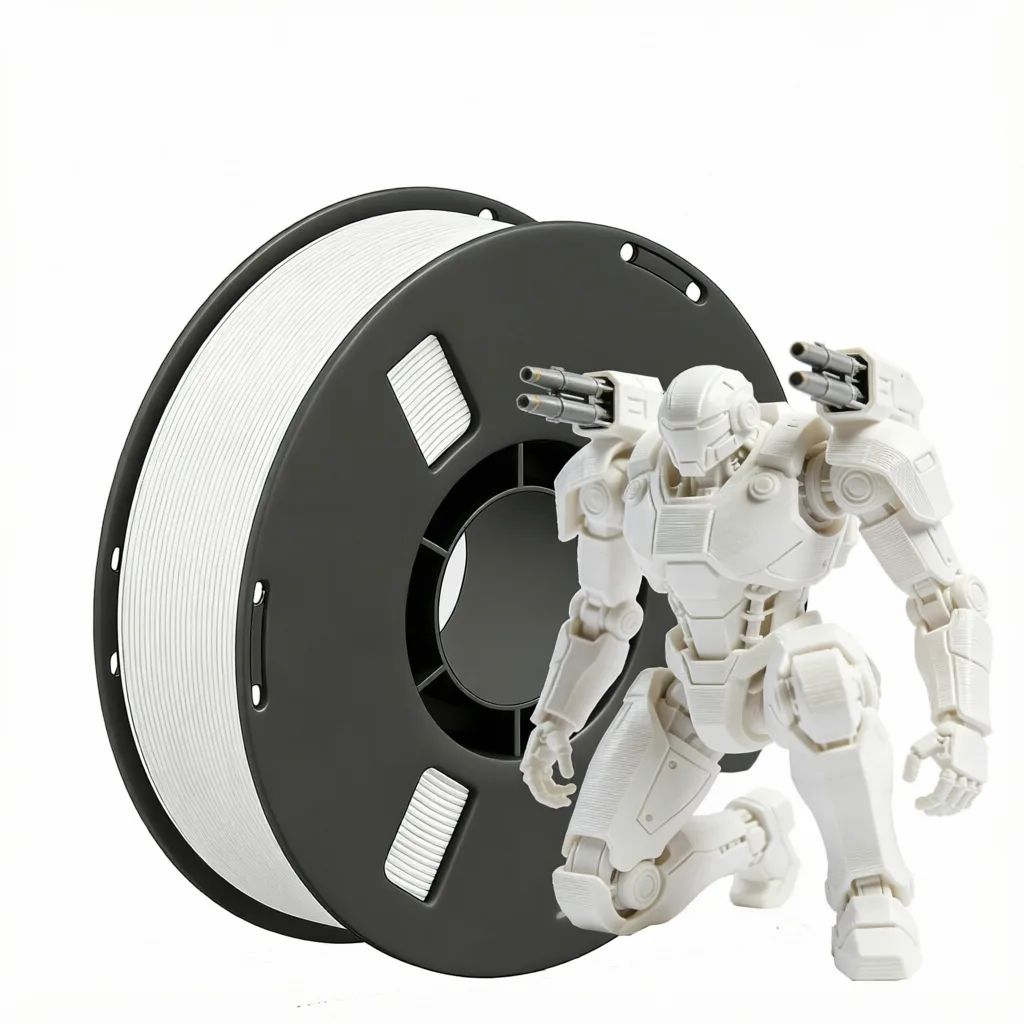
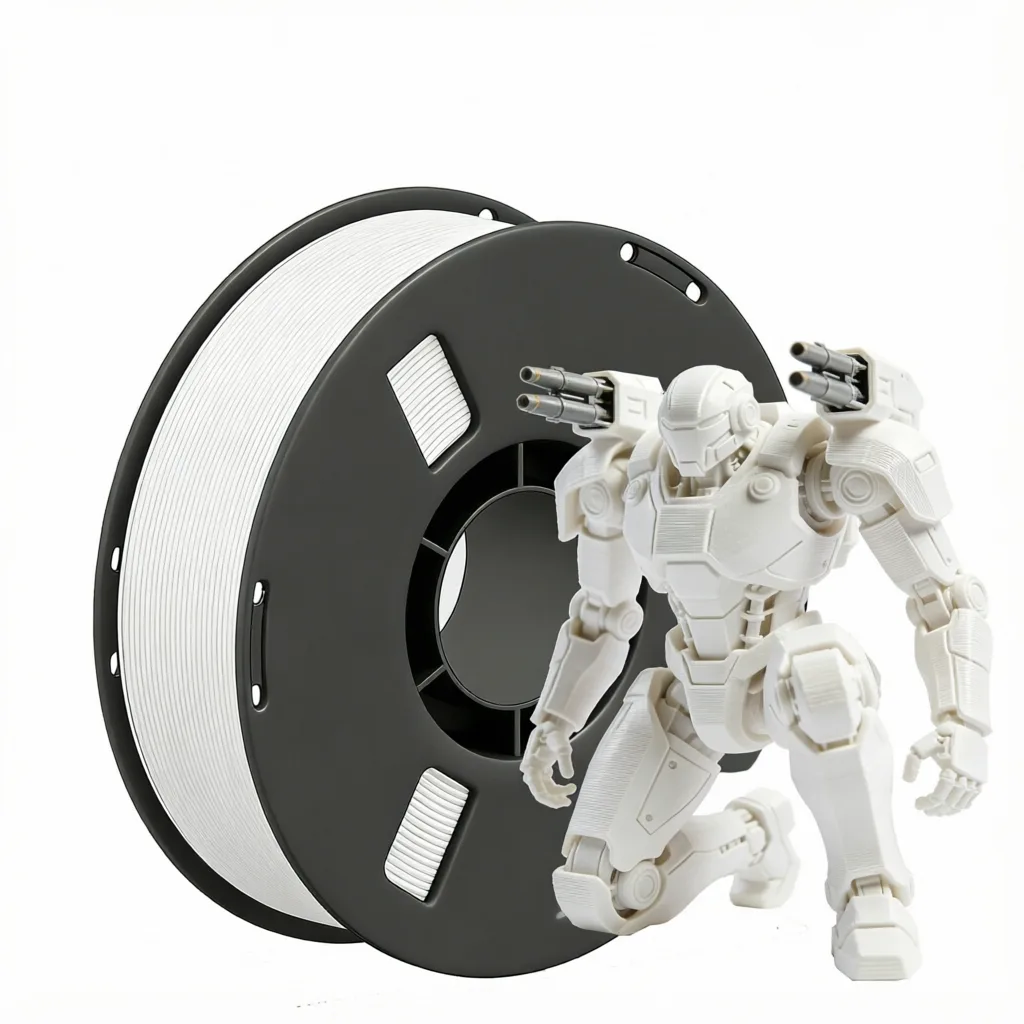
PLA+ 3D Printer Filament Enhanced Toughness 8 Vivid Colors Less Brittle Models

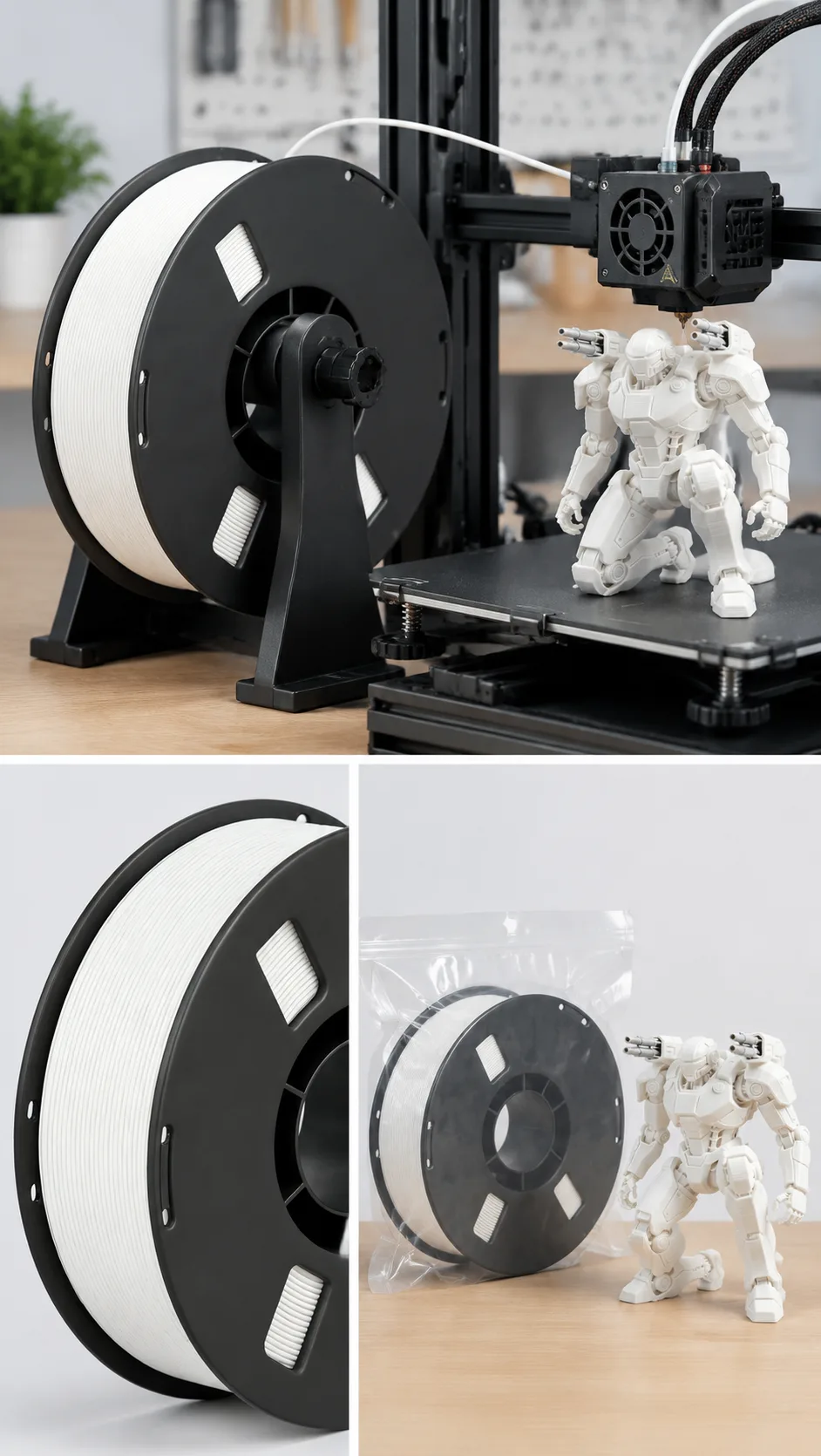
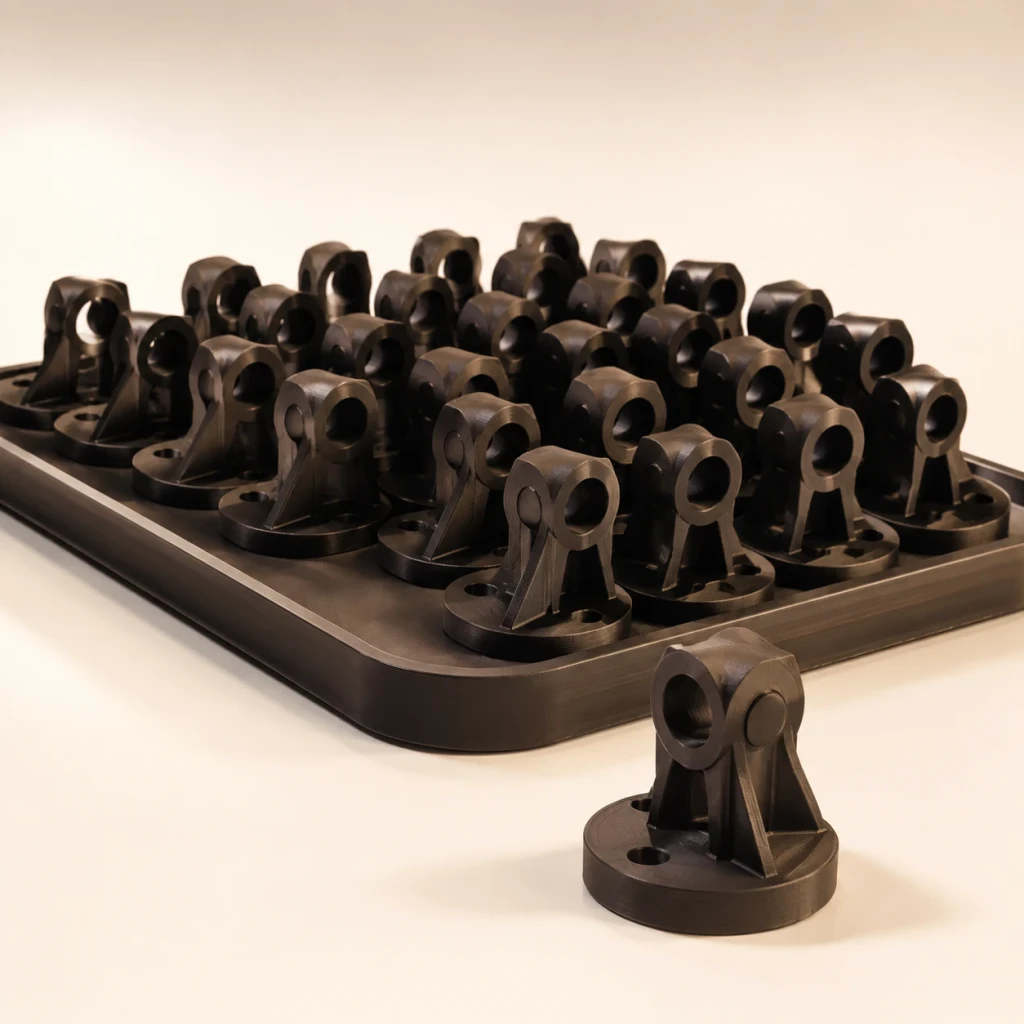
Brand: Yiqiu3D · Snap-fit clips that crack as they engage, and brackets that fail at the layer seam, are the usual reason a workshop stops trusting a filament. This PLA Plus grade is an impact-modified PLA with improved interlayer bonding, so latches, hinge pins and light-duty brackets flex as they engage and stay intact through repeated assembly instead of splitting on the seam. Toughness is improved over standard PLA

  • parts keep the stiffness PLA is chosen for. Nozzle 200-230 °C. 1 kg net filament per spool.
  • Nine functional colours: PLA+ White
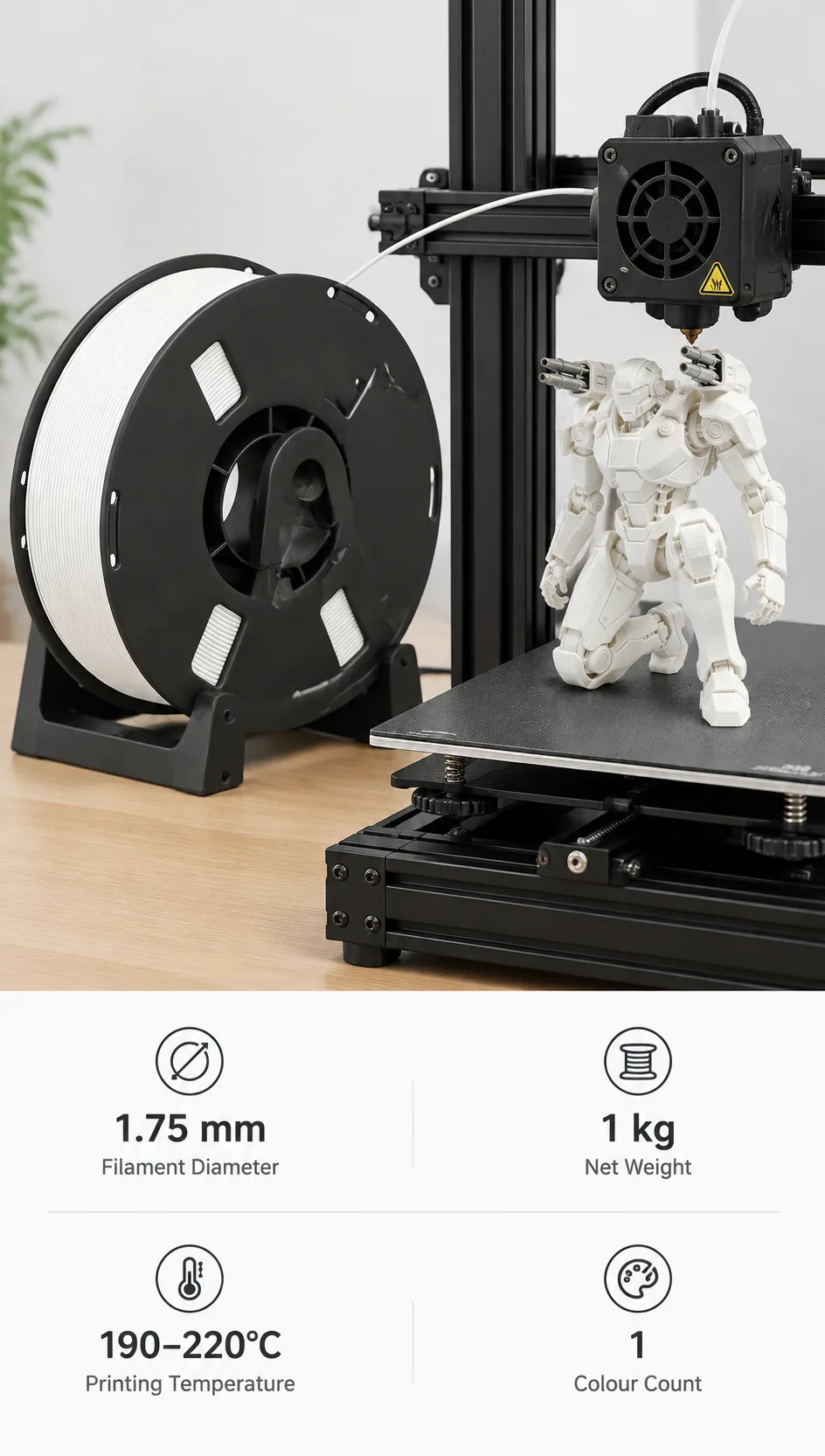
  • Diameter 1.75 mm
Compare filaments
Diameter 1.75mm
Material PLA
Quick Answer

What makes PLA Plus tougher than standard PLA, and how much stronger is it?

PLA Plus is polylactic acid modified with an impact modifier that improves the bond between layers and lets the material yield instead of cracking when a part is loaded quickly. That is the mechanism behind the practical difference: a plain PLA bracket often fails along a layer line on the first knock, while the modified grade deforms slightly and holds. We do not quote a percentage of impact or tensile improvement, because the figure depends on the specimen, the layer orientation and the print profile used to test it; what we describe is the mechanism and the grade, and we supply a test spool so you can measure performance on your own parts. Nozzle temperature 200-230 °C.

Full answers below
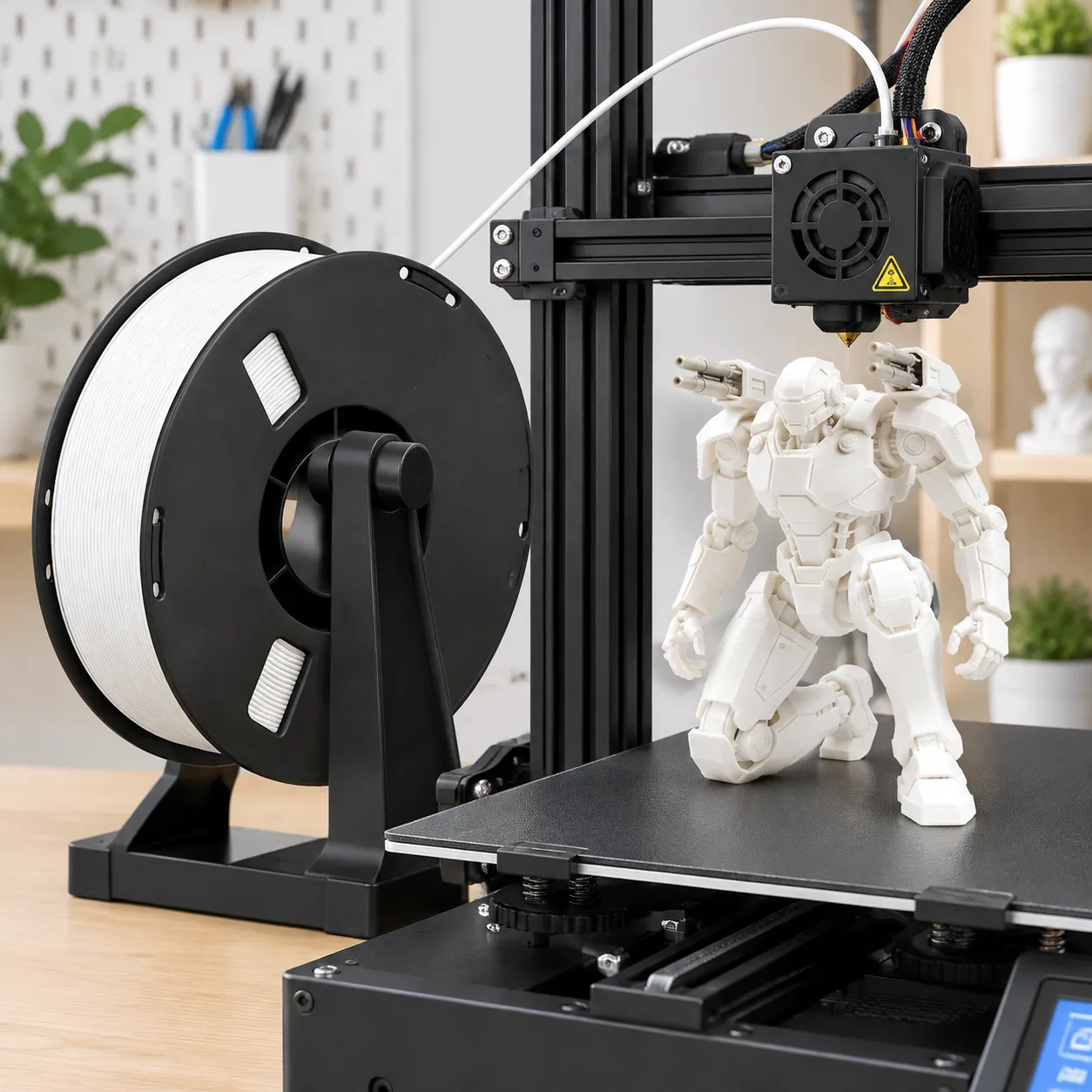
Is it right for my project?

Best for: For quick visual mock-ups where print speed and surface quality beat mechanical strength - available in 9 colours; lead colour PLA+ White. Not ideal for: Avoid for parts that will sit in a hot car or take repeated knocks; PETG or ABS suits better - available in 9 colours; lead colour PLA+ White.

Print settings

Nozzle 200-230°C

01 · Why this one

Product highlights

4 reasons

parts keep the stiffness PLA is chosen for. Nozzle 200-230 °C. 1 kg net filament per spool.

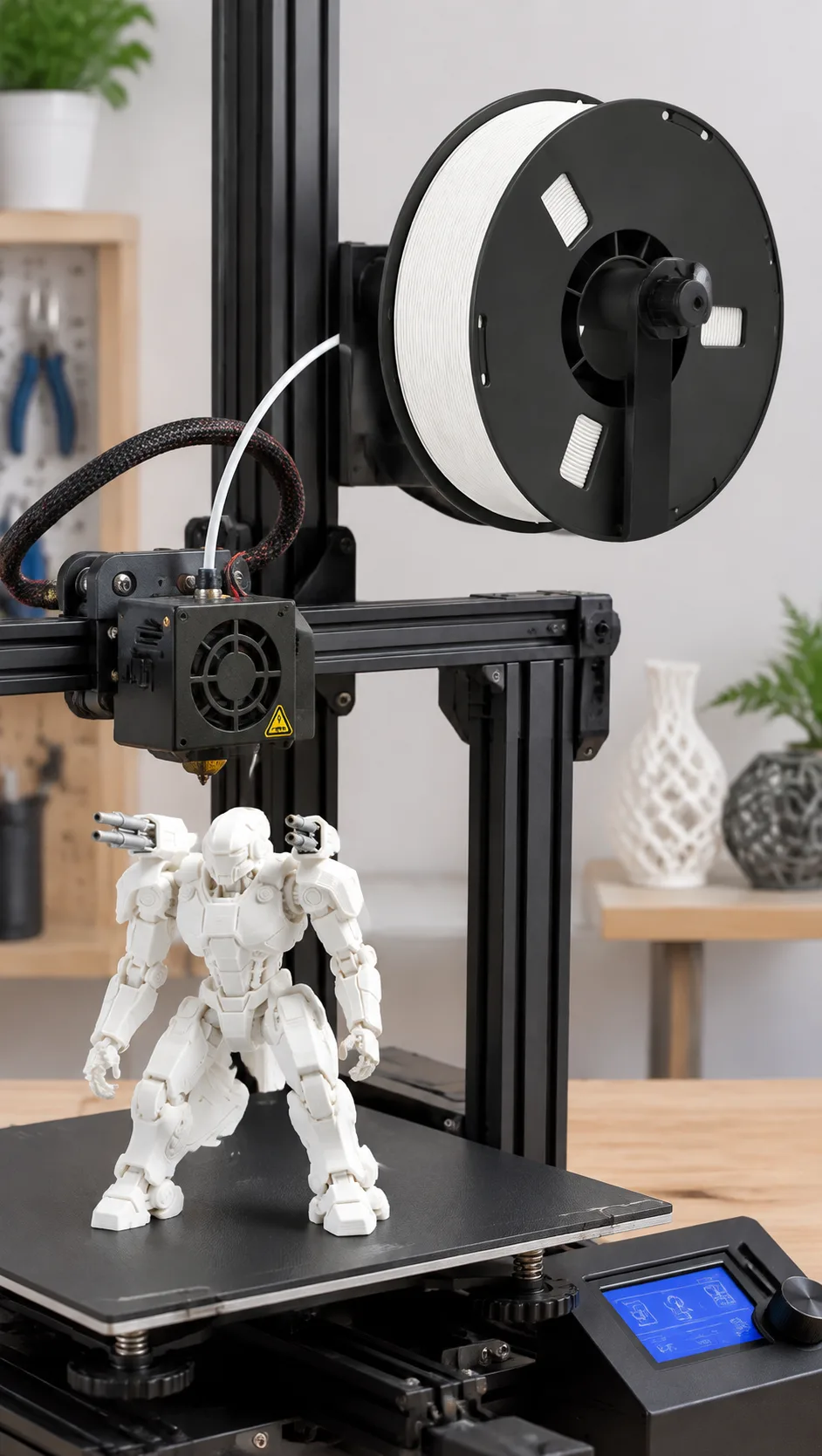
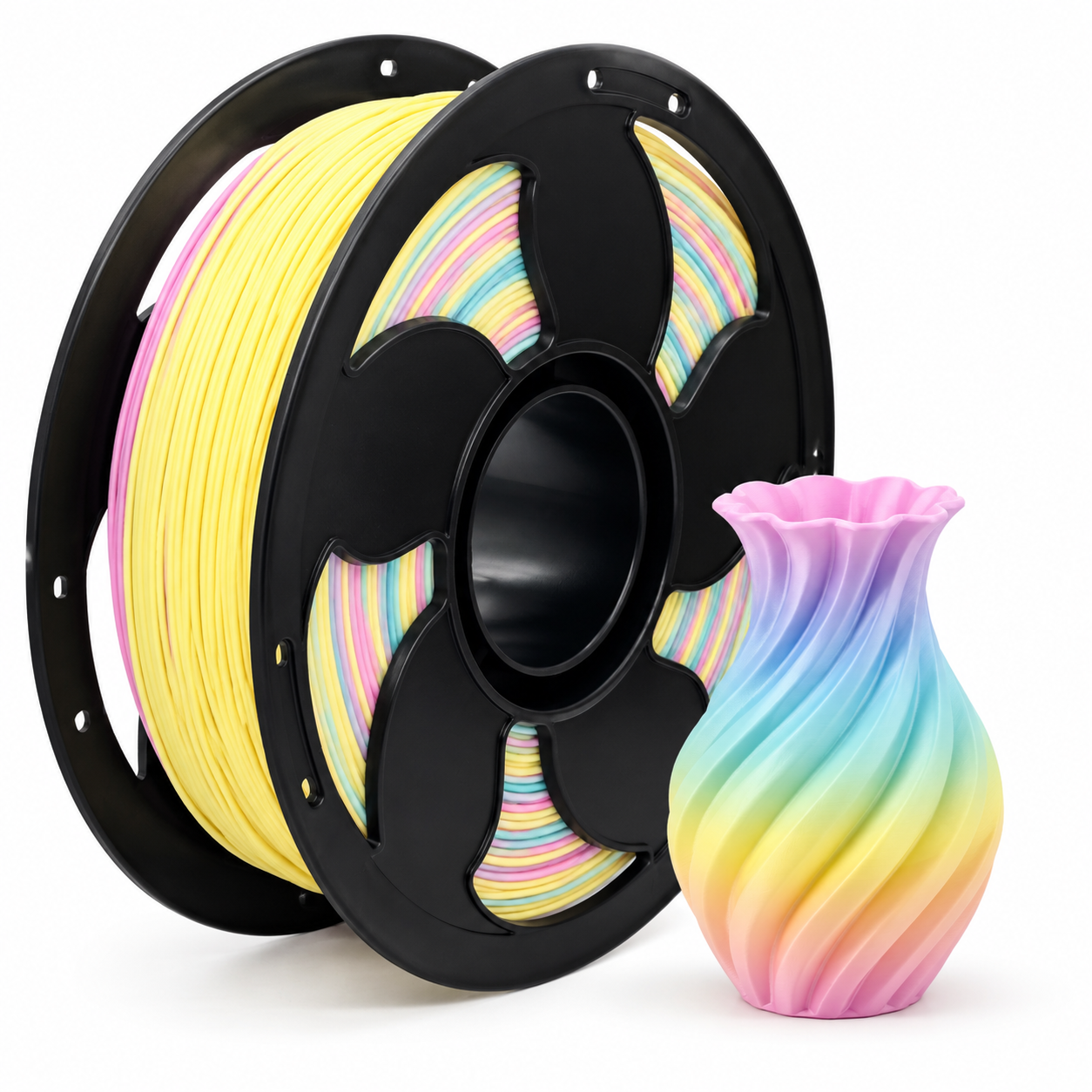
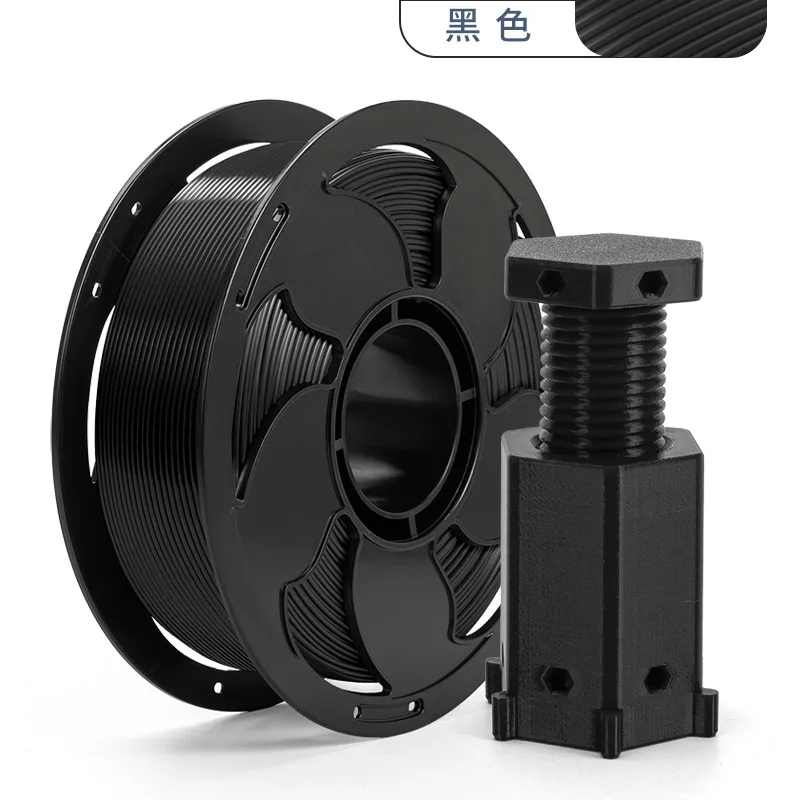
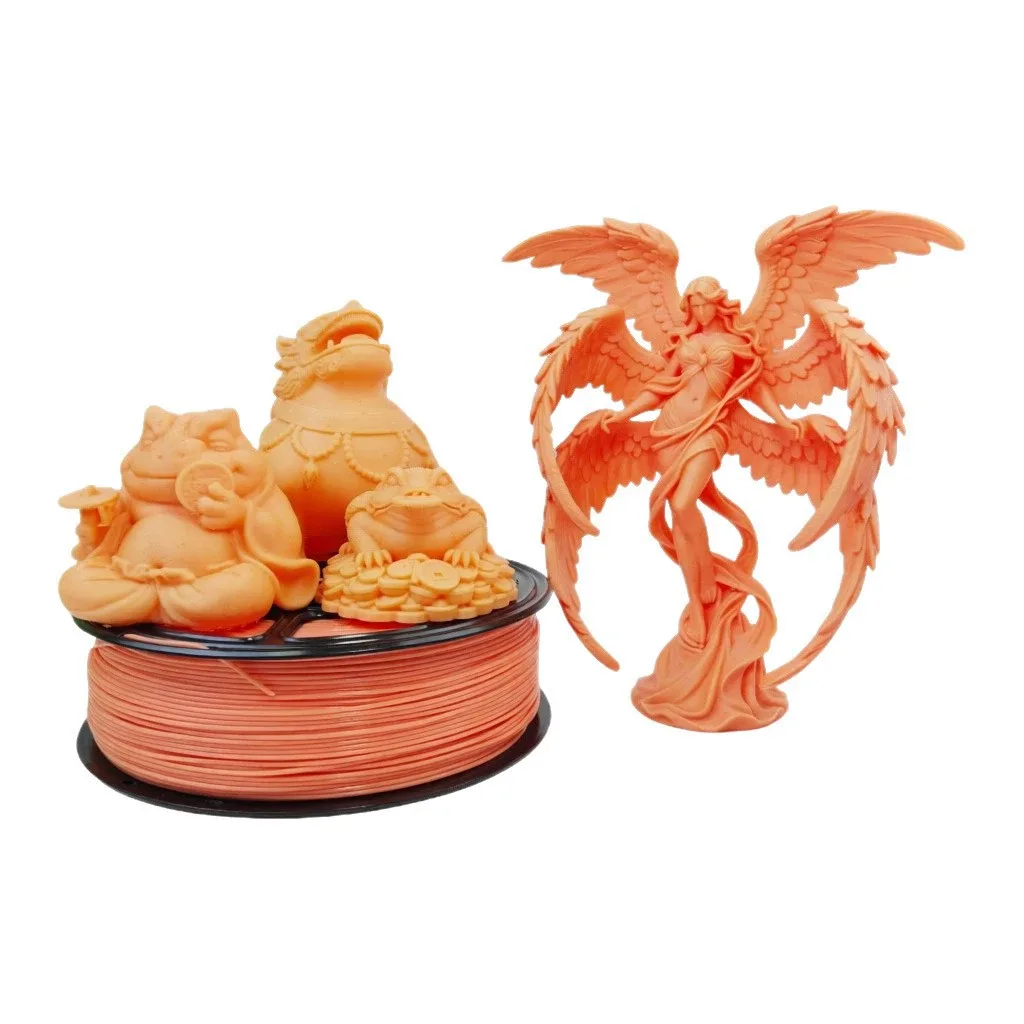
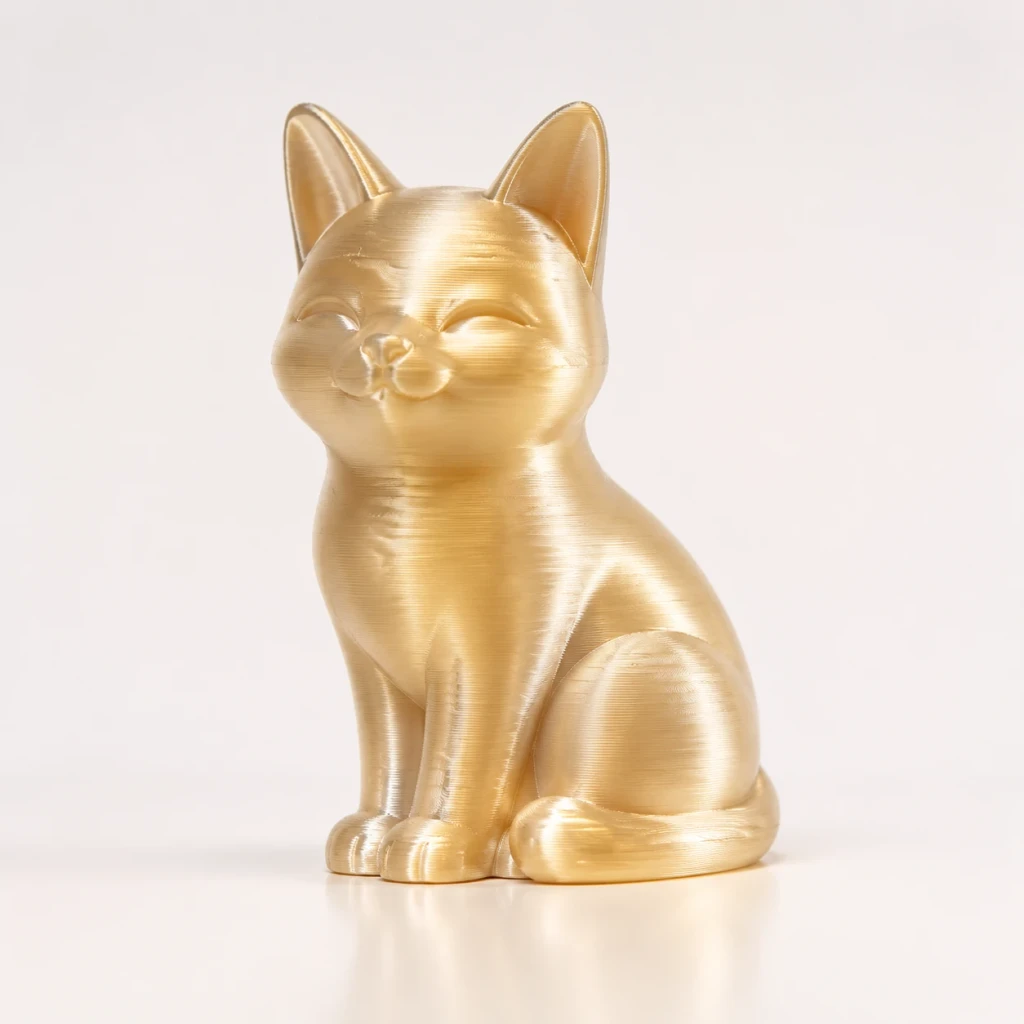
Nine functional colours: PLA+ White, PLA+ Black, PLA+ Red, PLA+ Blue, PLA+ Yellow, PLA+ Pink, PLA+ Purple, PLA+ Orange and PLA+ Green. White is the lead colour. Plain, non-glossy surfaces take a marker or a paint pen for part numbering, and a colour-coded rack of jigs lets an operator see at a glance which fixture belongs to which machine.

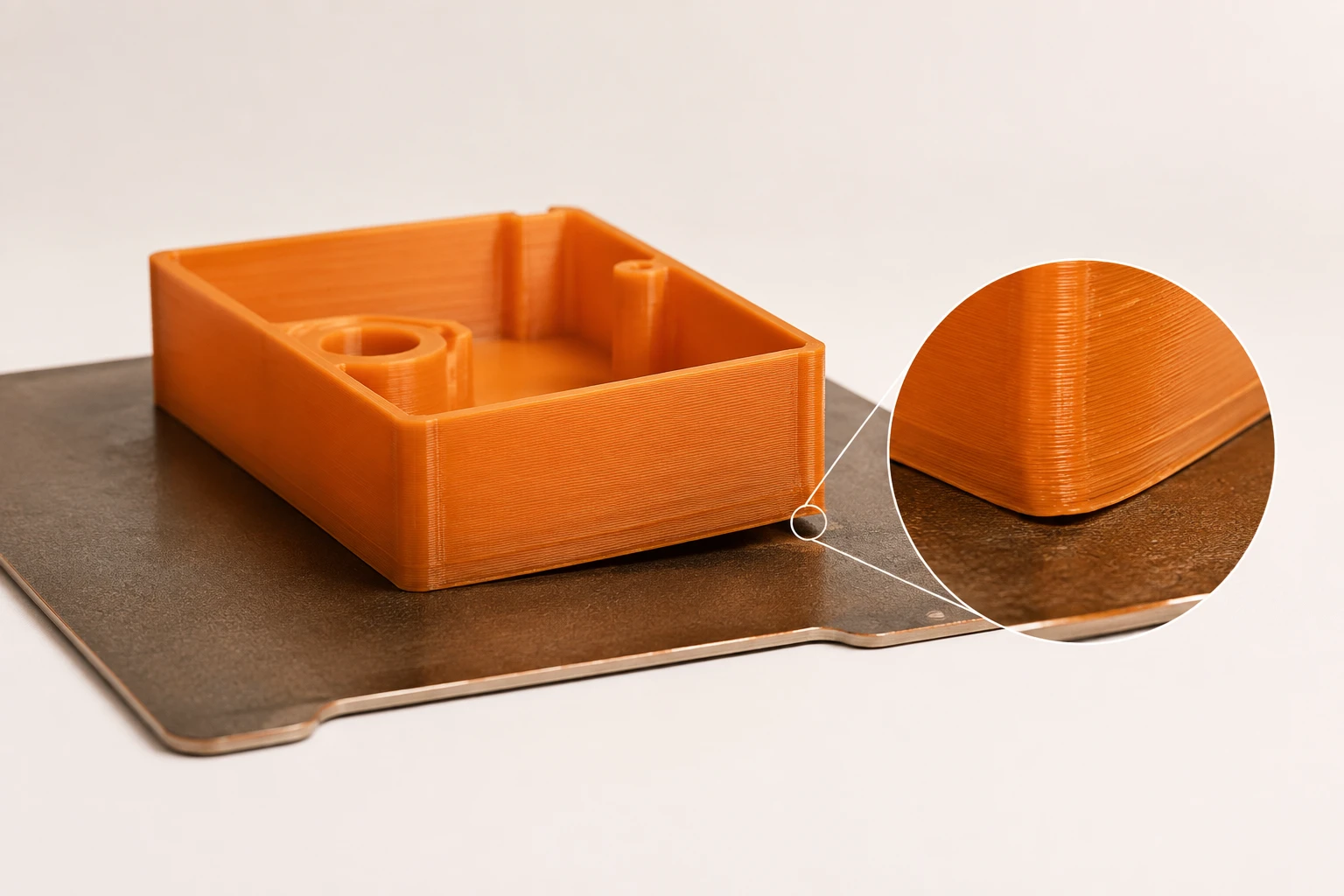
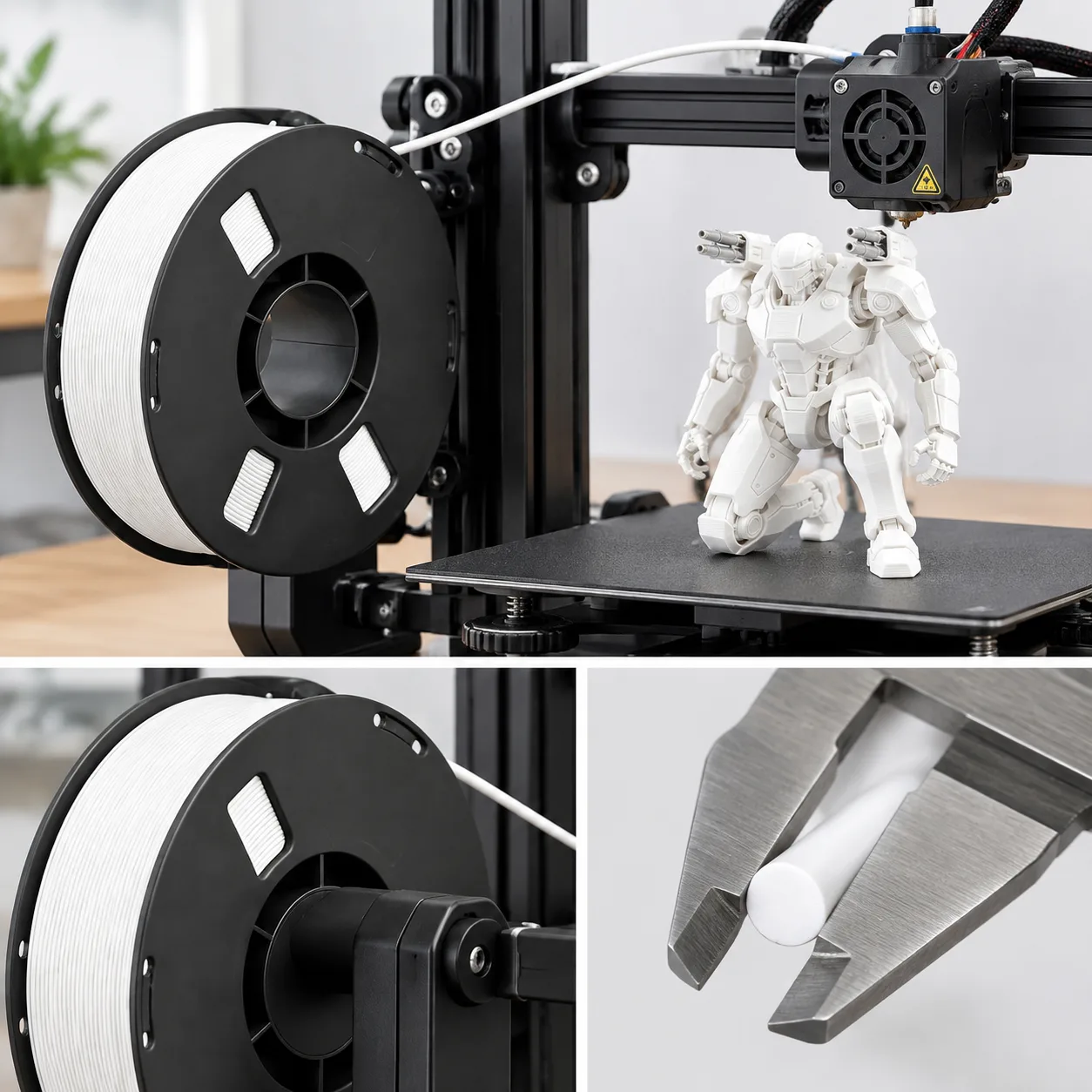
Diameter 1.75 mm, 1 kg net filament per spool on a standard round spool. Nozzle temperature 200-230 °C, a wider window than basic PLA, which tolerates the higher flow of a fast functional print and the lower end of the band for thin decorative walls. Improved adhesion comes from the modified PLA compound itself, so the stronger bond shows on a normal printer with normal slicer settings - no hardening nozzle and no enclosure needed.

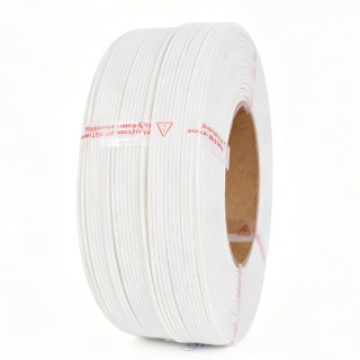
Load it, print it, use it. The spool ships vacuum sealed with a desiccant pack and needs no drying step before the first print. Standard PLA hardware is enough, and the print profile that already works on your machine is a valid starting point: the grade tolerates a wider temperature band than basic PLA. Close the bag between jobs, and keep a working spool in a dry box so the surface finish stays consistent across a long production run.

Technical Data

Specifications

Diameter 1.75mm
Material PLA

Print Profile

PLA+ 3D Printer Filament Enhanced Toughness 8 Vivid Colors Less Brittle Models prints best at 200-230°C nozzle.

Nozzle Temp200-230°C

Spool Specification

Spool details for your feeding and handling setup.

Gross Weight1.258 kg
Spool Size (L×W×H)20.4 × 20.4 × 6.5 cm
Pack FormatPiece
Spool TypeRound Spool

Attributes

Country / Regionchina
HS Code39169050
Item No.pla-enhanced-toughness-vivid-colors-less
Diameter 1.75mm
Appearance Round Spool
Diameter 1.75mm
Appearance Round Spool
Before You Ask

Frequently Asked Questions

What makes PLA Plus tougher than standard PLA, and how much stronger is it?
PLA Plus is polylactic acid modified with an impact modifier that improves the bond between layers and lets the material yield instead of cracking when a part is loaded quickly. That is the mechanism behind the practical difference: a plain PLA bracket often fails along a layer line on the first knock, while the modified grade deforms slightly and holds. We do not quote a percentage of impact or tensile improvement, because the figure depends on the specimen, the layer orientation and the print profile used to test it; what we describe is the mechanism and the grade, and we supply a test spool so you can measure performance on your own parts. Nozzle temperature 200-230 °C.
Will it run on my printer, and does it need special hardware?
It is 1.75 mm filament on a standard 1 kg round spool, so it fits FDM printers that accept 1.75 mm material and a 1 kg spool, including Bambu Lab X1 and P1 class, Creality Ender class, Prusa, Anycubic and Elegoo machines. No hardened nozzle, no enclosure and no heated chamber are needed, because the toughness comes from a modified PLA compound rather than an abrasive filler. No heated bed value is quoted for this product, since the spool data does not specify one; the bed setting that works for your standard PLA profile is a valid starting point.
Which print settings do you recommend for functional parts?
Nozzle temperature 200-230 °C. For snap-fit and load-bearing parts, run the upper half of that band: a hotter bead bonds better to the layer below, which is exactly where an ordinary PLA bracket fails. Use three or more perimeters and 0.16 mm to 0.24 mm layers so the load runs through continuous walls rather than through infill, and orient the part so layer lines sit across the load instead of along it. Moderate part cooling gives good bond strength; heavy cooling stiffens the seam and costs adhesion.
How much material is on one spool?
1 kg net filament per spool of 1.75 mm PLA Plus. As an orientation figure for planning, the strand cross-section and the density of PLA place one kilogram in the region of 330 to 340 metres, so we quote approx. 335 m. In practical terms that is a useful quantity of small functional parts - a rack of brackets, clips and jigs - or one large assembly, depending on wall count and infill. Cost from 1 kg net filament per spool.
What kind of parts is this filament for?
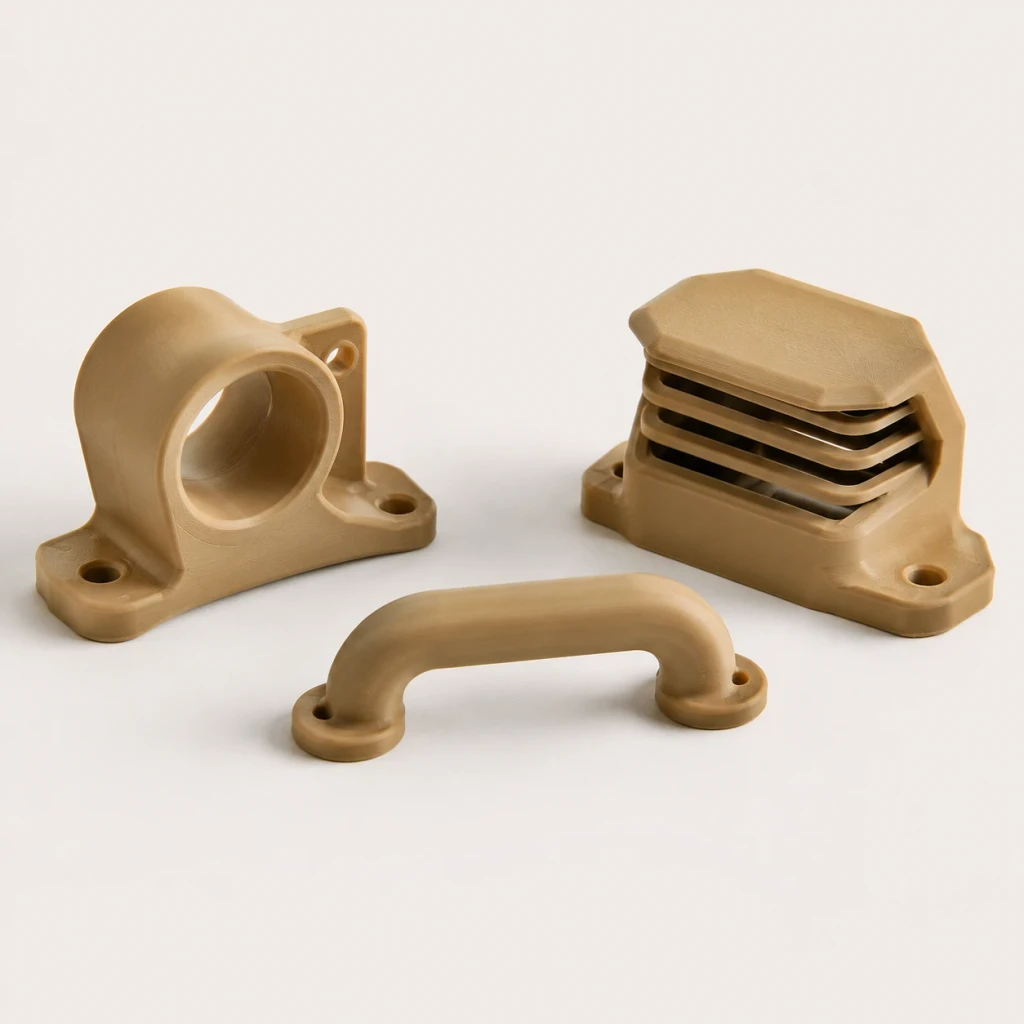
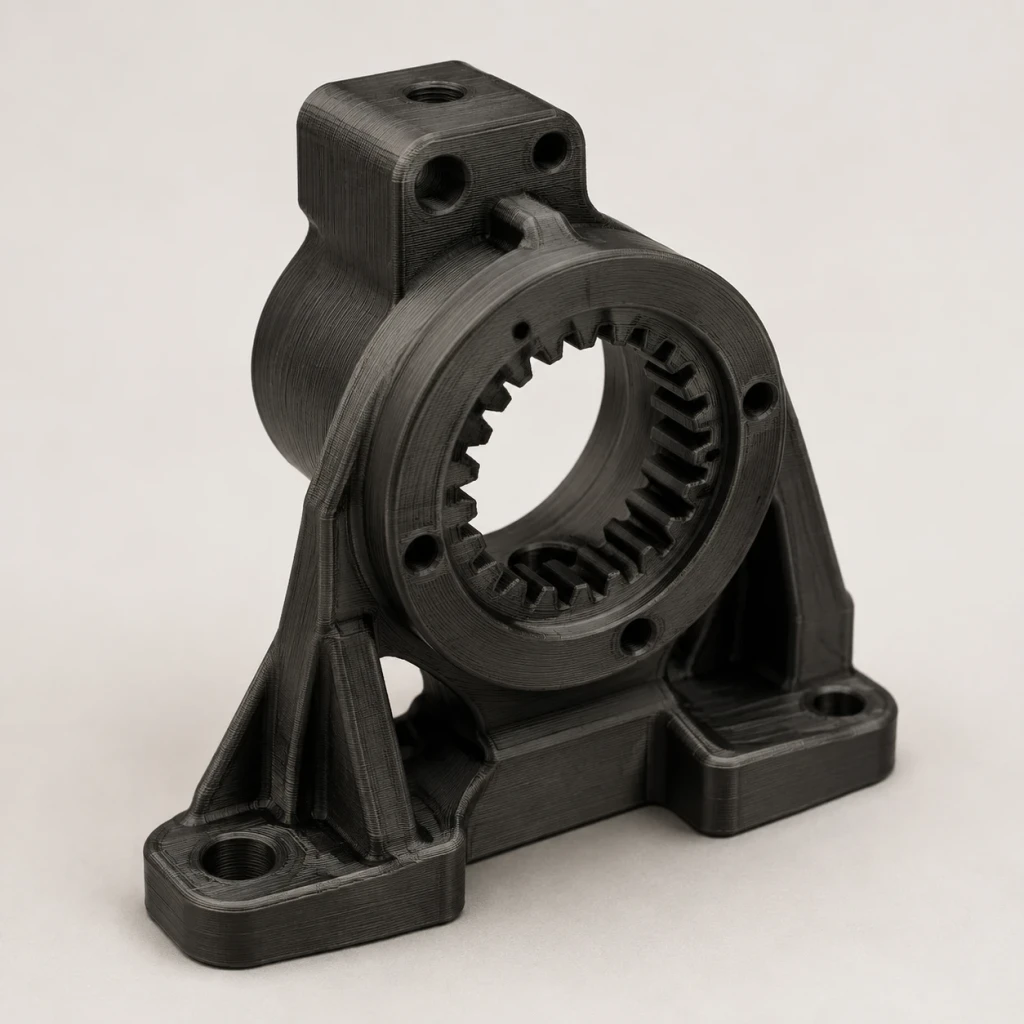
Parts that are handled and assembled rather than merely displayed: snap-fit clips and latches, hinge pins and pivots, light-duty brackets, cable management clips, replacement knobs and handles, drone frame parts that see occasional hard landings, jigs and fixtures that get knocked around a bench. It also suits printed-part assemblies where a plain PLA seam has been the failure point. It is not a replacement for engineering polymers in hot, chemical or continuously loaded service - PETG, ABS or a filled grade serve those duties.
How is the spool packed and stored?
Every spool ships vacuum sealed in a foil bag with a desiccant pack inside a printed carton, so it arrives dry and ready to print. PLA absorbs atmospheric moisture slowly; once the bag is open, return the spool to the resealable bag or a dry box between jobs, because damp filament prints with a rougher surface and can pop at the nozzle. If a spool has been open in humid air for a long period, a few hours at 50-60 °C in a filament dryer restores printing behaviour. Store flat, out of direct sunlight and away from heat sources.

Documentation & Downloads

Everything we publish for this material, in one place.

Ready to Order

Get factory-direct pricing on PLA+ 3D Printer Filament Enhanced Toughness 8 Vivid Colors Less Brittle Models

Not sure this is the right material? → Compare filaments